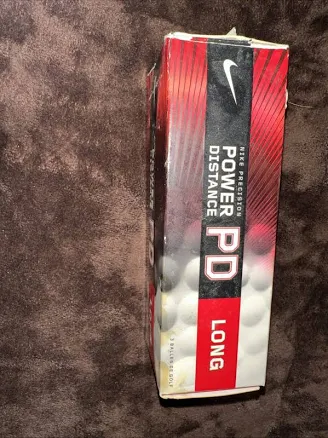
Nike Power Distance Long Golf Balls
Lower concern. Golf balls pose minimal PFAS exposure risk.
Nike does not disclose PFAS use in Power Distance balls. Golf balls have limited skin contact and are not food or water contact items.
We flunk more products than we pass. This one earned its grade. How we grade
Material
Synthetic rubber/elastomer golf ball core and cover
Lab data
No public lab test
You may also be interested in
Top-graded picks in the categories readers replace first, every one scored on the same rubric.

- polypropylene filter housing, carbon/sediment cartridge
- We found no PFAS statement from the brand
- Bacterial growth in spent cartridges
3 hazards checked on this product, all on its full breakdown.

Aquasure
Premier Series 75 GPD Under Sink Reverse Osmosis Water Filtration System
- RO membrane, carbon filters, stainless steel housing
- We found no PFAS statement from the brand
- Bacterial and microbial growth in housing and filters
4 hazards checked on this product, all on its full breakdown.

Avocado
Vegan Mattress
- organic cotton, natural latex, coconut coir, recycled steel coils
- The brand calls it PFAS-free, which we have not verified
- Heavy metals
2 hazards checked on this product, all on its full breakdown.
What Nike Power Distance Long Golf Balls is made of, ingredients and materials
Nike Power Distance balls use a synthetic rubber or elastomer core wrapped in a synthetic cover layer, a standard construction for modern golf balls. These materials are chosen for durability and performance, not chemical utility, meaning they do not require reactive additives like those found in plastics for food contact or thermal coatings. Unlike cookware or textiles, golf balls do not contact skin or ingestion pathways during normal use, and the elastomer matrix itself is chemically inert once cured.
What’s concerning
Category baseline
The starting point for this type of product, before anything specific to this product is counted.
No PFAS disclosure
No public statement from the brand about PFAS in this product.
Microplastic shedding
Repeated impact wear on synthetic covers can generate small plastic particles; however, these remain localized to the playing surface and turf and do not constitute an ingestion or direct inhalation risk during play. Environmental fate of shed microplastics from golf balls is not well characterized but is a recognized concern for water courses adjacent to golf courses.
What’s reassuring
Base material not linked to PFAS
The main material recorded for this product is not one associated with PFAS.
Elastomer degradation and off-gassing
Synthetic rubber and elastomer cores are chemically stable once vulcanized and do not emit volatile organic compounds under normal storage or use temperatures. No established off-gassing concerns exist for cured golf ball materials.
Heavy metals
Golf ball covers use synthetic dyes and pigments in minimal quantities; no lead, cadmium, or antimony content has been reported or is typical in elastomer-based sports equipment. The closed, non-porous structure limits leaching pathways.
Source, FDA ↗Skin contact sensitization
Cured elastomer and polymer surfaces do not contain known skin sensitizers or reactive allergens. Occasional hand contact during play poses no documented dermatological risk.
Formaldehyde / VOCs
No recalls, test results, or public reports indicate residual formaldehyde or uncured chemical additives in finished Nike Power Distance balls. Post-manufacturing curing and quality control minimize exposure to volatile manufacturing byproducts.
Source, ATSDR ↗How is this PFAS grade calculated?
The brand's record and disclosure
Nike has not publicly disclosed material safety data or third-party testing results specific to Power Distance golf balls. The broader Nike brand has faced scrutiny over labor and chemical manufacturing practices in footwear, but golf balls represent a minor product line with no established safety controversies or recalls on record. Nike's silence on PFAS in this category is typical for golf equipment manufacturers and does not indicate a known problem.
How it compares in its category
Golf balls across all major brands (Titleist, Callaway, TaylorMade, Bridgestone) use similar synthetic elastomer and polymer constructions with no meaningful safety differentiation. The category itself carries negligible chemical exposure risk compared to food-contact items or textiles worn daily. Performance and durability vary among brands, but material safety profiles are functionally equivalent.
If you buy it
Store balls in a cool, dry place away from direct heat or UV exposure for extended periods, as elastomer can degrade over decades if subjected to extreme conditions, though this does not pose a health risk. Golf balls require no special handling or maintenance beyond normal cleaning with water and mild soap. Replace when the cover becomes visibly cut or scuffed, which affects performance rather than safety. No inhalation, dermal, or ingestion risk exists under standard play conditions.
What is not known about PFAS in this product?
- Basis
- Model estimate, 72% confidence, not a lab result
- Lab test
- None on record for this exact product
- Brand statement
- Nike has made a specific claim
Formulations change between production runs, so check the current label. How we grade.
More golf balls & equipment grades
How we score, every product runs through the same public 0-100 rubric based on materials, coatings, brand disclosure, lab findings, and recalls. See the full methodology → Spotted a mistake? Report an error.