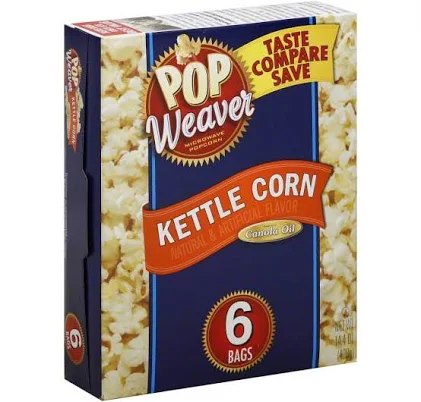
Pop Weaver · Microwave Popcorn
Pop Weaver Kettle Corn Microwave Popcorn
Likely grease-resistant coating; PFAS risk uncertain without disclosure.
Microwave popcorn bags typically use grease-resistant coatings to prevent oil leakage. Pop Weaver makes no public PFAS claims or disclosures about their bag materials.
The better-graded swap
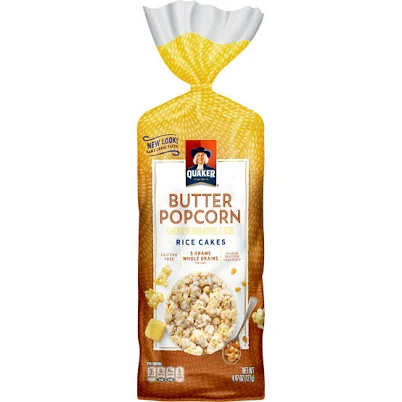
Quaker
Quaker Butter Popcorn Rice Cakes
70/100 safety
Same rubric that flunked this product. The swap earned Good.
Still want this one anyway? Check the price on Amazon. We’d swap it.
Material
paper-based microwave popcorn bag, likely with grease-resistant coating
Brand disclosure
Brand is silent on PFAS
Lab data
No public lab test
What Pop Weaver Kettle Corn Microwave Popcorn is made of, ingredients and materials
Pop Weaver kettle corn microwave popcorn is packaged in a paper-based bag with an internal grease-resistant coating designed to contain oil and prevent bag failure during microwave heating. This type of coating is often fluorochemical-based (PFAS) to achieve grease repellency, though Pop Weaver has not publicly disclosed the specific chemistry. The bag's lining may also contain minor additives or sealants that migrate into food when heated, particularly fats and oils that act as carriers for coating components.
What’s concerning
Waterproof / stain-resistant treatment
Water-repellent coating treatments have historically used PFAS.
Category baseline
The starting point for this type of product, before anything specific to this product is counted.
No PFAS disclosure
No public statement from the brand about PFAS in this product.
PFAS
Microwave popcorn bags typically use PFAS-based coatings for grease repellency. Pop Weaver has not disclosed the specific composition, making confirmation impossible without independent testing. Migration into food is most likely during microwave heating, especially with fatty products.
Source, ATSDR ↗PFAS
Paper-based microwave bags may contain adhesives, sealants, or other additives in addition to the primary grease-resistant layer. Heat and oil contact can promote migration of minor components. Risk is generally low with single-use heating and proper temperature control.
Source, ATSDR ↗Thermal degradation of bag material
If the bag is overheated or the internal coating is damaged, the paper substrate can char or the lining can break down, potentially releasing volatile compounds or fragments. Proper microwave heating (following package instructions) minimizes this risk.
What’s reassuring
BPA & bisphenols
No specific information is on record indicating BPA or BPS use in Pop Weaver microwave popcorn bags. Modern food-contact adhesives in this product class have largely phased out BPA, but brand-specific disclosure is not available.
Source, FDA ↗Microplastic generation from bag degradation
Microplastics are not a documented concern with intact, single-use microwave popcorn bags when used as intended. Risk would only arise if the bag were damaged, overheated, or fragmented before or during cooking, which is outside normal use.
The full breakdown
The brand's record and disclosure
Pop Weaver (owned by American Popcorn Company) has not issued public statements on PFAS use, fluorochemical sourcing, or third-party testing of microwave popcorn bags. The brand does not list certifications such as PFAS-free on packaging or marketing materials. No recalls or safety violations specific to this product are on record, but the absence of transparency on coating composition is the primary concern.
How it compares in its category
Most conventional microwave popcorn bags rely on grease-resistant coatings, the majority of which historically contained legacy PFAS compounds. Some premium or eco-focused brands (e.g., Organic Valley, smaller specialty popcorn makers) have begun shifting to non-fluorochemical or certified PFAS-free alternatives, though these remain less common. Pop Weaver's silence on this issue places it in the majority of mainstream popcorn brands that have not committed to PFAS-free transitions.
If you buy it
Use the product according to package directions; do not overheat the bag, as elevated temperatures may increase migration of coating components into food. The bag is single-use and not designed for reheating. Store unopened bags in a cool, dry place away from direct sunlight or moisture, which can degrade the coating and increase potential leaching. If the bag shows visible damage, grease staining on the exterior, or odor upon opening, discard it.
What we don’t know
- Basis
- Model estimate, 45% confidence, not a lab result
- Lab test
- None on record for this exact product
- Brand statement
- Pop Weaver has made none
Formulations change between production runs, so check the current label. How we grade.
Better-graded alternatives in Microwave Popcorn
Quaker
Butter Popcorn Rice Cakes
- puffed rice cakes in paperboard packaging
- We found no PFAS statement from the brand
- Mold or bacterial growth in packaging
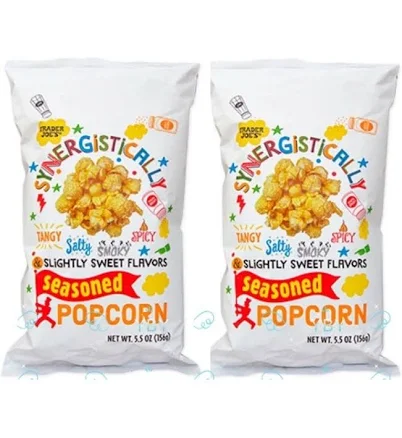
Trader Joe's
2 Packs Trader Joe's Synergistically Seasoned Popcorn 5.5 Oz Each Pack
- paperboard popcorn bag, grease-resistant interior lining
- We found no PFAS statement from the brand
- Moisture and mold risk if bag is compromised
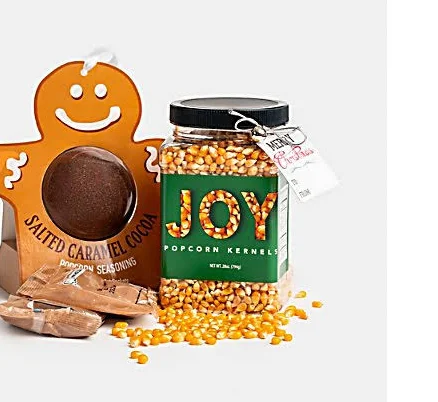
Wabash Valley
Farms Sweet
- paper-based food packaging with standard coating
- We found no PFAS statement from the brand
- Ink migration (printing on exterior or interior)
3 hazards checked on this product. See all of them.
More microwave popcorn grades
How we score, every product runs through the same public 0-100 rubric based on materials, coatings, brand disclosure, lab findings, and recalls. See the full methodology → Spotted a mistake? Report an error.