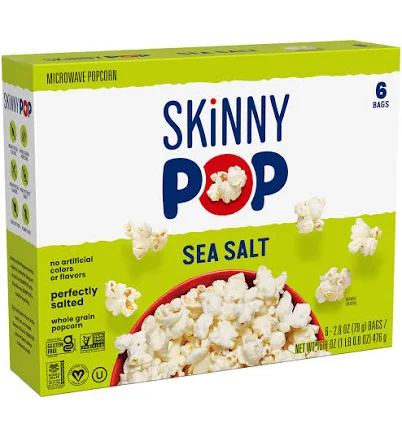
Skinny Pop · Microwave Popcorn
Skinnypop Popcorn Sea Salt
Likely lower concern, but grease-resistant packaging often uses PFAS coatings.
SkinnyPop does not disclose PFAS status. Grease-resistant food packaging commonly contains PFAS-based coatings. No third-party verification available for this product line.
The better-graded swap
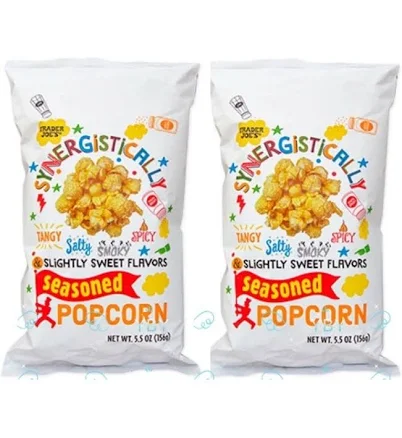
Trader Joe's
2 Packs Trader Joe's Synergistically Seasoned Popcorn 5.5 Oz Each Pack
70/100 safety
Same rubric that flunked this product. The swap earned Good.
Still want this one anyway? Check the price on Amazon. We’d swap it.
Material
Paper/cardboard popcorn bag with grease-resistant lining
Brand disclosure
Brand is silent on PFAS
Lab data
No public lab test
You may also be interested in
Top-graded picks in the categories readers replace first, every one scored on the same rubric.

- polypropylene filter housing, carbon/sediment cartridge
- We found no PFAS statement from the brand
- Bacterial growth in spent cartridges
3 hazards checked on this product, all on its full breakdown.

Aquasure
Premier Series 75 GPD Under Sink Reverse Osmosis Water Filtration System
- RO membrane, carbon filters, stainless steel housing
- We found no PFAS statement from the brand
- Bacterial and microbial growth in housing and filters
4 hazards checked on this product, all on its full breakdown.

Avocado
Vegan Mattress
- organic cotton, natural latex, coconut coir, recycled steel coils
- The brand calls it PFAS-free, which we have not verified
- Heavy metals
2 hazards checked on this product, all on its full breakdown.
What Skinnypop Popcorn Sea Salt is made of, ingredients and materials
Skinnypop Sea Salt is popped corn kernels in a paper/cardboard bag with a grease-resistant polymer lining (likely fluorinated to repel oil). The popcorn itself is minimally processed and contains no identified added dyes, preservatives, or flavor chemicals of concern. The lining's purpose is to prevent oil from saturating the cardboard, but fluorinated coatings (PFAS) can migrate into the product or environment during storage or disposal. The sea salt seasoning is sodium chloride with anti-caking agents; no heavy metals or problematic additives are documented for this product.
What’s concerning
Waterproof / stain-resistant treatment
Water-repellent coating treatments have historically used PFAS.
Category baseline
The starting point for this type of product, before anything specific to this product is counted.
No PFAS disclosure
No public statement from the brand about PFAS in this product.
PFAS
Fluorinated polymer linings in popcorn bags commonly contain PFAS compounds to repel grease. Migration into the product is generally low at room temperature but increases with heat or extended contact. Skinnypop has not disclosed coating composition or PFAS status.
Source, ATSDR ↗Microplastics
If the bag interior is mechanically damaged (puncture, tear, abrasion during transport), polymer fragments could theoretically shed onto the popcorn. Skinnypop bags are durable but not labeled with lining durability or food safety for minor damage.
Source, EPA ↗What’s reassuring
BPA & bisphenols
No documented evidence that Skinnypop bag linings use BPA or BPS-based polymers. However, detailed composition of the grease-resistant layer is proprietary and not publicly disclosed, so full exclusion cannot be confirmed.
Source, FDA ↗Anti-caking agent in salt (minimal risk)
Sea salt in processed snacks sometimes contains anti-caking agents like silicon dioxide or calcium silicate. No specific hazard is documented for Skinnypop's formulation, and these are generally recognized as safe at typical food levels.
Allergen cross-contamination (facility-dependent)
Skinnypop does not prominently label allergen warnings for tree nuts or sesame, and no major recalls on this basis are on record. However, manufacturing facility practices are not publicly detailed.
How is this PFAS grade calculated?
The brand's record and disclosure
Skinnypop (owned by Amplify Snack Brands) has not publicly committed to PFAS elimination or disclosed its packaging supplier chain. The brand markets itself as a simple, lightly processed snack and has no documented recalls related to chemical contamination. No third-party certifications (organic, non-GMO, or chemical-safety) are prominently claimed. Transparency around food contact materials remains limited across most popcorn brands in this price tier.
How it compares in its category
Most shelf-stable popcorn uses similar grease-resistant paper linings, making Skinnypop typical rather than exceptional in packaging chemistry. Brands offering PFAS-free alternatives (some organic or specialty popcorn makers) exist but cost more and have narrower distribution. For a mass-market seasoned popcorn, this product's ingredient simplicity is above average; the packaging is standard industry practice. Unpackaged bulk popcorn from a retailer bin eliminates the lining question but requires more shelf life management.
If you buy it
Store the bag at room temperature in a dry cupboard; do not heat the bag in a microwave or oven, as this can increase PFAS migration. The product's shelf life is typically 6-12 months if kept sealed. Once opened, transfer remaining popcorn to an airtight glass or metal container to prevent staleness and eliminate ongoing contact with the bag lining. There are no special handling precautions needed for normal consumption; the risk from PFAS in the lining is theoretical and low at typical intake levels.
What is not known about PFAS in this product?
- Basis
- Model estimate, 55% confidence, not a lab result
- Lab test
- None on record for this exact product
- Brand statement
- Skinny Pop has made none
Formulations change between production runs, so check the current label. How we grade.
What are the PFAS-free alternatives to Skinnypop Popcorn Sea Salt?
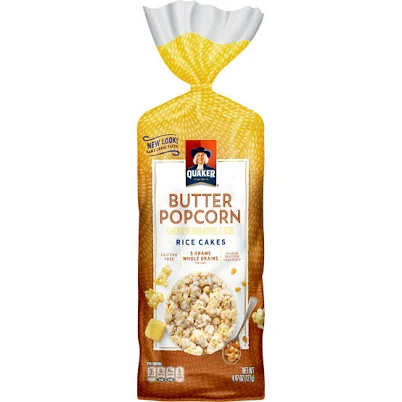
- puffed rice cakes in paperboard packaging
- We found no PFAS statement from the brand
- Mold or bacterial growth in packaging
- paperboard popcorn bag, grease-resistant interior lining
- We found no PFAS statement from the brand
- Moisture and mold risk if bag is compromised
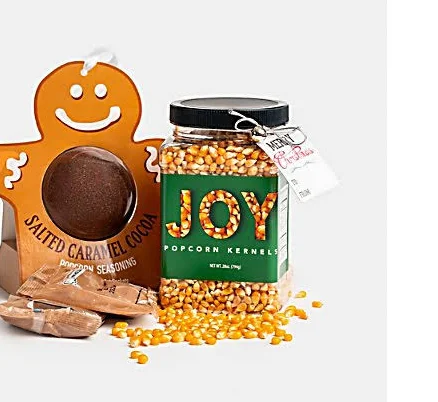
- paper-based food packaging with standard coating
- We found no PFAS statement from the brand
- Ink migration (printing on exterior or interior)
3 hazards checked on this product, all on its full breakdown.
More microwave popcorn grades
How we score, every product runs through the same public 0-100 rubric based on materials, coatings, brand disclosure, lab findings, and recalls. See the full methodology → Spotted a mistake? Report an error.