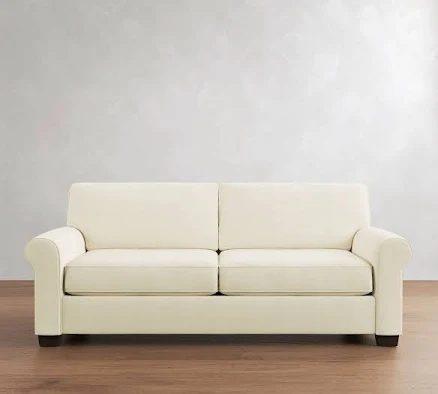
Pottery Barn · Upholstered Furniture
Pottery Barn Buchanan Roll Arm Upholstered Sofa Polyester Wrapped Cushions
Lower concern on PFAS; Pottery Barn discloses polyester cushions, no stain treatment stated.
Polyester-wrapped cushions are generally lower PFAS concern unless treated with water or stain repellents, which are not disclosed here. Pottery Barn provides no PFAS information; request spec sheet for coating details if concerned.
We flunk more products than we pass. This one earned its grade. How we grade
Material
Polyester wrapped cushions with fabric upholstery
Lab data
No public lab test
You may also be interested in
Top-graded picks in the categories readers replace first, every one scored on the same rubric.

Aqua Pure
3M Aqua-Pure AP802B Whole House Filter Housing
- polypropylene filter housing, carbon/sediment cartridge
- We found no PFAS statement from the brand
- Bacterial growth in spent cartridges
3 hazards checked on this product. See all of them.

Aquasure
Premier Series 75 GPD Under Sink Reverse Osmosis Water Filtration System
- RO membrane, carbon filters, stainless steel housing
- We found no PFAS statement from the brand
- Bacterial and microbial growth in housing and filters
4 hazards checked on this product. See all of them.

Avocado
Vegan Mattress
- organic cotton, natural latex, coconut coir, recycled steel coils
- The brand calls it PFAS-free, which we have not verified
- Heavy metals
2 hazards checked on this product. See all of them.
What Pottery Barn Buchanan Roll Arm is made of, ingredients and materials
This sofa uses polyester-wrapped cushion cores, a petroleum-derived synthetic that is stable under normal indoor conditions but can off-gas volatile organic compounds (VOCs) during manufacturing and initial use. Polyester itself does not leach plasticizers like phthalates when used as a fiber, though the fabric backing or adhesives used to bond layers may contain trace VOCs. The cushion wrapping creates a barrier that limits direct contact with the core foam, reducing inhalation risk from foam degradation products over time.
What’s concerning
Category baseline
The starting point for this type of product, before anything specific to this product is counted.
No PFAS disclosure
No public statement from the brand about PFAS in this product.
VOC off-gassing (adhesives, foam, polyester)
Polyester-wrapped cushions in upholstered furniture may off-gas low levels of VOCs from adhesives and foam core in the first weeks to months. No specific testing is publicly available for this model; standard practice in the category suggests off-gassing is minor and diminishes with ventilation.
Polyester fiber degradation and shedding
Over 5-10 years, polyester fibers can break down from UV, heat, and mechanical wear, potentially releasing microfibers. This is typical for all polyester upholstery and not unique to Pottery Barn. Risk is minimized by regular vacuuming and avoiding prolonged sun exposure.
Dust mite and mold accumulation
Polyester absorbs moisture and can harbor dust mites and mold if humidity is high or spills are not dried promptly. This is a maintenance issue, not a manufacturing defect, and applies to all fabric upholstery.
What’s reassuring
Base material not linked to PFAS
The main material recorded for this product is not one associated with PFAS.
Flame retardants
Pottery Barn does not state whether flame retardants are applied to the polyester wrapping or foam. U.S. upholstered furniture must meet flammability standards (16 CFR 1633), but the specific chemical used is not disclosed. No recalls or documented issues for this product.
Source, EPA ↗Adhesive leachables (if fabric-to-foam bond fails)
Polyester wrapping is glued to the foam core; if this bond degrades, adhesive residues could contact skin or be inhaled. No reported incidents for Pottery Barn sofas; this is a general upholstery aging concern, not brand-specific.
The full breakdown
The brand's record and disclosure
Pottery Barn does not publicly disclose flame-retardant treatments, stain-guard coatings, or VOC testing for this model, which is typical for mass-market upholstered furniture. The brand has no documented recalls related to chemical hazards in upholstered goods. Pottery Barn provides basic care instructions but does not advertise low-VOC certifications (such as GREENGUARD) for this line, placing it in the mainstream product tier without premium transparency.
How it compares in its category
Standard upholstered sofas in this price range rarely declare flame-retardant or adhesive ingredients; Pottery Barn's practice is unremarkable. Competitors offering the same construction typically also omit chemical disclosure. Premium alternatives (higher cost) may carry third-party certifications like GREENGUARD Gold or Cradle to Cradle, which Pottery Barn sofas do not; budget alternatives may use recycled polyester or bio-based foam, introducing different risk profiles. This product sits squarely in the conventional middle.
If you buy it
Air out the sofa for 24-48 hours after delivery in a well-ventilated space to allow initial VOCs to dissipate. Vacuum cushions regularly to reduce dust and potential mold growth in polyester fibers. Spot-clean with mild soap and cool water; avoid heat sources and direct sunlight, which can degrade polyester and accelerate off-gassing. If the cushion cover tears or the polyester degrades visibly after 5-7 years of use, consider replacing cushions rather than the frame to limit exposure to degraded materials.
What we don’t know
- Basis
- Model estimate, 62% confidence, not a lab result
- Lab test
- None on record for this exact product
- Brand statement
- Pottery Barn has made a specific claim
Formulations change between production runs, so check the current label. How we grade.
More upholstered furniture grades
How we score, every product runs through the same public 0-100 rubric based on materials, coatings, brand disclosure, lab findings, and recalls. See the full methodology → Spotted a mistake? Report an error.