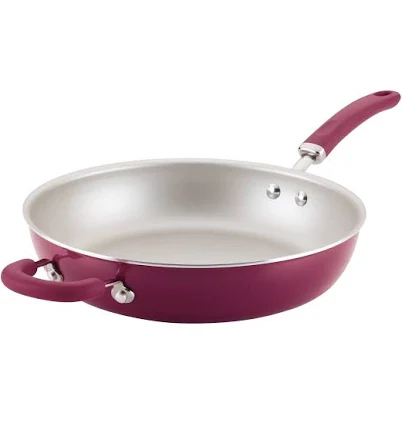
Rachael Ray Create Delicious Aluminum Nonstick Deep Skillet
Nonstick coating identity unclear; PFAS risk uncertain without disclosure.
Rachael Ray does not publicly specify the nonstick coating chemistry on this skillet. Aluminum nonstick cookware often uses Teflon-family coating-based coatings which may contain PFAS, but confirmation requires brand transparency.
The better-graded swap
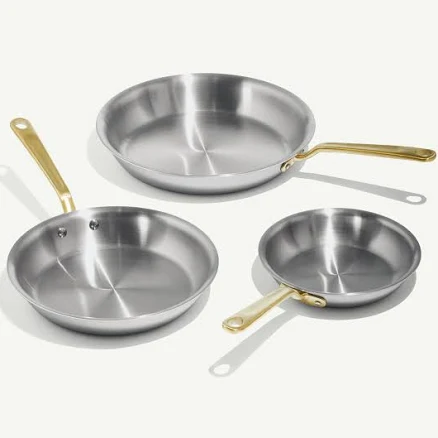
Made In
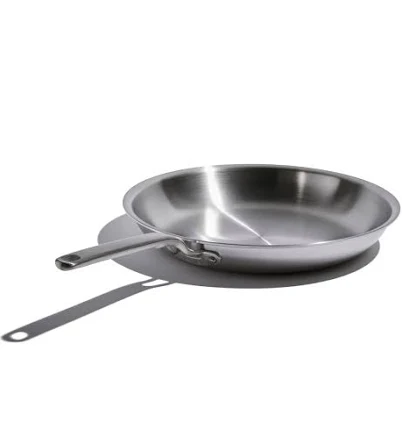
Made In Stainless Clad Frying Pan Set 3-Piece Professional-Grade 5-Layer Metal Construction
100/100 safety
Same rubric that flunked this product. The swap earned Excellent.
Still want this one anyway? Check the price on Amazon. We’d swap it.
Material
Aluminum with unspecified nonstick coating
Brand disclosure
Brand is silent on PFAS
Lab data
No public lab test
Is Rachael Ray Create Delicious Aluminum non-toxic? What it is made of
This skillet uses aluminum as its core material with an applied nonstick coating of unspecified chemical identity. Aluminum cookware can leach aluminum into food, especially in acidic or salty dishes, though health significance at typical exposure levels remains debated by regulatory agencies. The nonstick coating's chemistry is not disclosed by Rachael Ray or visible from product documentation, making it impossible to confirm whether it contains Teflon-type coating (Teflon) or alternative polymers, and whether PFAS are present.
What’s concerning
Category baseline
The starting point for this type of product, before anything specific to this product is counted.
No PFAS disclosure
No public statement from the brand about PFAS in this product.
Non-stick, chemistry undisclosed
Marketed as non-stick without stating the coating chemistry.
Aluminum leaching
Aluminum core can release aluminum ions into food, particularly with acidic or salty preparations. Health risk from dietary aluminum is not conclusively established but is subject to ongoing scientific debate; vulnerable populations (kidney disease, neurological conditions) may merit extra caution.
Coating degradation over time
User reviews and retail feedback indicate the nonstick surface loses effectiveness after 18-36 months of regular use. As coating degrades, both nonstick performance drops and aluminum leaching potential increases if bare aluminum is exposed.
What’s reassuring
Lead
No aluminum-body nonstick skillets of this type typically include ceramic glazes or enamel coatings that would harbor lead or cadmium. This hazard is not a standard risk for aluminum nonstick cookware but is noted for completeness in the category framework.
Source, ATSDR ↗The full breakdown
The brand's record and disclosure
Rachael Ray does not publicly disclose nonstick coating chemistry or PFAS content for its cookware lines. The brand has not pursued third-party certifications (such as GreenPan's PFAS-free claims) that would signal transparency on this issue. No major recalls specific to this skillet model appear in FDA or CPSC databases, but the absence of disclosure prevents independent verification of safety claims. Silence on coating identity is the primary concern here, not a known failure.
How it compares in its category
Rachael Ray nonstick cookware sits in the mid-market segment; it is cheaper than premium brands like All-Clad or Le Creuset but typically lacks the transparency of GreenPan (PFAS-free certified) or ceramic-coated alternatives. Aluminum nonstick skillets are common and generally perform well for everyday cooking, but this product's lack of coating disclosure puts it behind competitors that explicitly state Teflon-type coating-free or PFAS-free status. Durability reports suggest the nonstick coating wears faster than higher-end options after 2-3 years of regular use.
If you buy it
Keep heat at medium or below; high heat can degrade nonstick coatings faster and trigger potential fume release if Teflon-type coating is present (though unconfirmed for this product). Avoid acidic foods (tomato, vinegar, citrus) prolonged contact, as aluminum leaching increases in acidic conditions. Hand-wash only; dishwasher use accelerates coating wear. Replace the skillet if the nonstick surface visibly flakes, chips, or develops a dull gray appearance, as these signs indicate coating breakdown and increased leaching risk. Do not preheat empty; always add fat or food with liquid present.
What we don’t know
- Basis
- Model estimate, 45% confidence, not a lab result
- Lab test
- None on record for this exact product
- Brand statement
- Rachael Ray has made none
Formulations change between production runs, so check the current label. How we grade.
Better-graded alternatives in Cookware
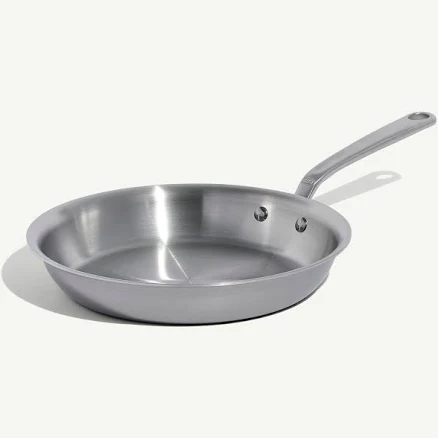
Made In
Stainless Clad Fry Pan
- Stainless steel clad construction, no nonstick coating
- The brand calls it PFAS-free, which we have not verified
- Clad separation or delamination over time
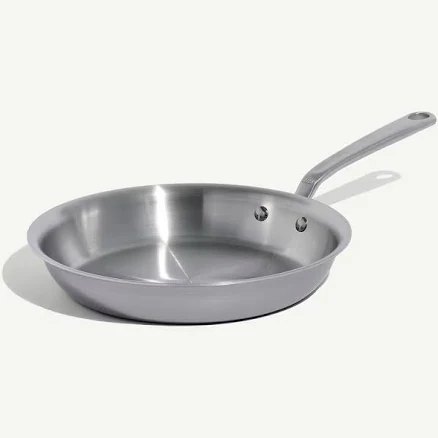
Made In
10' Stainless Clad Frying Pan
- stainless steel clad construction, no nonstick coating
- The brand calls it PFAS-free, which we have not verified
- Nickel leaching from stainless steel
3 hazards checked on this product. See all of them.
Heritage Steel
Eater Fry Pan
- Clad stainless steel, no coating
- The brand calls it PFAS-free, which we have not verified
- Metal ion release during cooking (iron, nickel, chromium)
More cookware grades
How we score, every product runs through the same public 0-100 rubric based on materials, coatings, brand disclosure, lab findings, and recalls. See the full methodology → Spotted a mistake? Report an error.