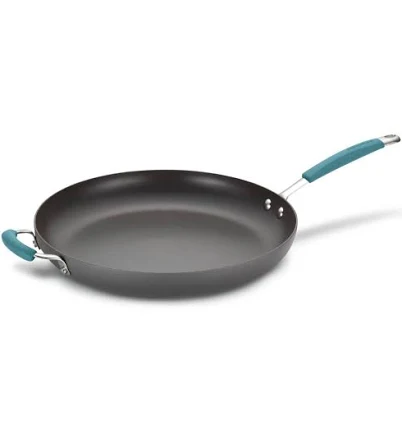
Rachael Ray Cucina Hard Anodized Nonstick Skillet with Helper Handle
Nonstick type undisclosed; typical hard anodized cookware often uses Teflon-type coating-based coatings.
Hard anodized nonstick skillet with unspecified coating type. Rachael Ray provides no PFAS disclosure. Standard hard anodized cookware frequently contains Teflon-type coating; brand silence prevents confident assessment.
The better-graded swap
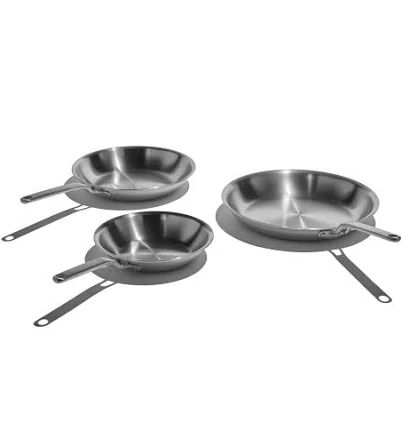
Heritage Steel
Eater x Heritage Steel 3 Piece Fry Pan Set
100/100 safety
Same rubric that flunked this product. The swap earned Excellent.
Still want this one anyway? Check the price on Amazon. We’d swap it.
Material
Hard anodized aluminum with nonstick coating, type unspecified
Brand disclosure
Brand is silent on PFAS
Lab data
No public lab test
Is Rachael Ray Cucina Hard Anodized Nonstick non-toxic? What it is made of
This skillet uses hard anodized aluminum as its base, a process that creates a dense oxide layer making the metal more durable and corrosion-resistant than bare aluminum. The nonstick coating type is not specified by the brand, which is a significant gap in transparency. Hard anodized cookware itself is generally stable, but the nonstick topcoat is where chemical leaching risk concentrates if the coating degrades or is overheated.
What’s concerning
Category baseline
The starting point for this type of product, before anything specific to this product is counted.
No PFAS disclosure
No public statement from the brand about PFAS in this product.
Non-stick, chemistry undisclosed
Marketed as non-stick without stating the coating chemistry.
Nonstick coating degradation and fume risk
The coating type is undisclosed; if Teflon-type coating-based and overheated (above 500-600F), degradation can release polymer fumes. Hard anodized pans are less prone to this than softer surfaces, but brand silence on chemistry prevents full risk assessment.
Coating adhesion and microparticle release
Nonstick coatings can wear or chip with use, especially if the underlying hard anodized layer is scratched. Small coating particles may enter food if damage is significant; replacement is prudent if visible peeling occurs.
Long-term durability and replacement cost
Hard anodized nonstick cookware typically lasts 3-5 years of regular use before coating performance degrades noticeably. This is a category norm, not a defect specific to Rachael Ray, but budget for replacement cycles.
What’s reassuring
Aluminum leaching
Hard anodization seals the aluminum surface, effectively preventing leaching into food in normal use. No recalls or health reports specific to this product suggest leaching is an active concern with proper care.
Lead
Hard anodized cookware does not use lead-glazed enamels or ceramic coatings that historically carried this risk. No safety data suggests contamination in current Rachael Ray products of this type.
Source, ATSDR ↗The full breakdown
The brand's record and disclosure
Rachael Ray cookware is produced by major manufacturers (currently Groupe SEB) and sold widely at retail. The brand has not publicly disclosed whether its nonstick coatings are Teflon-type coating-based, ceramic, or alternative chemistries, nor has it made prominent commitments to PFAS reduction. No major recalls or safety controversies specific to this skillet line are on record, but the silence on coating chemistry is a disclosure weakness compared to brands that proactively clarify nonstick materials.
How it compares in its category
Hard anodized cookware sits in the mid-to-premium segment and presents lower concern than soft-anodized or non-anodized aluminum for daily use. However, this product's nonstick coating remains a black box chemically, whereas some competitors (All-Clad, Le Creuset, GreenPan) offer explicit material disclosures or Teflon-type coating-free alternatives. For consumers seeking certainty, ceramic or bare stainless steel options eliminate nonstick coating concerns entirely.
If you buy it
Keep the skillet below 500 degrees Fahrenheit to minimize any risk from nonstick coating breakdown; use low to medium heat for most tasks. Hand wash rather than dishwasher to extend coating life. Inspect regularly for chips, discoloration, or peeling; replace the pan if the coating is visibly damaged. Avoid metal utensils and scouring pads. Do not preheat empty on high heat, as this degrades nonstick performance and integrity over time.
What we don’t know
- Basis
- Model estimate, 35% confidence, not a lab result
- Lab test
- None on record for this exact product
- Brand statement
- Rachael Ray has made none
Formulations change between production runs, so check the current label. How we grade.
Better-graded alternatives in Cookware
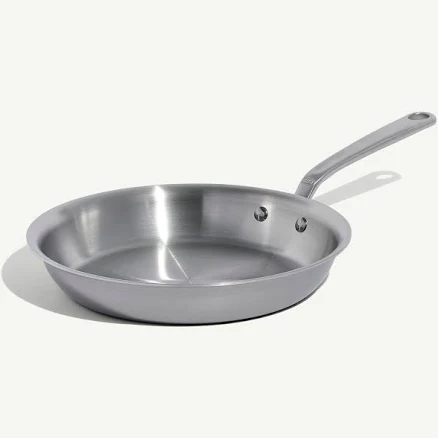
Made In
Stainless Clad Fry Pan
- Stainless steel clad construction, no nonstick coating
- The brand calls it PFAS-free, which we have not verified
- Clad separation or delamination over time
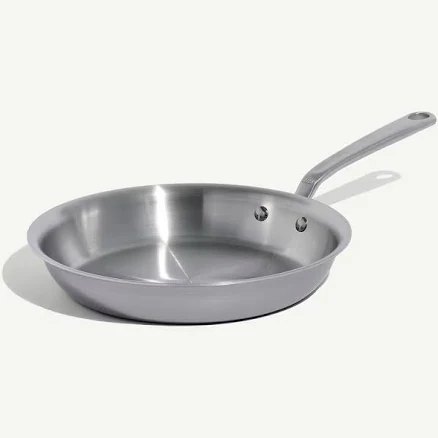
Made In
10' Stainless Clad Frying Pan
- stainless steel clad construction, no nonstick coating
- The brand calls it PFAS-free, which we have not verified
- Nickel leaching from stainless steel
3 hazards checked on this product. See all of them.
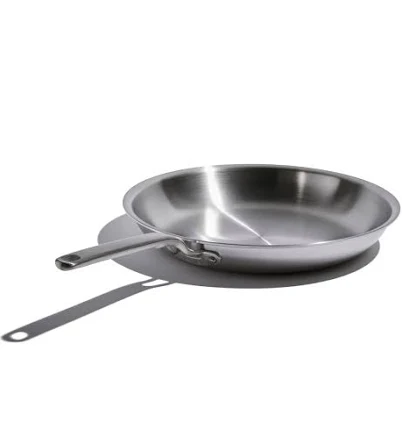
Heritage Steel
Eater Fry Pan
- Clad stainless steel, no coating
- The brand calls it PFAS-free, which we have not verified
- Metal ion release during cooking (iron, nickel, chromium)
More cookware grades
How we score, every product runs through the same public 0-100 rubric based on materials, coatings, brand disclosure, lab findings, and recalls. See the full methodology → Spotted a mistake? Report an error.