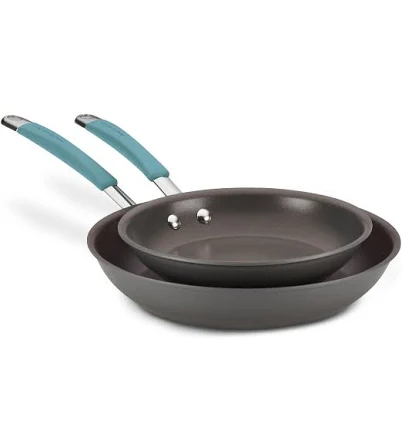
Rachael Ray Cucina Hard-Anodized Nonstick Twin Pack Skillet Set
Skip until brand discloses nonstick coating type and PFAS status.
Hard-anodized nonstick cookware with unidentified nonstick coating. Rachael Ray provides no PFAS disclosure or safety certifications; PFAS presence cannot be ruled out.
The better-graded swap
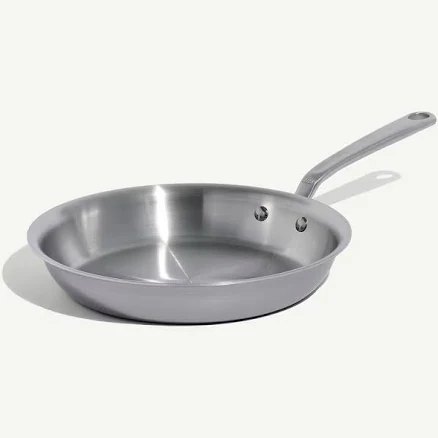
Made In
MADE IN 10' Stainless Clad Frying Pan
100/100 safety
Same rubric that flunked this product. The swap earned Excellent.
Still want this one anyway? Check the price on Amazon. We’d swap it.
Material
hard-anodized aluminum with nonstick coating, type unspecified
Brand disclosure
Brand is silent on PFAS
Lab data
No public lab test
Is Rachael Ray Cucina Hard-Anodized Nonstick non-toxic? What it is made of
This product uses hard-anodized aluminum as the base layer. Hard anodizing creates a dense oxide surface that is harder than the underlying aluminum and generally resists corrosion better than bare aluminum. The nonstick coating type is not specified in available product information, which is a critical gap since modern nonstick can be either Teflon-family coating-based (Teflon-type coating-class) or ceramic or hybrid formulations, each with different thermal stability and degradation profiles.
What’s concerning
Category baseline
The starting point for this type of product, before anything specific to this product is counted.
No PFAS disclosure
No public statement from the brand about PFAS in this product.
Non-stick, chemistry undisclosed
Marketed as non-stick without stating the coating chemistry.
Teflon-type coating fume risk (if Teflon-family coating nonstick)
If the coating is Teflon-type coating-based (not disclosed), overheating above 500F can release Teflon-family coating fumes. Brand silence on coating type and safe temperature limits makes risk assessment impossible; this is the primary reason for the 'care' tier.
Aluminum leaching
Hard anodizing reduces but does not eliminate aluminum migration into acidic foods. Risk is lower than bare aluminum but persists. Cooking tomatoes, vinegar-based dishes, or highly acidic foods for extended periods may increase leaching.
Nonstick coating degradation over time
Budget-tier nonstick coatings on mass-market aluminum cookware typically degrade after 1-3 years of regular use, especially with dishwasher use. Flaking or visible wear requires immediate replacement to avoid ingesting coating particles.
What’s reassuring
Lead
Hard anodizing itself does not use lead or cadmium in modern manufacturing. No recalls or testing data for Rachael Ray Cucina products on record for heavy metals in the anodized surface.
Source, ATSDR ↗The full breakdown
The brand's record and disclosure
Rachael Ray cookware has no published material safety certifications or independent third-party testing readily available. The brand has not publicly disclosed whether its nonstick coatings contain PFOA, PFOS, or other PFAS "forever chemicals" (PFAS), nor has it provided thermal safety limits or composition details on retailer sites or company documentation. This silence is notable given that major competitors (T-fal, Calphalon, Le Creuset) have made some level of public PFAS commitment or certification claims.
How it compares in its category
Hard-anodized aluminum nonstick skillets are mid-range in the cookware market. They sit below premium brands (All-Clad, Staub, Le Creuset) that disclose coating composition, and roughly level with mass-market brands (Calphalon, T-fal) that similarly vary in transparency. The twin-pack format at budget pricing suggests cost-optimized coating and durability; hard anodizing itself is a responsible base-layer choice that reduces direct aluminum contact with food.
If you buy it
Use on medium heat or below and avoid preheating empty. Hand wash only; dishwasher use accelerates nonstick degradation and anodized surface wear. Replace the set if the nonstick coating begins to flake, peel, or discolor with use, as this signals breakdown of the protective layer. Store with paper towels between skillets to prevent coating contact damage and extend usable life.
What we don’t know
- Basis
- Model estimate, 35% confidence, not a lab result
- Lab test
- None on record for this exact product
- Brand statement
- Rachael Ray has made none
Formulations change between production runs, so check the current label. How we grade.
Better-graded alternatives in Cookware
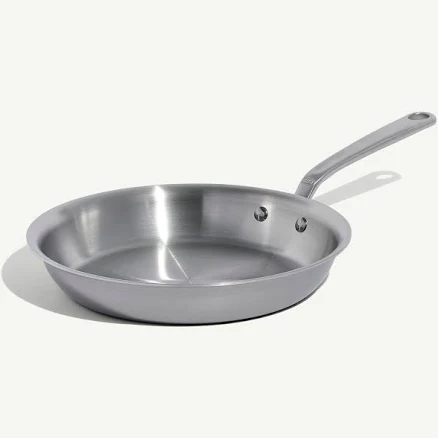
Made In
Stainless Clad Fry Pan
- Stainless steel clad construction, no nonstick coating
- The brand calls it PFAS-free, which we have not verified
- Clad separation or delamination over time
Made In
10' Stainless Clad Frying Pan
- stainless steel clad construction, no nonstick coating
- The brand calls it PFAS-free, which we have not verified
- Nickel leaching from stainless steel
3 hazards checked on this product. See all of them.
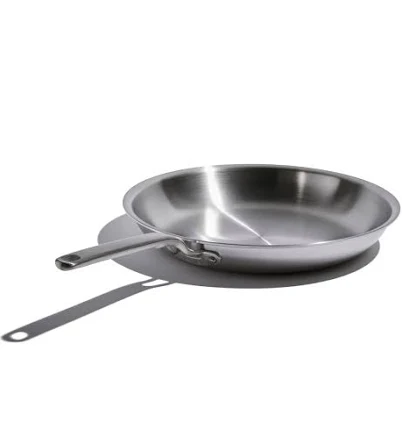
Heritage Steel
Eater Fry Pan
- Clad stainless steel, no coating
- The brand calls it PFAS-free, which we have not verified
- Metal ion release during cooking (iron, nickel, chromium)
More cookware grades
How we score, every product runs through the same public 0-100 rubric based on materials, coatings, brand disclosure, lab findings, and recalls. See the full methodology → Spotted a mistake? Report an error.