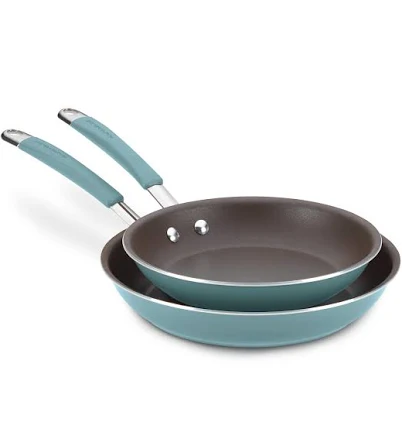
Rachael Ray Cucina Nonstick Skillet Set
Nonstick composition unknown. Avoid until brand discloses coating type.
Rachael Ray does not specify whether this nonstick cookware uses Teflon-type coating, Teflon-family coating, or alternative coatings. Without disclosure, PFAS risk cannot be ruled out.
The better-graded swap
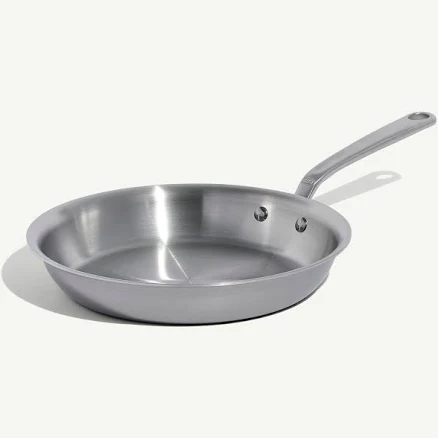
Made In
Made In Stainless Clad Fry Pan
100/100 safety
Same rubric that flunked this product. The swap earned Excellent.
Still want this one anyway? Check the price on Amazon. We’d swap it.
Material
Nonstick coating, composition unspecified
Brand disclosure
Brand is silent on PFAS
Lab data
No public lab test
Is Rachael Ray Cucina Nonstick Skillet Set non-toxic? What it is made of
Rachael Ray Cucina skillets use a proprietary nonstick coating whose exact chemical composition Rachael Ray has not publicly disclosed. The cookware substrate is typically hard-anodized aluminum with the nonstick layer applied on top. Without knowing whether the coating is Teflon-type coating-based (traditional Teflon-type), ceramic, or a hybrid formulation, you cannot fully assess whether heating above certain thresholds poses fume risk or what degradation byproducts may leach into food over time.
What’s concerning
Category baseline
The starting point for this type of product, before anything specific to this product is counted.
No PFAS disclosure
No public statement from the brand about PFAS in this product.
Non-stick, chemistry undisclosed
Marketed as non-stick without stating the coating chemistry.
Teflon-type coating fume risk (inhalation hazard when overheated)
If this line uses traditional Teflon-type coating, overheating above 500°F can release polymer fume inhalation hazard (Teflon-type coating fume fever). Rachael Ray's refusal to disclose coating type means you cannot rule this out. Risk is low if you follow temperature guidelines, but unconfirmed composition prevents full reassurance.
Coating degradation and particle shedding
Nonstick coatings on cookware degrade over 2-5 years with normal use; flaking has been documented in consumer reviews of Rachael Ray cookware. Ingested coating particles are considered low-risk by most agencies, but degradation also indicates aluminum substrate may begin leaching into acidic foods.
Aluminum leaching into food
Hard-anodized aluminum cookware is generally resistant to leaching, but once the nonstick layer chips or wears, direct contact with acidic foods (tomato sauce, citrus, vinegar) can mobilize aluminum into meals. Risk increases with age and coating damage.
Manufacturing defects or coating adhesion failure
Consumer complaints exist regarding uneven nonstick application and premature flaking in some Rachael Ray cookware batches. This suggests inconsistent quality control, which correlates with higher risk of accelerated degradation and particle shedding.
What’s reassuring
Lead
No recalls or test results on record for Rachael Ray Cucina skillets involving heavy metals in external enamels or printed designs. However, the brand has not published third-party lead/cadmium testing data for this line, so absence of reports does not confirm safety.
Source, ATSDR ↗The full breakdown
The brand's record and disclosure
Rachael Ray (owned by Groupe SEB) has not issued public statements about PFAS content, PFOA phase-out timelines, or coating composition for this line. The brand does not appear on lists of cookware manufacturers with explicit PFOA-free certifications or third-party testing transparency. This silence is notable in an industry where competitors increasingly disclose coating type and PFAS status to address consumer concerns about fluorinated coatings.
How it compares in its category
Rachael Ray Cucina is mid-market nonstick cookware positioned between budget brands and premium lines like Caraway or Our Place, which do disclose PFAS-free or ceramic alternatives. Most nonstick cookware in this price range uses Teflon-type coating-based coatings with similar opacity about composition. The lack of disclosure is less defensible than brands that have voluntarily shifted to ceramic or provided detailed safety datasheets.
If you buy it
Keep heat below 350-375°F to minimize any potential fume release if the coating is Teflon-type coating. Replace the skillet if the nonstick surface chips, flakes, or visibly degrades, as this accelerates leaching of coating particles and substrate aluminum. Hand-wash only (dishwasher use voids most nonstick warranties and speeds coating breakdown). Store without stacking heavy items on top, and avoid metal utensils that accelerate wear.
What we don’t know
- Basis
- Model estimate, 35% confidence, not a lab result
- Lab test
- None on record for this exact product
- Brand statement
- Rachael Ray has made none
Formulations change between production runs, so check the current label. How we grade.
Better-graded alternatives in Cookware
Made In
Stainless Clad Fry Pan
- Stainless steel clad construction, no nonstick coating
- The brand calls it PFAS-free, which we have not verified
- Clad separation or delamination over time
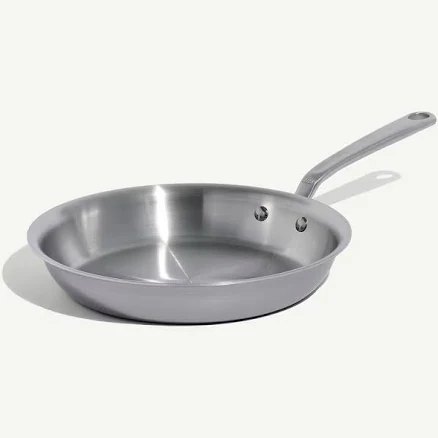
Made In
10' Stainless Clad Frying Pan
- stainless steel clad construction, no nonstick coating
- The brand calls it PFAS-free, which we have not verified
- Nickel leaching from stainless steel
3 hazards checked on this product. See all of them.
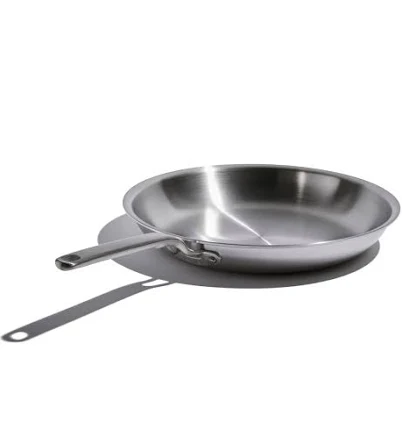
Heritage Steel
Eater Fry Pan
- Clad stainless steel, no coating
- The brand calls it PFAS-free, which we have not verified
- Metal ion release during cooking (iron, nickel, chromium)
More cookware grades
How we score, every product runs through the same public 0-100 rubric based on materials, coatings, brand disclosure, lab findings, and recalls. See the full methodology → Spotted a mistake? Report an error.