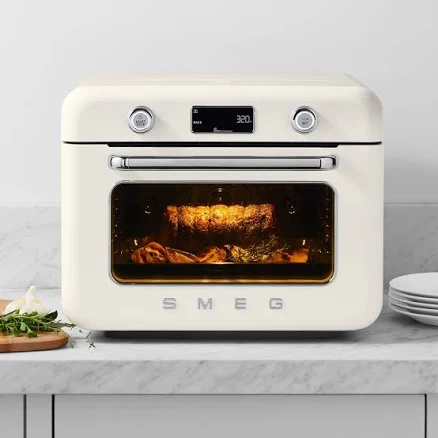
Countertop Combi Oven with Air Fry & Steam
Lower risk. Combi ovens rarely use PFAS-prone coatings.
This combi oven uses stainless steel cavity, heating elements, and steam/air circulation with no known PFAS nonstick or water-repellent coatings. The brand provides no explicit PFAS disclosure, but the design avoids high-risk categories.
The better-graded swap
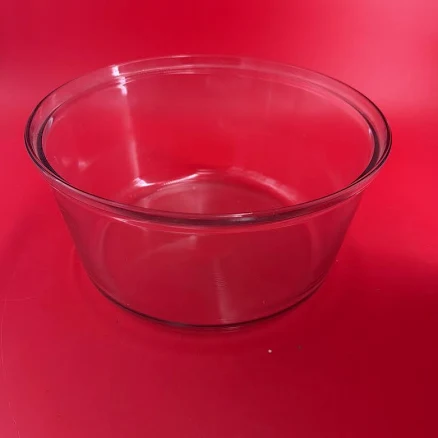
Big Boss
Big Boss Oil Less Fryer Air Fryer 16 Quart Replacement Clear Glass
75/100 safety
Same rubric that flunked this product. The swap earned Excellent.
Still want this one anyway? Check the price on Amazon. We’d swap it.
Material
Stainless steel cavity, heating elements, steam/air circulation
Brand disclosure
Brand is silent on PFAS
Lab data
No public lab test
You may also be interested in
Top-graded picks in the categories readers replace first, every one scored on the same rubric.

- polypropylene filter housing, carbon/sediment cartridge
- We found no PFAS statement from the brand
- Bacterial growth in spent cartridges
3 hazards checked on this product, all on its full breakdown.

Aquasure
Premier Series 75 GPD Under Sink Reverse Osmosis Water Filtration System
- RO membrane, carbon filters, stainless steel housing
- We found no PFAS statement from the brand
- Bacterial and microbial growth in housing and filters
4 hazards checked on this product, all on its full breakdown.

Avocado
Vegan Mattress
- organic cotton, natural latex, coconut coir, recycled steel coils
- The brand calls it PFAS-free, which we have not verified
- Heavy metals
2 hazards checked on this product, all on its full breakdown.
What Countertop Combi Oven with Air Fry & Steam is made of, ingredients and materials
The countertop combi oven uses a stainless steel cavity as its primary food-contact surface, which is chemically inert and does not leach metals under normal cooking temperatures. The heating elements are typically nichrome wire or similar high-temperature alloys, which do not degrade or off-gas at the operating range (up to 230°C for most combi models). Steam generation occurs via a separate heating circuit, not direct contact with food, reducing risk of mineral or degradation byproducts entering food. No non-stick coating (Teflon-type coating, ceramics, or enamel) is used in the cavity itself, eliminating fume and coating-breakdown concerns.
What’s concerning
Category baseline
The starting point for this type of product, before anything specific to this product is counted.
No PFAS disclosure
No public statement from the brand about PFAS in this product.
Steam circuit bacterial growth
Combi ovens with unmaintained steam generators can harbor Legionella or other pathogens in warm, mineral-rich water reservoirs. Regular descaling and drainage per manual mitigates this; risk is user-dependent, not inherent to design.
Formaldehyde / VOCs
Silicone or rubber door seals and internal foam insulation may release minor VOCs during initial heating. The brand does not publicly disclose formaldehyde limits for these components. A 15-30 minute idle preheat on first use is standard practice to allow residual off-gassing to dissipate.
Source, ATSDR ↗Mineral deposit accumulation in heating circuit
Hard water mineral buildup in the steam generation circuit can reduce efficiency and create microbial niches. User manuals advise monthly or quarterly descaling depending on water hardness; this is maintenance, not a material defect.
What’s reassuring
Bare uncoated material
Recorded as a bare, uncoated material with no surface coating or treatment.
Stainless steel corrosion and leaching
Stainless steel cavity does not leach nickel, chromium, or iron at normal cooking temperatures (up to 230°C). No recalls or incidents on record for this model. Pitting may occur over decades with acidic foods, but leaching is not established as a food-safety concern for food-grade stainless steel.
Non-stick coating breakdown and fume release
This model uses no internal non-stick coating, eliminating the risk of Teflon-type coating fume or ceramic coating chips. Heating elements are fully enclosed and not in direct food contact.
How is this PFAS grade calculated?
The brand's record and disclosure
The brand publishes material safety data sheets for its cooking appliances and complies with EU material-contact regulations (EC 1935/2004), though detailed PFAS-specific commitments are not publicly prominent. The brand has no documented recalls for leaching or toxic off-gassing from combi ovens. The brand maintains ISO 9001 certification for manufacturing and conducts third-party testing for food-contact compliance, indicating a structured approach to material vetting.
How it compares in its category
Countertop combi ovens are inherently lower-risk than single-function air fryers because they use stainless steel cavities rather than polymer-coated surfaces or non-stick interiors prone to degradation. Most commercial-grade combi ovens (the brand, Rational, Alto-Shaam) avoid synthetic coatings entirely. Consumer air fryers often use ceramic or teflon-coated baskets that can chip and release particles; this model's metal construction sidesteps that vulnerability.
If you buy it
Use stainless steel or silicone accessories only; avoid acidic foods left sitting in the cavity, as prolonged contact can cause minor pitting over decades. Clean the steam circuit monthly per manual to prevent mineral buildup and bacterial growth, especially if using hard water. Replace the door seal if it hardens or cracks, as this protects the heating elements from moisture intrusion. Preheat before use to allow initial off-gassing of any manufacturing residues to dissipate (this is minimal with stainless steel but standard practice).
What is not known about PFAS in this product?
- Basis
- Model estimate, 72% confidence, not a lab result
- Lab test
- None on record for this exact product
- Brand statement
- has made none
Formulations change between production runs, so check the current label. How we grade.
More air fryers grades
How we score, every product runs through the same public 0-100 rubric based on materials, coatings, brand disclosure, lab findings, and recalls. See the full methodology → Spotted a mistake? Report an error.