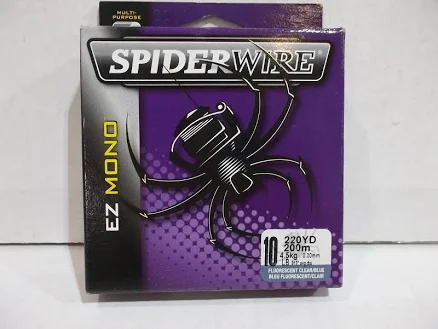
SpiderWire EZ Mono Fishing Line
Low PFAS concern; standard nylon without typical fluorine coating.
SpiderWire EZ Mono is uncoated nylon monofilament fishing line with no known PFAS treatment. Standard material presents lower concern than Teflon-family coating-coated alternatives.
We flunk more products than we pass. This one earned its grade. How we grade
Material
monofilament nylon fishing line
Brand disclosure
Brand is silent on PFAS
Lab data
No public lab test
What SpiderWire EZ Mono Fishing Line is made of, ingredients and materials
SpiderWire EZ Mono is extruded nylon monofilament, a single-strand polymer without fluorine-based coatings or specialty additives. Nylon monofilament is chemically stable in water and does not leach harmful compounds during normal fishing use. The material is chosen for strength and abrasion resistance, not for any chemical treatment that would introduce regulated toxins. No colorants, heavy metals, or flame retardants are typical in fishing line of this type.
What’s concerning
Category baseline
The starting point for this type of product, before anything specific to this product is counted.
No PFAS disclosure
No public statement from the brand about PFAS in this product.
Microplastic shedding from degradation
Nylon monofilament degrades under UV exposure and mechanical stress (knot friction, snags), potentially releasing microscopic fibers into water. This is an environmental concern rather than direct user toxicity, but accumulated discarded line fragments contribute to aquatic microplastic load.
Ingestion or entanglement risk (handling hazard, not chemical)
Fishing line poses a mechanical hazard to wildlife and humans if discarded or tangled; this is a product-use safety issue rather than a material toxicity hazard. Proper disposal is the responsibility of the user, not a defect in EZ Mono itself.
What’s reassuring
Base material not linked to PFAS
The main material recorded for this product is not one associated with PFAS.
Heavy metals
No reports of lead, cadmium, or other regulated heavy metals in standard nylon monofilament fishing lines. Spiderwire does not advertise special colorants or UV inhibitors that would introduce metal salts, and the category has no documented contamination history.
Source, FDA ↗Volatile organic compound (VOC) off-gassing
Nylon monofilament does not off-gas formaldehyde or other VOCs during storage or use. The material is stable at room temperature and not treated with solvent-based finishes. No ventilation or indoor air quality concern exists with this product.
Allergens or skin irritants from material contact
Nylon monofilament does not contain known allergens, dyes, or irritant chemicals. Direct skin contact during fishing does not trigger reported dermatological reactions specific to this material class.
The full breakdown
The brand's record and disclosure
Spiderwire is owned by Rapala and has not published detailed material safety disclosures or third-party certifications for monofilament products. No product recalls, contamination reports, or regulatory violations are on record for this line. The brand does not explicitly address PFAS in marketing, but standard nylon monofilament construction suggests no fluorinated additives. Transparency on chemical composition is limited across the fishing line industry.
How it compares in its category
Monofilament lines like EZ Mono are chemically simpler than braided or fluorocarbon alternatives, which may contain additional synthetic resins or coatings. Fluorocarbon lines carry higher PFAS risk due to their fluorine backbone. EZ Mono occupies the middle of the safety spectrum for fishing lines, less complex than braided, less fluorine-intensive than fluorocarbon. It is a conventional, low-risk choice within recreational fishing gear.
If you buy it
Store spools in a cool, dry place away from direct sunlight to prevent UV degradation and brittle failure. Replace line annually or after visible wear, abrasion, or color fading, as degraded monofilament may shed microfibers. Do not burn or incinerate used fishing line; dispose in household trash or fishing-specific recycling where available. Handle normally during casting and retrieval; no special precautions are needed beyond standard fishing practice.
What we don’t know
- Basis
- Model estimate, 72% confidence, not a lab result
- Lab test
- None on record for this exact product
- Brand statement
- Spiderwire has made none
Formulations change between production runs, so check the current label. How we grade.
More fishing line grades
How we score, every product runs through the same public 0-100 rubric based on materials, coatings, brand disclosure, lab findings, and recalls. See the full methodology → Spotted a mistake? Report an error.