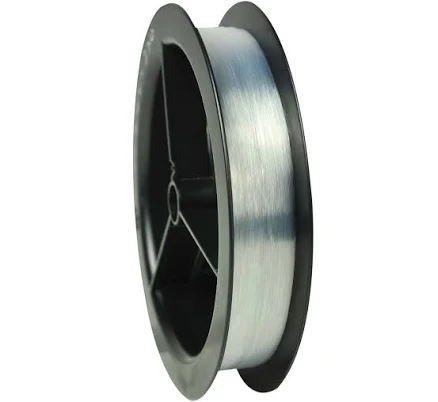
SpiderWire EZ Mono Monofilament Fishing Line
Monofilament nylon fishing line not linked to PFAS use.
SpiderWire EZ Mono is monofilament nylon fishing line. The material is not one associated with PFAS. The brand has no PFAS statement on record.
We flunk more products than we pass. This one earned its grade. How we grade
Material
Monofilament nylon fishing line
Brand disclosure
Brand is silent on PFAS
Lab data
No public lab test
What SpiderWire EZ Mono Monofilament Fishing is made of, ingredients and materials
SpiderWire EZ Mono is extruded nylon monofilament, a single continuous polymer strand used for angling. Nylon monofilament does not rely on coatings, glazes, or chemical binders that leach into food or skin, making the material class inherently low-risk for the hazards that affect cookware, cosmetics, or textiles. The polymer itself is stable under normal fishing conditions (freshwater, saltwater, sunlight exposure) and does not off-gas volatile compounds or degrade into microplastics fragments at the scale or speed seen in food-storage plastics.
What’s concerning
Category baseline
The starting point for this type of product, before anything specific to this product is counted.
No PFAS disclosure
No public statement from the brand about PFAS in this product.
Nylon polymer degradation and microfiber shedding
Extended UV exposure or mechanical wear can fragment monofilament into microfibers; shedding into aquatic environments is an environmental concern, not a direct consumer ingestion hazard, as the user does not ingest the line or handle it closely enough for dermal exposure to pose risk.
What’s reassuring
Base material not linked to PFAS
The main material recorded for this product is not one associated with PFAS.
Additive toxicity (UV stabilizers, colorants)
Spiderwire does not disclose UV-stabilizer or pigment formulations; standard nylon fishing line typically uses common stabilizers (e.g., hindered amine light stabilizers) that are not classified as hazardous at the doses used in polymers, but independent testing of this specific product is not publicly available.
Choking or aspiration hazard (packaging or product design)
The line itself is not a choking hazard for adults; packaging is a standard plastic spool with no small-parts risk. No design defect or recall history is on record.
Heavy metals
Monofilament line may be dyed (e.g., green, clear, hi-vis yellow); standard colorants used in nylon extrusion do not typically contain lead or cadmium, but formulation transparency is low and independent testing of pigment safety for this product is not available.
Source, FDA ↗The full breakdown
The brand's record and disclosure
Spiderwire (owned by Pure Fishing, a subsidiary of Newell Brands) does not publish detailed material safety data sheets or third-party certifications for monofilament fishing line, which is typical for the fishing-tackle industry. No significant recalls, manufacturing controversies, or documented chemical safety complaints are on public record for this product line. The brand markets durability and UV resistance as selling points but does not disclose additive formulations such as UV-stabilizer chemistry.
How it compares in its category
Monofilament fishing line has lower concern for certain exposure routes in consumer outdoor products because it is not ingested, worn against skin for extended periods, or heated in food preparation. Alternatives such as braided polyethylene or fluorocarbon lines carry the same low-hazard profile. Unlike textiles or cookware, fishing line does not accumulate in the body or leach into consumables, and minor fraying or microfiber shedding into aquatic environments is a separate environmental concern unrelated to direct consumer safety.
If you buy it
Store the line in a cool, dry place away from direct sunlight to slow UV degradation and maintain flexibility; nylon becomes brittle when exposed to prolonged heat or UV, reducing performance rather than creating a safety hazard. Inspect the line visually before each use for fraying, weak spots, or clouding, and replace it annually or after heavy use to prevent breakage during casting. After saltwater fishing, rinse the spool with fresh water and allow it to dry completely to prevent mold or corrosion of the spool itself (not the line). Dispose of spent line responsibly by placing it in sealed trash rather than recycling, as it is not accepted in standard curbside programs.
What we don’t know
- Basis
- Model estimate, 72% confidence, not a lab result
- Lab test
- None on record for this exact product
- Brand statement
- Spiderwire has made none
Formulations change between production runs, so check the current label. How we grade.
More fishing line grades
How we score, every product runs through the same public 0-100 rubric based on materials, coatings, brand disclosure, lab findings, and recalls. See the full methodology → Spotted a mistake? Report an error.