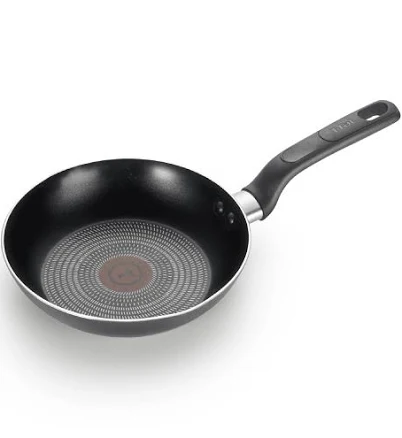
T-Fal Easy Care Nonstick Fry Pan
T-Fal uses Teflon-type coating nonstick; brand silent on PFAS composition.
T-Fal Easy Care pans use traditional Teflon-type coating nonstick coating, a known Teflon-family coating. The brand makes no PFAS disclosure or third-party verification available.
The better-graded swap
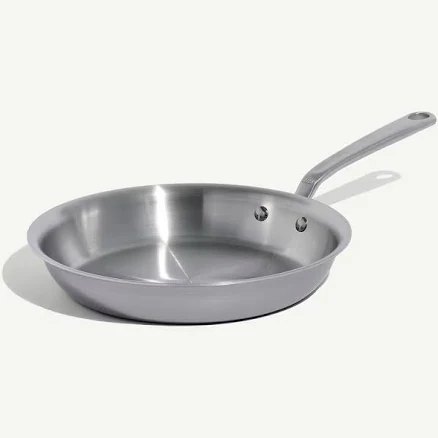
Made In
MADE IN 10' Stainless Clad Frying Pan
100/100 safety
Same rubric that flunked this product. The swap earned Excellent.
Still want this one anyway? Check the price on Amazon. We’d swap it.
Material
Teflon-type coating nonstick Teflon-family coating
Lab data
No public lab test
Is T-Fal Easy Care Nonstick Fry Pan non-toxic? What it is made of
T-Fal Easy Care uses Teflon-type coating (polytetrafluoroethylene), a Teflon-family coating applied to an aluminum base. Teflon-type coating itself is chemically inert at normal cooking temperatures but degrades above 500°F (260°C), releasing fumes that can cause polymer fume fever in humans and harm pet birds at lower temperatures. The aluminum substrate underneath is not directly food-contact in intact coating but becomes relevant if the nonstick surface chips or wears away.
What’s concerning
PTFE / Teflon confirmed
Uses Teflon-type coating (Teflon), a Teflon-family coating in the PFAS family.
Category baseline
The starting point for this type of product, before anything specific to this product is counted.
No PFAS disclosure
No public statement from the brand about PFAS in this product.
Teflon-type coating thermal decomposition and fume inhalation
Heating Teflon-type coating above 500°F (260°C) releases perfluorooctanoic acid (PFOA) precursors and other fluorinated gases; acute exposure causes polymer fume fever (reversible). Risk is real but preventable with low-to-medium heat discipline on cooktops.
Coating degradation and aluminum exposure
Scratched or peeling Teflon-type coating exposes underlying aluminum; aluminum leaching increases with acidic foods, presenting a lower concern at typical ingestion levels. No acute toxicity is documented at typical exposures, but long-term chronic ingestion remains a data gap.
Nonstick coating wear and microparticle shedding
Repeated use and washing cause microscopic Teflon-type coating particles to shed into food, especially if coating is damaged. Ingested Teflon-type coating particles are generally considered non-bioavailable, but swallowing visible coating flakes warrants pan replacement.
PFAS
T-Fal does not disclose whether Teflon-type coating contains GenX, PFBS, or legacy PFOA alternatives. Generic Teflon-type coating is considered lower-risk than some PFAS replacements, but specific formulation is proprietary and unverified.
Source, ATSDR ↗What’s reassuring
Lead
T-Fal Easy Care uses Teflon-type coating on bare or primed aluminum, not ceramic glaze, so lead/cadmium glazing hazards do not apply to this product.
Source, ATSDR ↗The full breakdown
The brand's record and disclosure
T-Fal (Groupe SEB) does not publicly disclose PFAS composition or phase-out timelines for its Teflon-type coating cookware lines, despite growing industry pressure. The company has not pursued alternative nonstick technologies (ceramic, hard-anodized) as widely as some competitors, nor does it publish independent safety testing results. No major recalls or contamination incidents are on public record for this specific product line.
How it compares in its category
Teflon-type coating nonstick remains the category standard for affordability and nonstick performance, but T-Fal sits mid-market. Premium alternatives (Le Creuset cast iron, All-Clad stainless) avoid Teflon-type coating entirely. Budget ceramic nonstick and hard-anodized aluminum options are comparable in price but carry different trade-offs (ceramic durability, hard-anodized slower heating). T-Fal's value proposition relies on Teflon-type coating, making transparency a competitive weakness.
If you buy it
Keep stovetop temperature at medium or below; never exceed 400°F (204°C) to avoid Teflon-type coating decomposition. Replace if coating visibly chips, peels, or flakes. Hand-wash only (dishwasher degrades coating faster). Never preheat empty or use metal utensils. If you cook frequently at high heat or own pet birds, choose non-Teflon-type coating cookware instead. Expected lifespan is 2-4 years with proper care before replacement reduces potential aluminum leaching.
What we don’t know
- Basis
- Model estimate, 82% confidence, not a lab result
- Lab test
- None on record for this exact product
- Brand statement
- T-fal has made a specific claim
Formulations change between production runs, so check the current label. How we grade.
Better-graded alternatives in Cookware
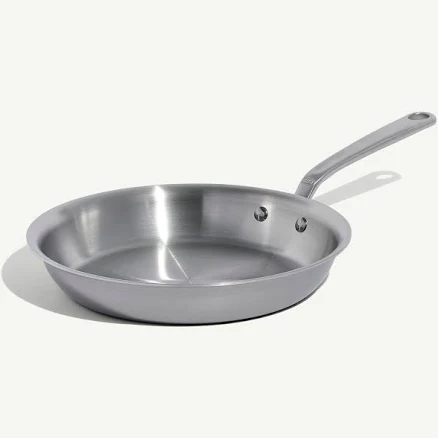
Made In
Stainless Clad Fry Pan
- Stainless steel clad construction, no nonstick coating
- The brand calls it PFAS-free, which we have not verified
- Clad separation or delamination over time
Made In
10' Stainless Clad Frying Pan
- stainless steel clad construction, no nonstick coating
- The brand calls it PFAS-free, which we have not verified
- Nickel leaching from stainless steel
3 hazards checked on this product. See all of them.
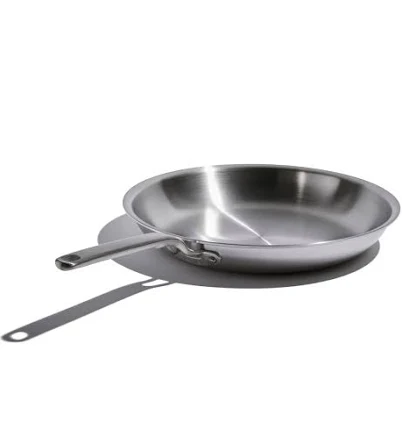
Heritage Steel
Eater Fry Pan
- Clad stainless steel, no coating
- The brand calls it PFAS-free, which we have not verified
- Metal ion release during cooking (iron, nickel, chromium)
More cookware grades
How we score, every product runs through the same public 0-100 rubric based on materials, coatings, brand disclosure, lab findings, and recalls. See the full methodology → Spotted a mistake? Report an error.