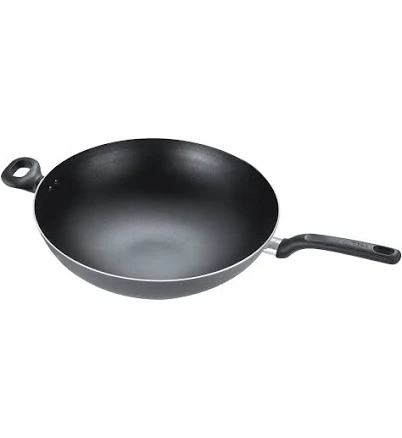
T-fal Easy Care Nonstick Wok 14.25 inch, Is It Non-Toxic?
Traditional Teflon-type coating non-stick wok; higher PFAS concern than ceramic or stainless alternatives.
T-fal Easy Care uses conventional Teflon-type coating non-stick coating, a Teflon-family coating family historically associated with PFAS manufacturing. The brand makes no PFAS-related disclosures or claims.
The better-graded swap
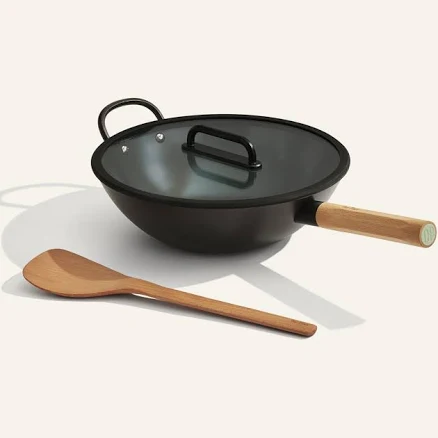
Our Place
Our Place Carbon Steel Wok
100/100 safety
Same rubric that flunked this product. The swap earned Excellent.
Still want this one anyway? Check the price on Amazon. We’d swap it.
Material
Teflon-type coating nonstick coating on aluminum base
Lab data
No public lab test
You may also be interested in
Top-graded picks in the categories readers replace first, every one scored on the same rubric.

- polypropylene filter housing, carbon/sediment cartridge
- We found no PFAS statement from the brand
- Bacterial growth in spent cartridges
3 hazards checked on this product, all on its full breakdown.

Aquasure
Premier Series 75 GPD Under Sink Reverse Osmosis Water Filtration System
- RO membrane, carbon filters, stainless steel housing
- We found no PFAS statement from the brand
- Bacterial and microbial growth in housing and filters
4 hazards checked on this product, all on its full breakdown.

Avocado
Vegan Mattress
- organic cotton, natural latex, coconut coir, recycled steel coils
- The brand calls it PFAS-free, which we have not verified
- Heavy metals
2 hazards checked on this product, all on its full breakdown.
Is T-fal Easy Care Nonstick Wok 14.25 inch non-toxic? What it is made of
T-fal Easy Care uses Teflon-type coating (polytetrafluoroethylene, DuPont's Teflon family) nonstick coating bonded to an aluminum base. Teflon-type coating itself is chemically stable at normal cooking temperatures (below 500F), but degradation and fume release accelerate sharply above 600F, which wok cooking can approach during high-heat stir-fry. The aluminum substrate can leach small amounts of metal into acidic foods, though at levels that pose lower concern for occasional exposure.
What’s concerning
Category baseline
The starting point for this type of product, before anything specific to this product is counted.
No PFAS disclosure
No public statement from the brand about PFAS in this product.
PTFE / Teflon confirmed
Uses Teflon-type coating (Teflon), a Teflon-family coating in the PFAS family.
Teflon-type coating thermal decomposition fume release
Teflon-type coating nonstick coatings release irritant gases (primarily fluorinated volatile organics) above 600F, a temperature reachable during wok stir-frying on high flame. This is an established hazard class, not specific failure of T-fal, but inherent to Teflon-type coating cookware.
Coating degradation and microparticle shedding
Repeated thermal cycling and mechanical contact can cause Teflon-type coating to flake or shed microscopic particles into food. T-fal does not publish durability data for this model; risk depends on user care and product batch variation.
Aluminum leaching
Acidic foods (tomato, citrus, vinegar) can mobilize aluminum from the uncoated base, especially if the Teflon-type coating develops micro-cracks. Levels are typically below regulatory concern thresholds but add cumulative exposure.
Teflon-type coating adhesion and manufacturing residues
T-fal does not disclose whether legacy PFOA or other processing aids remain in the coating or substrate. Modern Teflon-type coating formulations are PFOA-free in theory, but independent verification for this specific model is not available.
Aluminum handle or rivet corrosion from water/cleaning
If the wok has exposed aluminum in handle hardware or pop-rivets, extended water exposure or dishwasher use can cause pit corrosion and potential metal release; hand-wash guidance mitigates this.
How is this PFAS grade calculated?
The brand's record and disclosure
T-fal (Groupe SEB) does not publicly disclose Teflon-type coating formulation details, presence of legacy PFOA processing aids, or independent coating durability testing for this model. The brand has no known major recalls or safety controversies specific to this wok line, but maintains industry-standard silence on PFAS-related concerns. No third-party certifications (non-toxic, lead-free claims) are advertised on this product.
How it compares in its category
Teflon-type coating woks sit in the middle of the safety spectrum. Ceramic-coated and carbon-steel woks avoid synthetic polymers entirely but require seasoning and can chip. Stainless steel woks eliminate both coating risk and PFAS but heat unevenly and require more oil. T-fal's Teflon-type coating option trades chemical complexity for convenience; it is not a premium or differentiated safety choice within the category.
If you buy it
Never exceed medium-high heat (below 500F); use a stovetop thermometer if high-heat stir-fry is your goal, or switch to carbon steel for that use. Replace the wok within 3-5 years if the coating shows visible scratches, peeling, or discoloration. Hand-wash only and avoid metal utensils. Do not leave empty on heat and do not preheat longer than 2-3 minutes to minimize thermal stress on the coating.
What is not known about PFAS in this product?
- Basis
- Model estimate, 78% confidence, not a lab result
- Lab test
- None on record for this exact product
- Brand statement
- T-fal has made a specific claim
Formulations change between production runs, so check the current label. How we grade.
What are the PFAS-free alternatives to T-fal Easy Care Nonstick Wok 14.25 inch?
- carbon steel (bare metal, no coating)
- The brand calls it PFAS-free, which we have not verified
- Iron leaching from bare metal surface
2 hazards checked on this product, all on its full breakdown.
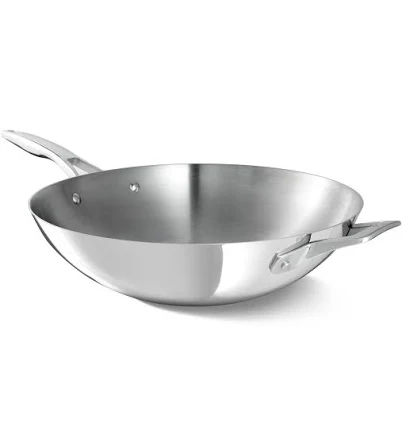
- Stainless steel with no nonstick coating
- Metal leaching (chromium, nickel, iron)
2 hazards checked on this product, all on its full breakdown.
Find an alternative on Amazon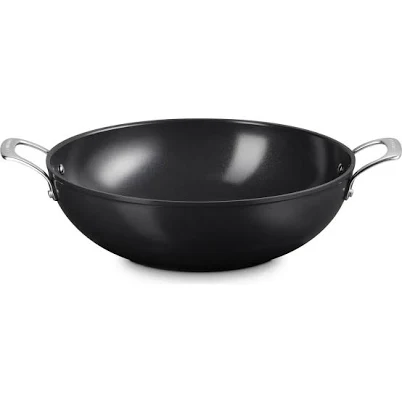
- ceramic non-stick coating (ceramic-type)
- The brand calls it PFAS-free, which we have not verified
- Ceramic coating degradation and substrate exposure
3 hazards checked on this product, all on its full breakdown.
More woks grades
How we score, every product runs through the same public 0-100 rubric based on materials, coatings, brand disclosure, lab findings, and recalls. See the full methodology → Spotted a mistake? Report an error.