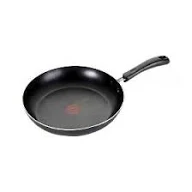
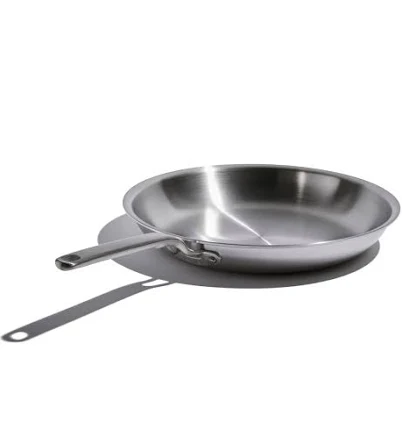
T-Fal Essentials Fry Pan
Teflon-type coating non-stick coating, disclosed by the brand.
T-fal lists this range among its products containing intentionally added PFAS and says its nonstick contains Teflon-type coating, a Teflon-family coating in the PFAS family.
The better-graded swap
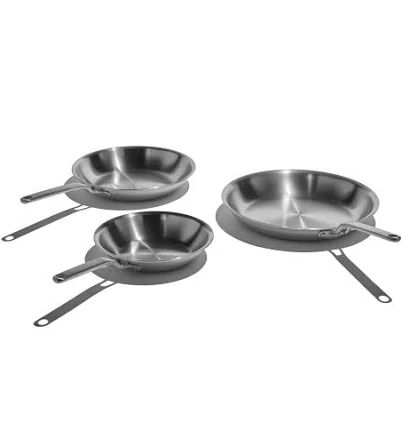
Heritage Steel
Eater x Heritage Steel 3 Piece Fry Pan Set
100/100 safety
Same rubric that flunked this product. The swap earned Excellent.
Still want this one anyway? Check the price on Amazon. We’d swap it.
Material
Teflon-type coating non-stick coating, as disclosed by T-fal for this range
Lab data
No public lab test
Is T-Fal Essentials Fry Pan non-toxic? What it is made of
T-Fal Essentials fry pans use Teflon-type coating (polytetrafluoroethylene), the synthetic polymer commonly called Teflon, bonded to an aluminum core. Teflon-type coating itself is stable at normal cooking temperatures but breaks down above 500°F (260°C), releasing gases that may contain fluorinated compounds. The aluminum substrate beneath the Teflon-type coating is typical for non-stick cookware and is not directly exposed during normal use if the coating remains intact.
What’s concerning
No PFAS disclosure
No PFAS-free statement from the brand for this product.
PTFE / Teflon confirmed
The brand discloses a Teflon-type coating.
Category baseline
The starting point for this type of product, before anything specific to this product is counted.
PFAS
Teflon-type coating coatings can emit fumes above 500°F; T-Fal does not specify a maximum safe temperature in most product literature. Risk is low during normal stovetop use below 400°F but increases significantly if pan is overheated or used on high direct heat without food or liquid.
Source, ATSDR ↗Aluminum leaching from substrate
If the Teflon-type coating cracks or wears through, the aluminum core may contact acidic foods. T-Fal does not disclose coating thickness or warranty against this, and no testing data for this specific model is on record. Leaching risk is low if coating remains intact and handling avoids mechanical damage.
Coating degradation and microparticle shedding
Teflon-type coating coatings wear over time, especially in budget non-stick lines; visible flaking or discoloration indicates coating breakdown. Once degraded, particles may shed into food. T-Fal provides no published durability testing or expected lifespan for the Essentials range.
Thermal shock and handle integrity
T-Fal Essentials are budget cookware with riveted or welded handles; no published data on handle retention or structural failure is on record. Thermal cycling from dishwasher or rapid cooling may stress handle attachment over years of use.
What’s reassuring
Lead
No recalls or test reports link T-Fal Essentials fry pans to heavy metal contamination in the Teflon-type coating or any visible enameled surfaces. Standard non-stick formulations do not typically contain lead or cadmium, but no brand-specific verification is on record for this product line.
Source, ATSDR ↗The full breakdown
The brand's record and disclosure
T-Fal discloses the Teflon-type coating in product specifications but has not publicly committed to PFAS phase-out or published testing data on fume emissions at temperature. The brand maintains general non-stick cookware care guidance but no transparency statements on PFAS alternatives or reformulation timelines are on record. This silence on PFAS stance is consistent with many mainstream non-stick cookware manufacturers and does not indicate unusual risk, only lack of proactive communication.
How it compares in its category
Teflon-type coating non-stick cookware remains the market standard and the T-Fal Essentials line is a budget-oriented competitor. Ceramic non-stick, stainless steel, and cast iron alternatives avoid Teflon-type coating entirely but trade convenience and require different care. Versus premium Teflon-type coating brands, T-Fal does not distinguish itself on durability claims or coating longevity; coating degradation over 2-5 years is typical across budget non-stick ranges.
If you buy it
Never exceed 400°F (204°C) on the stovetop and do not preheat empty; overheating is the primary risk for Teflon-type coating decomposition. Hand wash rather than dishwasher to extend coating life and avoid thermal shock. Inspect the non-stick surface every 6-12 months for flaking, discoloration, or peeling; discard the pan once degradation is visible because a damaged coating may not perform predictably. Use wooden or silicone utensils to prevent scratching.
What we don’t know
- Basis
- Model estimate, 35% confidence, not a lab result
- Lab test
- None on record for this exact product
- Brand statement
- T-fal has made a specific claim
Formulations change between production runs, so check the current label. How we grade.
Better-graded alternatives in Cookware
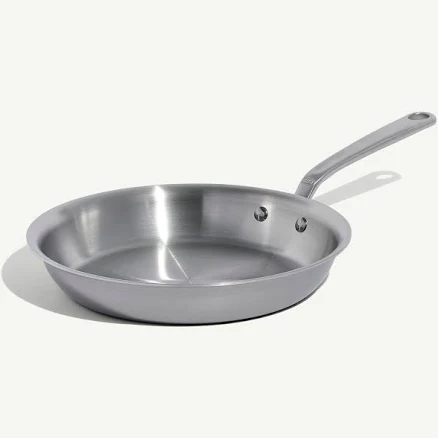
Made In
Stainless Clad Fry Pan
- Stainless steel clad construction, no nonstick coating
- The brand calls it PFAS-free, which we have not verified
- Clad separation or delamination over time
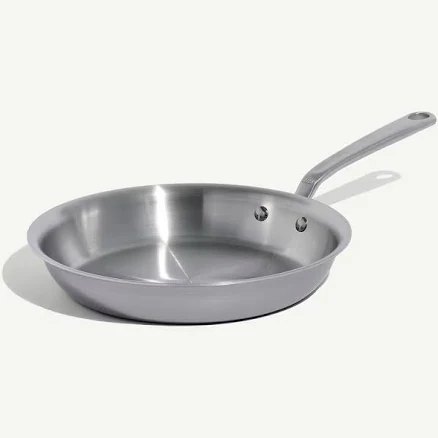
Made In
10' Stainless Clad Frying Pan
- stainless steel clad construction, no nonstick coating
- The brand calls it PFAS-free, which we have not verified
- Nickel leaching from stainless steel
3 hazards checked on this product. See all of them.
Heritage Steel
Eater Fry Pan
- Clad stainless steel, no coating
- The brand calls it PFAS-free, which we have not verified
- Metal ion release during cooking (iron, nickel, chromium)
More cookware grades
How we score, every product runs through the same public 0-100 rubric based on materials, coatings, brand disclosure, lab findings, and recalls. See the full methodology → Spotted a mistake? Report an error.