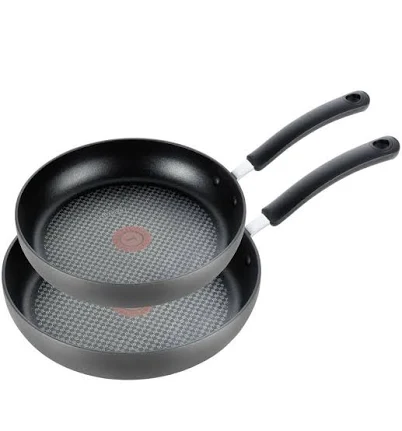
T-fal Ultimate Hard Anodized Nonstick Fry Pan Set
Teflon-type coating non-stick coating, disclosed by the brand.
T-fal lists this range among its products containing intentionally added PFAS and says its nonstick contains Teflon-type coating, a Teflon-family coating in the PFAS family.
The better-graded swap
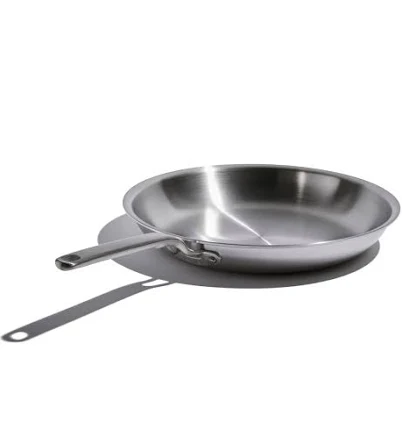
Heritage Steel
Heritage Steel Eater Fry Pan
100/100 safety
Same rubric that flunked this product. The swap earned Excellent.
Still want this one anyway? Check the price on Amazon. We’d swap it.
Material
Teflon-type coating non-stick coating, as disclosed by T-fal for this range
Lab data
No public lab test
Is T-fal Ultimate Hard Anodized Nonstick Fry non-toxic? What it is made of
T-fal Ultimate Hard Anodized uses hard-anodized aluminum as the base, which creates a durable oxide layer that reduces direct aluminum contact with food. The Teflon-type coating non-stick coating is applied over this base. Hard anodizing is more scratch-resistant than standard anodizing, which theoretically extends the life of the Teflon-type coating layer and reduces the risk of coating flaking into food. However, Teflon-type coating itself is the source of the PFAS hazard concern, independent of the aluminum substrate.
What’s concerning
No PFAS disclosure
No PFAS-free statement from the brand for this product.
PTFE / Teflon confirmed
The brand discloses a Teflon-type coating.
Category baseline
The starting point for this type of product, before anything specific to this product is counted.
Teflon-type coating thermal decomposition and fume release
Teflon-type coating coatings can decompose when heated above 500°F, releasing fluorinated gases. This product carries no special fume-suppression technology disclosed by the brand. Risk is user-controlled, strict temperature discipline reduces likelihood.
Coating degradation and particle ingestion
Teflon-type coating coatings wear with use and mechanical damage (scratches, high-heat hotspots). Hard anodizing reduces wear relative to standard non-stick, but no product-specific durability data is public. Visible flaking or peeling warrants discontinuation.
What’s reassuring
Aluminum leaching
The hard-anodized oxide layer provides a physical barrier between aluminum and food; leaching under normal cooking conditions (neutral to slightly acidic foods, moderate heat) is not a documented concern for anodized cookware. Prolonged contact with highly acidic foods at high heat is theoretically higher-risk but not established as a problem for this product.
Lead
This product uses Teflon-type coating non-stick, not enamel or ceramic glaze. Lead or cadmium concerns apply to glazed or enameled cookware, not this type.
Source, ATSDR ↗Handle integrity and heat transfer
No recalls or public complaints on record for handle failure or excessive heat conduction to handles in this product line. Standard cookware safety protocols apply (use handle covers, avoid contact with handles during cooking).
The full breakdown
The brand's record and disclosure
T-fal (Groupe SEB) discloses that this product uses Teflon-type coating non-stick coating but has not published a formal stance on PFAS reduction, phase-out plans, or alternative exploration. No major recalls specific to this cookware line for coating degradation or Teflon-type coating-related incidents are on record in public databases. The brand does not advertise third-party certifications (e.g., GREENGUARD) for this cookware range.
How it compares in its category
Teflon-type coating non-stick cookware remains common in mid-market cookware. Ceramic-coated alternatives exist but carry their own trade-offs (lower durability, easier scratching). Stainless steel without non-stick avoids Teflon-type coating but requires more fat and skilled technique. Hard-anodized bases are a standard durability upgrade; T-fal's use of this is typical for the price tier. No data suggests this product is an outlier in PFAS content relative to competing Teflon-type coating cookware.
If you buy it
Never heat the pan above 500°F (260°C); Teflon-type coating decomposition and fume release are documented above this threshold. Hand-wash rather than dishwasher to reduce coating wear. Inspect the cooking surface regularly for scratches, peeling, or discoloration. If the non-stick coating shows visible damage, discontinue use to avoid ingestion of coating particles. Use lower to medium heat; high heat is unnecessary and increases fume and degradation risk.
What we don’t know
- Basis
- Model estimate, 35% confidence, not a lab result
- Lab test
- None on record for this exact product
- Brand statement
- T-fal has made a specific claim
Formulations change between production runs, so check the current label. How we grade.
Better-graded alternatives in Cookware
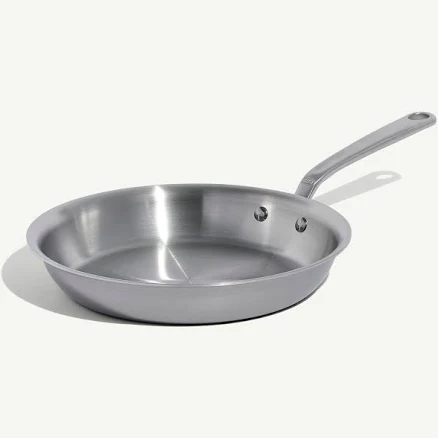
Made In
Stainless Clad Fry Pan
- Stainless steel clad construction, no nonstick coating
- The brand calls it PFAS-free, which we have not verified
- Clad separation or delamination over time
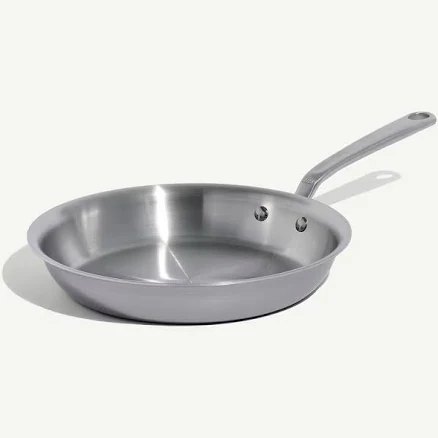
Made In
10' Stainless Clad Frying Pan
- stainless steel clad construction, no nonstick coating
- The brand calls it PFAS-free, which we have not verified
- Nickel leaching from stainless steel
3 hazards checked on this product. See all of them.
Heritage Steel
Eater Fry Pan
- Clad stainless steel, no coating
- The brand calls it PFAS-free, which we have not verified
- Metal ion release during cooking (iron, nickel, chromium)
More cookware grades
How we score, every product runs through the same public 0-100 rubric based on materials, coatings, brand disclosure, lab findings, and recalls. See the full methodology → Spotted a mistake? Report an error.