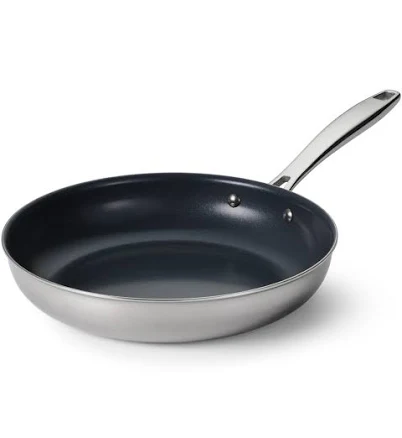
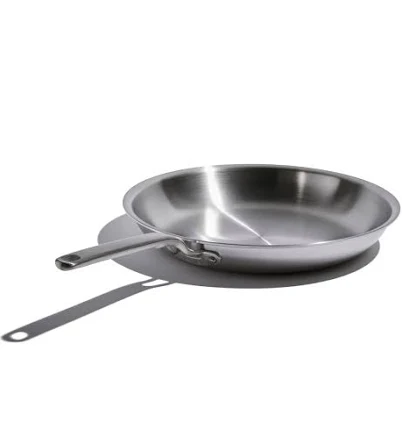
Tramontina Tri-Ply Clad Stainless Steel Ceramic Nonstick Fry Pan
Ceramic nonstick likely lower PFAS risk, but brand does not disclose coating details.
Tramontina markets this as ceramic nonstick, which typically avoids traditional Teflon-type coating/PFOA. However, the brand provides no public disclosure about PFAS absence or coating chemistry, leaving uncertainty about any auxiliary treatments.
The better-graded swap
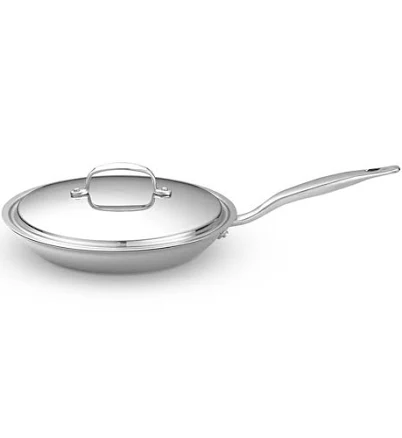
Heritage Steel
Heritage Steel 10.5" Fry Pan with Lid
100/100 safety
Same rubric that flunked this product. The swap earned Excellent.
Still want this one anyway? Check the price on Amazon. We’d swap it.
Material
Ceramic nonstick coating over stainless steel tri-ply
Lab data
No public lab test
Is Tramontina Tri-Ply Clad Stainless Steel non-toxic? What it is made of
This pan uses a ceramic nonstick coating applied over a stainless steel tri-ply base (typically stainless steel exterior and interior with aluminum or copper core for heat distribution). Ceramic coatings are inorganic, ceramic-type materials that do not contain Teflon-type coating (Teflon) or traditional fluorinated nonstick chemistry. However, the specific binder system, hardening agents, and any organosilicate additives in Tramontina's ceramic formula are not publicly disclosed, making independent assessment of the coating chemistry impossible. The stainless steel substrate has no hazard of this kind on record, but degradation of the ceramic layer over time can expose underlying materials to food and heat.
What’s concerning
Category baseline
The starting point for this type of product, before anything specific to this product is counted.
No PFAS disclosure
No public statement from the brand about PFAS in this product.
Non-stick, chemistry undisclosed
Marketed as non-stick without stating the coating chemistry.
Ceramic coating degradation and particle release
Ceramic nonstick coatings inherently degrade with use and heat cycling. As the coating chips or flakes, ceramic particles can enter food; long-term ingestion risk is unquantified but plausible. Tramontina does not publish durability or particle-shedding test data.
Lead
While FDA-regulated ceramic cookware sold in the US must pass lead leaching limits, Tramontina does not publicly disclose glaze testing or certification. Ceramic glazes in budget cookware lines can occasionally harbor trace lead or cadmium; independent testing is not available for this brand.
Source, ATSDR ↗Aluminum leaching from core (if exposed)
The tri-ply base likely includes aluminum for thermal conductivity. If the ceramic coating degrades significantly, aluminum can leach into acidic foods. This risk is low under normal use but increases with coating wear and improper cleaning.
What’s reassuring
Teflon-type coating/fluorine fume risk
Ceramic coatings do not contain Teflon-type coating, so traditional Teflon-type coating off-gassing (which occurs above 500 F) is not a hazard with this product. This is a genuine safety advantage over older nonstick technologies.
Coating binder or organosilicate chemical identity
Tramontina does not disclose whether the ceramic binder includes organosiloxanes, ceramic-type precursors, or other chemical additives. Without material composition data, potential off-gassing or leachables cannot be assessed. Brand silence on this point limits informed purchase confidence.
The full breakdown
The brand's record and disclosure
Tramontina is a Brazilian cookware manufacturer widely available in North America and Europe. The brand does not publish detailed material safety data sheets, coating composition, or third-party certifications (such as GOTS or FDA premarket notification summaries) for its ceramic nonstick lines. No significant recalls or public health warnings specific to Tramontina ceramic cookware have been documented in CPSC or health authority databases as of current public records. The company's silence on coating chemistry is consistent with many mid-market cookware brands but limits consumer ability to verify manufacturing standards or chemical sourcing.
How it compares in its category
Ceramic nonstick cookware sits between traditional Teflon-type coating-based nonstick (higher Teflon-type coating fume risk if overheated) and cast iron or stainless steel (no nonstick coating risk but higher maintenance). Compared to name-brand ceramic alternatives (e.g., Caraway, Our Place), Tramontina typically offers lower price point but also lower transparency on material sourcing and durability testing. Ceramic coatings are generally more brittle than Teflon-type coating and prone to chipping or wear within 2-5 years of regular use; Tramontina's tri-ply base is a strength, but long-term nonstick retention depends on coating quality not disclosed by the brand.
If you buy it
Keep heat below medium-high; ceramic coatings can degrade or release particles if subjected to prolonged high heat or rapid thermal shock. Hand wash only; dishwasher and abrasive scrubbers damage the coating faster. Inspect the coating regularly for chips, peeling, or dull spots; once degradation is visible, discontinue use to avoid ingesting ceramic particles or exposing food to underlying metal surfaces. Replace every 2-4 years depending on use frequency. Avoid acidic or alcohol-based foods for extended storage, as they may accelerate coating breakdown.
What we don’t know
- Basis
- Model estimate, 55% confidence, not a lab result
- Lab test
- None on record for this exact product
- Brand statement
- Tramontina has made a specific claim
Formulations change between production runs, so check the current label. How we grade.
Better-graded alternatives in Cookware
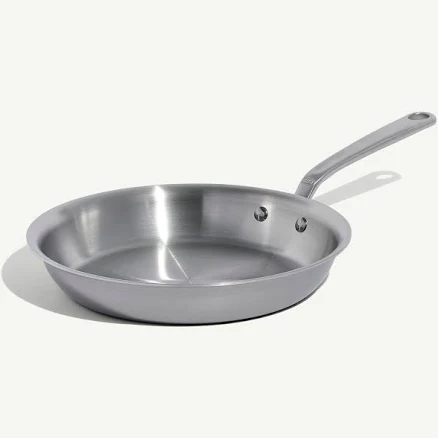
Made In
Stainless Clad Fry Pan
- Stainless steel clad construction, no nonstick coating
- The brand calls it PFAS-free, which we have not verified
- Clad separation or delamination over time
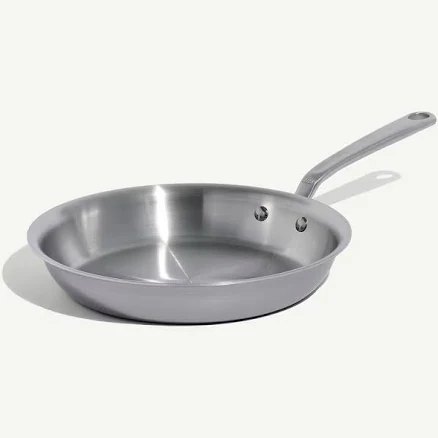
Made In
10' Stainless Clad Frying Pan
- stainless steel clad construction, no nonstick coating
- The brand calls it PFAS-free, which we have not verified
- Nickel leaching from stainless steel
3 hazards checked on this product. See all of them.
Heritage Steel
Eater Fry Pan
- Clad stainless steel, no coating
- The brand calls it PFAS-free, which we have not verified
- Metal ion release during cooking (iron, nickel, chromium)
More cookware grades
How we score, every product runs through the same public 0-100 rubric based on materials, coatings, brand disclosure, lab findings, and recalls. See the full methodology → Spotted a mistake? Report an error.