By PFAS Authority · Updated September 19, 2026
Top grades to buy

Aisle
Super Hipster
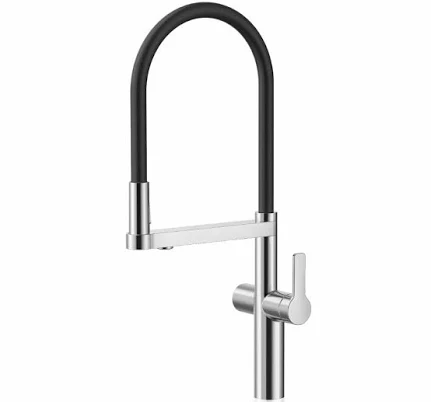
APEC Water Systems
APEC 2-in-1 Pull-Down Kitchen Faucet

Aquasure
Premier Series 75 GPD Under Sink Reverse Osmosis Water Filtration System
Model-based grades, not lab tests. We flunk more than we pass. How grading works
Is the EU Finally Getting Serious About PFAS in 2026?
On June 15, 2026, European Commissioner for Environment Jessika Roswall held high-level talks in Brussels on the growing crisis of PFAS, the "forever chemicals" that have contaminated water, soil, and everyday products across Europe. The discussions, hosted by the European Commission's environment directorate, focused on the scale of PFAS pollution and how the EU might phase out these persistent substances. It's a signal that regulators are treating PFAS not as a niche chemical issue, but as a widespread public health and environmental challenge.
For consumers, this comes as no surprise. PFAS Authority's own scoring of 10,952 products found that 41% fail our PFAS and toxin screen, a reminder that regulatory talk in Brussels is playing catch-up to a problem already sitting in millions of homes, closets, and kitchens.
What Happened in Brussels?
According to the European Commission's environment portal, Commissioner Roswall's meeting brought together stakeholders to discuss the extent of PFAS-related pollution and possible strategies for reducing or eliminating these chemicals from circulation. While the Commission's announcement did not detail specific new legislation, it framed the conversation as part of a broader EU effort to address PFAS contamination in water supplies, soil, and consumer products.
PFAS, per- and polyfluoroalkyl substances, are a family of thousands of synthetic chemicals prized for their resistance to water, grease, and stains. That same durability means they don't break down easily in the environment or the human body, earning them the "forever chemicals" nickname.
Who and What Is Affected?
PFAS pollution isn't confined to industrial sites. These chemicals show up in outdoor gear, cookware, cosmetics, and food packaging sold across Europe and beyond. Our own product testing illustrates just how widespread the problem is in specific categories. Based on published ingredient lists, material disclosures, and certifications, not laboratory testing, PFAS Authority found.
- 100% of 316 scored camping tents and tarps failed our screen
- 100% of 74 scored rain jackets failed
- 100% of 72 scored cycling rain jackets failed
- 100% of 15 scored sleeping bags failed
- 100% of 15 scored softshell jackets failed
These figures reflect products marketed as weatherproof or high-performance, categories where manufacturers have historically relied on PFAS-based coatings for water and stain resistance.
Transparency is also a widespread issue. Several major brands, including Cuisinart, Calphalon, The North Face, MAC, T-fal, Nike, Columbia, and Estée Lauder, currently disclose nothing about PFAS use in their products, according to our research. That lack of disclosure makes it difficult for shoppers to know what they're bringing into their homes, and it's part of why regulatory pressure like the discussions in Brussels matters.
Why Does This Matter to You?
Scientific studies have found associations between exposure to certain PFAS and health concerns, including changes in cholesterol levels, immune response, and other outcomes, though researchers caution these are associations, not proven causation in individuals. Because PFAS persist in the environment and accumulate in the body over time, even low-level, repeated exposure from multiple everyday sources is a concern that public health agencies and regulators are increasingly trying to address.
The EU's renewed attention to PFAS phase-out strategies suggests future restrictions could reshape which products are sold and how they're made. But regulatory change moves slowly, and in the meantime, the products already on store shelves and in your closet reflect the older, less-regulated landscape. That's why understanding what's currently in circulation, and making informed choices, remains squarely in consumers' hands.
What Can You Do Right Now?
You don't need to wait for new EU rules to start reducing your exposure. A few practical steps.
- Check before you buy. Use a tool like our product finder to see how specific rain jackets, tents, cookware, and other items score before adding them to your cart.
- Favor brands that disclose. Companies that publish ingredient and material information make it easier to avoid PFAS; those that stay silent leave you guessing.
- Be cautious with "waterproof" and "stain-resistant" labels. These marketing terms have historically been closely tied to PFAS treatments, especially in outdoor gear.
- Understand how scoring works. Our methodology explains how we evaluate products using published ingredients, materials, and certifications rather than independent lab testing, an important distinction when comparing our scores to other sources.
Bottom Line
The EU's high-level dialogue on PFAS signals growing political will to tackle forever chemicals at the source. But with 41% of scored products failing PFAS Authority's screen, and entire categories like tents, rain jackets, and sleeping bags showing 100% failure rates, the gap between policy discussions and store shelves remains wide. Until stronger rules take effect, informed shopping is your best defense; products that avoid PFAS-based treatments can be considered lower concern, though no product should be labeled outright "safe."
Frequently Asked Questions
What did Commissioner Roswall's meeting actually decide?
According to the European Commission's announcement, the June 2026 talks were a high-level dialogue on PFAS pollution and phase-out strategies. No specific new EU-wide law was announced at this stage; it was described as a discussion among stakeholders on the path forward.
Are all products with PFAS dangerous?
Not necessarily. PFAS exposure has been associated with certain health concerns in scientific studies, but this doesn't prove that any single product will cause harm. Products without PFAS-based treatments are generally considered lower concern, based on current science.
How does PFAS Authority know a product contains PFAS?
Our scores are based on published ingredient lists, material disclosures, and third-party certifications provided by brands and manufacturers, not independent laboratory testing. Full details are available in our methodology.
What else we were tracking around this
- Sep 20, 2026Is Indiana American Water's $150M PFAS Cleanup Enough to Protect Your Tap Water?
- Sep 19, 2026Is Europe's PFAS Restriction Finally Happening in 2026?
- Sep 19, 2026Are Wild Turkeys Safe to Eat in Maine? What the PFAS Warning Means for You
- Sep 18, 2026Does Your Makeup Contain "Forever Chemicals", and Should You Worry in 2026?
The latest PFAS news is updated daily.
Now check your own stuff
Search anything you own and get its PFAS grade in seconds.
Get the graded list, free
The products we score each week, and the best-graded alternative in every category.
No spam. Unsubscribe anytime.