By PFAS Authority · Updated September 20, 2026
Top grades to buy

Aisle
Super Hipster
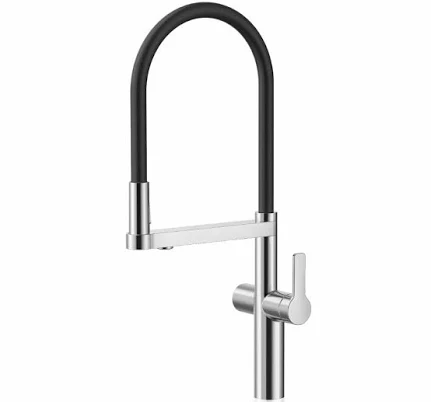
APEC Water Systems
APEC 2-in-1 Pull-Down Kitchen Faucet

Aquasure
Premier Series 75 GPD Under Sink Reverse Osmosis Water Filtration System
Model-based grades, not lab tests. We flunk more than we pass. How grading works
Is Indiana American Water's $150M PFAS Cleanup Enough to Protect Your Tap Water in 2025?
Indiana American Water has announced a $150 million plan to install PFAS treatment systems across its service areas, starting with a new plant in Charlestown, according to the Indianapolis Business Journal. The utility says the Charlestown facility is the first PFAS treatment plant in its own network, and the first anywhere in the state of Indiana. If you get your water from Indiana American Water, this is a big deal, but it also raises questions about timing, cost, and what you can do in the meantime.
What happened in Charlestown, Indiana?
According to the Indianapolis Business Journal, Indiana American Water is building a new treatment plant in Charlestown specifically designed to remove PFAS, the "forever chemicals" linked to nonstick cookware, firefighting foam, waterproof fabrics, and industrial discharge. The company has framed this as the opening move in a much larger, $150 million buildout that will bring similar PFAS treatment technology to other parts of its Indiana service territory over time. The utility has not laid out a full public timeline for every affected system, so customers outside Charlestown should watch for updates from the company and state regulators.
Who is affected by this PFAS treatment plan?
The immediate beneficiaries are Charlestown-area customers of Indiana American Water, a regional utility that serves communities throughout the state. Because this is described as the first PFAS treatment plant in Indiana, it also matters to anyone on a private well or a smaller municipal system nearby, PFAS contamination often shows up across a wider watershed than a single utility's footprint. If you're unsure whether your water provider is Indiana American Water or a different system, your water bill or your local utility's website will confirm it.
Why does PFAS in drinking water matter?
PFAS, or per- and polyfluoroalkyl substances, are a large family of synthetic chemicals that don't break down easily in the environment or in the human body. Health researchers have found associations between certain PFAS exposures and issues including changes in cholesterol levels, immune response, and other outcomes, though scientists caution these are associations observed in population studies, not proof that PFAS causes any specific illness in any one person. That uncertainty is part of why utilities and regulators are moving to reduce PFAS in drinking water even as the science continues to develop.
Water isn't the only place PFAS shows up in daily life. Our own scoring work at PFAS Authority looks at consumer products, and the pattern is striking, PFAS Authority's own scoring of 11,027 products found that 41% fail its PFAS and toxin screen. Some categories are far worse than the average our data shows camping tents and tarps, rain jackets, cycling rain jackets, sleeping bags, and softshell jackets all failing 100% of the products scored in each category. It's worth noting that we score products based on published ingredients, materials, certifications, and manufacturer disclosures, not laboratory testing, so a "fail" reflects what a brand has (or hasn't) disclosed about PFAS use, not a chemical measurement in our own lab.
What should you do while treatment plans roll out?
If you're an Indiana American Water customer, a few practical steps can help.
- Check the utility's consumer confidence report or website for PFAS test results specific to your service area, since levels can vary by location.
- Consider a home filtration system certified to reduce PFAS if you want extra reduction while the utility's treatment buildout continues; look for filters independently certified for PFAS reduction rather than general "purity" claims.
- Look beyond the tap. Since gear and cookware are common PFAS sources too, use our product finder to check specific brands and items, especially outdoor gear categories where our scoring found universal failure rates.
- Be cautious with brands that disclose nothing about PFAS in their products. In our scoring, Cuisinart, The North Face, Calphalon, MAC, T-fal, Nike, Columbia, and Adidas currently provide no public PFAS disclosure, which makes it harder for consumers to make informed choices.
How do we score products, and can I check my own gear?
PFAS Authority doesn't send products to a lab. Instead, we evaluate publicly available ingredient lists, material specifications, third-party certifications, and brand disclosures to flag likely PFAS content or data gaps. You can read the full breakdown of how scoring works on our methodology page, and search individual products or brands using the finder tool.
Bottom Line
Indiana American Water's $150 million PFAS treatment buildout, starting in Charlestown, is a meaningful step toward reducing forever chemicals in Indiana tap water, according to the Indianapolis Business Journal. But the rollout will take time to reach every community the utility serves, and drinking water is only one exposure pathway, everyday products like rain jackets, tents, and cookware remain a significant, often undisclosed, source of PFAS. Checking your water utility's reporting and screening your household products are both reasonable steps while broader fixes are built out.
Frequently Asked Questions
Is my water automatically PFAS-free now that Indiana American Water announced this plan?
No. The Charlestown plant is described as the first of its kind for the utility and the state, per the Indianapolis Business Journal, but the full $150 million buildout will roll out over time across the company's service areas. Check your local consumer confidence report for area-specific results.
Are PFAS in drinking water definitely harmful to my health?
Research has found associations between certain PFAS exposures and various health outcomes, but these are population-level associations, not confirmed cause-and-effect for any individual. Regulatory agencies treat reducing exposure as a precaution given ongoing scientific uncertainty.
How can I check if my everyday products contain PFAS?
You can search brands and products using PFAS Authority's finder tool, which is built on our scoring of published ingredients, materials, and disclosures, detailed further on our methodology page. Categories like rain jackets and camping gear have shown especially high failure rates in our data.
What else we were tracking around this
- Sep 20, 2026Can New WPI Technology Finally Destroy PFAS “Forever Chemicals”?
- Sep 20, 2026Can New EPA-Funded Technology Finally Destroy PFAS in Industrial Wastewater in 2026?
- Sep 19, 2026Is Europe's PFAS Restriction Finally Happening in 2026?
- Sep 19, 2026Is the EU Finally Getting Serious About PFAS in 2026?
The latest PFAS news is updated daily.
Now check your own stuff
Search anything you own and get its PFAS grade in seconds.
Get the graded list, free
The products we score each week, and the best-graded alternative in every category.
No spam. Unsubscribe anytime.