By PFAS Authority · Updated September 20, 2026
Top grades to buy

Aisle
Super Hipster
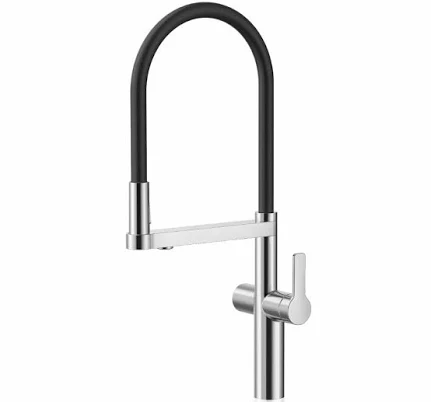
APEC Water Systems
APEC 2-in-1 Pull-Down Kitchen Faucet

Aquasure
Premier Series 75 GPD Under Sink Reverse Osmosis Water Filtration System
Model-based grades, not lab tests. We flunk more than we pass. How grading works
Can New EPA-Funded Technology Finally Destroy PFAS in Industrial Wastewater in 2026?
The U.S. Environmental Protection Agency says a technology developed with help from its Small Business Innovation Research (SBIR) program now offers industrial wastewater producers a practical way to destroy PFAS chemicals rather than simply capture and store them. It's a meaningful step in the decades-long fight against "forever chemicals," but it doesn't change the fact that PFAS are already embedded in thousands of everyday products. PFAS Authority's own scoring of 11,027 products found that 41% fail its PFAS and toxin screen, based on published ingredients, materials, certifications, and manufacturer disclosures rather than laboratory testing.
What Did the EPA Announce?
According to the EPA, its SBIR program, which funds small businesses developing environmental technologies, has supported a company that created a system capable of breaking down PFAS molecules in industrial wastewater, rather than just filtering them out. Traditional treatment methods, like granular activated carbon or reverse osmosis, remove PFAS from water but leave the chemicals intact, requiring disposal or long-term storage. The EPA says this newer approach is designed to actually destroy the PFAS chemical structure, addressing a persistent challenge for facilities that discharge wastewater containing these compounds.
Who Does This Affect?
The technology is aimed at industrial wastewater producers, manufacturers, chemical processors, and other facilities whose discharge water may contain PFAS from production processes, coatings, or firefighting foam use. Municipal water treatment plants that receive industrial discharge could also benefit, since PFAS entering the water supply upstream has been a long-standing complication for downstream drinking water treatment.
Indirectly, this affects nearly everyone. PFAS discharged into wastewater can migrate into rivers, groundwater, and eventually drinking water systems. Communities located near industrial facilities, and people who rely on private wells fed by groundwater near contamination sites, have historically faced elevated exposure risk, according to the EPA.
Why Does PFAS Destruction Matter?
PFAS, or per- and polyfluoroalkyl substances, are a class of thousands of synthetic chemicals used for their water-, stain-, and grease-resistant properties. They're called "forever chemicals" because their carbon-fluorine bonds resist natural breakdown, allowing them to persist in soil, water, and the human body for years. Scientific research has associated PFAS exposure with a range of health concerns, including changes in cholesterol levels, thyroid function, immune response, and certain cancers, though researchers describe these as associations observed in studies, not proven cause-and-effect relationships for every individual.
Because these chemicals don't break down on their own, destruction technologies like the one EPA highlighted are significant. Capturing PFAS in filters only relocates the problem; destroying the chemical bonds is considered a more permanent solution. If adopted widely by industry, this kind of technology could reduce the amount of new PFAS entering waterways over time.
That said, this innovation addresses PFAS at the industrial source, it does nothing about the PFAS already built into consumer products sitting in homes, closets, and kitchens today. That's where consumer awareness still matters most.
What Does This Mean for Everyday Products?
While EPA and industry work on reducing PFAS discharge into water, the chemicals remain widespread in items people buy every day. PFAS Authority's product screening has found particularly high failure rates in outdoor gear, where water-resistant coatings are common. Every camping tent and tarp scored (316 products), every rain jacket scored (74 products), every cycling rain jacket scored (72 products), every sleeping bag scored (15 products), and every softshell jacket scored (15 products) failed PFAS Authority's screen, a 100% failure rate in each of those categories.
PFAS Authority has also found that several major brands, including Cuisinart, The North Face, Calphalon, MAC, T-fal, Nike, Columbia, and Adidas, disclose nothing publicly about PFAS in their products, making it difficult for shoppers to know what they're buying without independent screening.
What Should Consumers Do?
Wastewater destruction technology operates upstream, at the industrial level, so there's no direct action consumers need to take in response to the EPA's announcement itself. But it's a useful reminder to look closely at products already in your home or shopping cart.
- Check outdoor gear, cookware, and textiles for PFAS-related certifications or explicit "PFAS-free" labeling from brands that disclose ingredients.
- Be cautious with brands that provide no PFAS disclosure at all, since the absence of information makes it impossible to verify what's inside a product.
- Use tools like PFAS Authority's product finder to compare items before buying, especially in high-risk categories like rainwear and camping gear.
- Review how products are scored through PFAS Authority's methodology, which is based on publicly available ingredients, materials, and certifications rather than independent lab testing.
Bottom Line
The EPA's SBIR-funded PFAS destruction technology is a promising development for reducing PFAS pollution at its industrial source, potentially preventing new contamination in waterways over time, according to the agency. But it doesn't address PFAS already present in consumer goods. With 41% of scored products failing PFAS Authority's screen, and entire categories like tents, rain jackets, and sleeping bags showing 100% failure rates, informed shopping remains one of the most direct tools consumers have today.
FAQ
Does this EPA technology mean tap water is now PFAS-free?
No. The EPA's announcement concerns a destruction technology for industrial wastewater treatment, not a guarantee about any specific drinking water system. Water quality varies by location and treatment infrastructure.
Is PFAS destruction technology already required at factories?
The EPA's summary describes this as an available solution developed through its SBIR program, not a mandate. Adoption by individual facilities depends on regulation, cost, and company decisions.
How can I tell if a product I own contains PFAS?
Many manufacturers don't disclose PFAS content directly. PFAS Authority scores products using published ingredients, materials, and certifications, you can look up items through the product finder to see how they compare, keeping in mind that a lower-scoring result reflects reduced concern rather than a guarantee of "PFAS-free" status.
What else we were tracking around this
- Sep 21, 2026Are Driscoll's Strawberries Safe? What the New PFAS Lawsuit Means for Shoppers
- Sep 20, 2026Can New WPI Technology Finally Destroy PFAS “Forever Chemicals”?
- Sep 20, 2026Is Indiana American Water's $150M PFAS Cleanup Enough to Protect Your Tap Water?
- Sep 19, 2026Is Europe's PFAS Restriction Finally Happening in 2026?
The latest PFAS news is updated daily.
Now check your own stuff
Search anything you own and get its PFAS grade in seconds.
Get the graded list, free
The products we score each week, and the best-graded alternative in every category.
No spam. Unsubscribe anytime.