By PFAS Authority · Updated October 6, 2026
Top grades to buy

Aisle
Super Hipster
APEC Water Systems
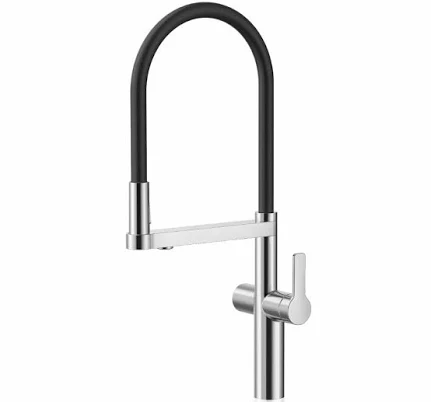
APEC 2-in-1 Pull-Down Kitchen Faucet

Aquasure
Premier Series 75 GPD Under Sink Reverse Osmosis Water Filtration System
Model-based grades, not lab tests. We flunk more than we pass. How grading works
Are PFAS Bans Working to Cut 'Forever Chemicals' in Your Clothes in 2026?
A new report covered by The Guardian on June 15, 2026, found that state-level bans on PFAS, or "forever chemicals," appear to be having a real effect on the textile and apparel industry. According to the report, roughly 80% of 115 clothing and textile products tested complied with PFAS limits now in place in several states, though some companies are still exceeding those limits.
It's encouraging news, but it also raises an obvious question for shoppers, does "mostly compliant" mean your rain jacket or tent is free of forever chemicals? Not necessarily. PFAS Authority's own scoring of 11,334 products finds that 40% fail our PFAS and toxin screen, and in some outdoor categories, the failure rate is far worse than the national testing data suggests. Unlike the lab testing referenced in the Guardian report, our scores are built from published ingredients, materials, certifications and manufacturer disclosures rather than chemical analysis in a lab, which lets us evaluate a much larger number of products, though it means we're only as good as what brands choose to disclose.
What Did the New Report Actually Find?
Per the Guardian's summary of the report, testers examined 115 clothing and textile products from the marketplace and found that about 80% fell within PFAS limits set by state regulations, bans that have rolled out in states like California, New York, and Washington over the past several years targeting PFAS in apparel, textiles, and consumer goods. The remaining roughly 20% of products tested still exceeded those legal limits, suggesting that while regulation is pushing the industry in the right direction, compliance is uneven.
This matters because PFAS are a large family of synthetic chemicals prized for their water-, stain-, and grease-resistant properties. They've been widely used in rain gear, tents, sleeping bags, school uniforms, and even some cookware and furniture. Health researchers have linked PFAS exposure to a range of concerns, including certain cancers, thyroid disruption, immune effects, and developmental issues, though it's important to note these are associations observed in population studies, not proof that any single product causes harm to any individual person.
Who and What Is Affected?
The state bans referenced in the report generally apply to new apparel and textile products sold within those states, meaning manufacturers either have to reformulate their products or stop selling noncompliant items in those markets. Outdoor and performance gear, rain jackets, tents, tarps, sleeping bags, softshell jackets, has historically been among the heaviest users of PFAS-based water-repellent (DWR) coatings, which is why these categories are getting the most scrutiny.
That tracks with what PFAS Authority sees in our own data. Our scoring finds some of the worst performance concentrated exactly where you'd expect, camping tents and tarps (100% failing out of 316 scored), rain jackets (100% failing out of 74 scored), cycling rain jackets (100% failing out of 72 scored), sleeping bags (100% failing out of 15 scored), and softshell jackets (100% failing out of 15 scored). Every single product we've scored in these five categories currently fails our screen, a reminder that broad compliance with state limits doesn't mean every category, or every brand, has cleaned up its supply chain.
We've also found that some well-known brands, including Cuisinart, The North Face, MAC, Calphalon, T-fal, Nike, Columbia, and All-Clad, disclose nothing at all about PFAS use in their products, making it impossible for shoppers to know where they stand based on public information alone.
Why Does This Gap Between Reports Matter?
The Guardian's report and PFAS Authority's data aren't necessarily contradicting each other, they're measuring different things. State bans typically set legal limits for PFAS concentration in finished textiles, and lab testing checks whether products fall under that threshold. Our scoring instead looks at the full picture of what's disclosed about a product's materials, certifications, and chemical treatments, across a far larger sample size. A product can technically meet a state's PFAS limit and still rely on fluorinated chemistry elsewhere, or simply not disclose enough for us to rule out concern.
The upshot, regulation is clearly moving the needle, which is good news for anyone hoping forever chemicals eventually disappear from store shelves. But "compliant" is not the same as "lower concern" for an individual product, and entire categories, especially outdoor and rain gear, still show heavy reliance on PFAS-based treatments according to our own screen.
What Should Shoppers Do Right Now?
If you're buying rain jackets, tents, sleeping bags, or similar gear this year, a few steps can help.
- Look for explicit "PFAS-free" labeling on durable water repellent (DWR) coatings, rather than assuming compliance with state law means PFAS-free.
- Check whether a brand publishes any PFAS disclosure at all, brands that say nothing make independent verification difficult.
- Use a tool like PFAS Authority's product finder to compare specific items before you buy, especially in high-risk categories like tents, rain jackets, and sleeping bags.
- Wash new gear before first use and air it out, which may reduce some surface-level chemical exposure, though this won't remove PFAS embedded in coatings or fabric treatments.
Bottom Line
State PFAS bans appear to be working, with about 80% of tested clothing and textile products now falling within legal limits, per the report covered by the Guardian. But PFAS Authority's own screening of over 11,000 products shows that entire categories of outdoor gear, tents, rain jackets, sleeping bags, softshells, are still scoring 100% failure, and several major brands disclose nothing about PFAS at all. Progress is real, but shoppers in high-risk categories still need to do their own homework.
Frequently Asked Questions
Does passing a state PFAS limit mean a product has no forever chemicals?
Not necessarily. State limits set a threshold for PFAS concentration, and products testing below that threshold are considered compliant, but "compliant" doesn't mean zero PFAS content, and it doesn't account for broader toxin concerns PFAS Authority screens for.
Why do outdoor categories like tents and rain jackets fail so often?
These products have traditionally relied on fluorinated durable water repellent (DWR) coatings for weatherproofing. PFAS Authority's scoring, based on published materials and disclosures, finds 100% failure rates in several of these categories, suggesting the industry hasn't broadly shifted to PFAS-free alternatives yet.
What can I do if a brand doesn't disclose PFAS information?
You can check independent scoring tools like PFAS Authority's product finder for comparable items, contact the brand directly to ask about their DWR chemistry, or prioritize products that explicitly advertise PFAS-free treatments.
What else we were tracking around this
- Oct 6, 2026Will New Jersey's New PFAS-in-Apparel Ban Protect You in 2026?
- Oct 6, 2026Are State PFAS Bans Actually Cleaning Up Your Clothes in 2026?
- Oct 5, 2026Will New EU Packaging Rules in 2026 Finally Curb PFAS in What You Buy?
- Oct 5, 2026Could 2024 Be the Year Congress Finally Bans PFAS in Food Packaging?
The latest PFAS news is updated daily.
Now check your own stuff
Search anything you own and get its PFAS grade in seconds.
Get the graded list, free
The products we score each week, and the best-graded alternative in every category.
No spam. Unsubscribe anytime.