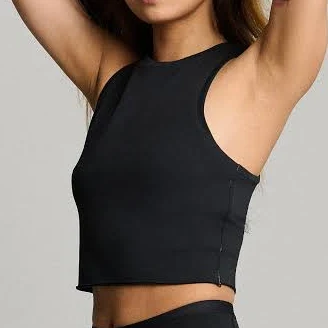
Aisle Essential High-Rise Period Brief, Leakproof Underwear Essential Brief Black / S
A water-repellent or grease-resistant treatment of unstated chemistry, with a brand PFAS statement we have not verified.
Aisle says its leakproof layers have no PFAS and that SGS testing found no detectable PFAS. We record that as an unverified brand claim. Mamavation reported no fluorine detected in Aisle (formerly Lunapads) period underwear. Its record describes a water-repellent or grease-resistant treatment of unstated chemistry, which is still counted.
Brand says: “Aisle says its leakproof layers have no PFAS and that SGS testing found no detectable PFAS.”
We flunk more products than we pass. This one earned its grade. How we grade
Material
Unspecified waterproof/leak-resistant coating on undisclosed base textile
Brand disclosure
Brand claims PFAS-free
Lab data
No PFAS found in testing
You may also be interested in
Top-graded picks in the categories readers replace first, every one scored on the same rubric.

- polypropylene filter housing, carbon/sediment cartridge
- We found no PFAS statement from the brand
- Bacterial growth in spent cartridges
3 hazards checked on this product, all on its full breakdown.

Aquasure
Premier Series 75 GPD Under Sink Reverse Osmosis Water Filtration System
- RO membrane, carbon filters, stainless steel housing
- We found no PFAS statement from the brand
- Bacterial and microbial growth in housing and filters
4 hazards checked on this product, all on its full breakdown.

Avocado
Vegan Mattress
- organic cotton, natural latex, coconut coir, recycled steel coils
- The brand calls it PFAS-free, which we have not verified
- Heavy metals
2 hazards checked on this product, all on its full breakdown.
What Aisle Essential High-Rise Brief Black / S is made of, ingredients and materials
Aisle's brief uses an unspecified waterproof or leak-resistant coating applied to an undisclosed base textile. The coating chemistry is not publicly detailed, making it impossible to rule out synthetic polymers, polyurethane, or other elastomers that could shed microparticles or off-gas volatile compounds with prolonged wear or laundering. Without fiber content and treatment specifics, assessment of skin irritation risk, durability, or breakdown products remains limited to brand claims rather than material transparency.
What’s concerning
Category baseline
The starting point for this type of product, before anything specific to this product is counted.
Waterproof / stain-resistant treatment
Water-repellent coating treatments have historically used PFAS.
Microplastics
Waterproof coatings on textiles, especially polyurethane or TPU, can shed microfibers and polymer particles during wear and repeated washing. Aisle's unspecified coating composition means shedding rate and particle size cannot be assessed independently.
Source, EPA ↗Volatile organic compounds (VOCs) off-gassing from coating
Synthetic waterproof coatings can emit volatile compounds (solvents, adhesives, cross-linking agents) during initial use and laundering, especially if applied with isocyanates or other reactive chemistry. Aisle does not disclose curing or off-gassing protocols.
What’s reassuring
Brand-stated PFAS-free
The brand states this product is PFAS-free. We have not verified the claim.
No PFAS found in lab test
No PFAS detected in independent testing.
Formaldehyde / VOCs
No public reports or recalls of formaldehyde in Aisle period underwear. Standard finishing on polyester blends may include small amounts; brand does not claim formaldehyde-free status, suggesting either no testing or acceptance of trace residuals.
Source, ATSDR ↗Skin irritation from undisclosed coating or base textile dyes
No published reports of contact dermatitis or allergic reactions specific to Aisle briefs. However, direct genital contact with an opaque waterproof coating and unknown dye chemistry creates a theoretical risk for sensitive individuals; patch testing before extended wear is prudent for those with known sensitivities.
Azo dyes in black colorway
Black textiles may use azo dyes, which can be reduced to carcinogenic aromatic amines under certain conditions (sweat, heat, bacteria). Aisle does not explicitly certify azo-free production; risk is low but unconfirmed.
How is this PFAS grade calculated?
The brand's record and disclosure
Aisle has issued a PFAS-free claim and achieved a strong safety grade (90/100) on PFAS grounds, but the company has not disclosed the specific chemistry of its waterproof treatment in publicly available materials. No independent certifications (Oeko-Tex, Bluesign) or third-party coating audits have been published for this product line. This reflects a wider trend in period underwear marketing where performance claims outpace material transparency.
How it compares in its category
Period underwear typically uses polyester or nylon blends with polyurethane, thermoplastic polyurethane (TPU), or silicone-based waterproof layers. Aisle's undisclosed approach is less transparent than competitors offering Oeko-Tex certification or explicit material lists. Many brands in this category still rely on older water-repellent finishes with residual PFAS; Aisle's stated PFAS avoidance positions it ahead on that specific hazard, though the alternative chemistry remains unverified.
If you buy it
Wash in cold water before first wear to reduce potential off-gassing or loose dyes. Dry on low heat or air-dry to avoid degrading the waterproof coating. Replace every 6-12 months depending on use intensity and visible coating wear (flaking, reduced absorbency). Machine wash with mild detergent; do not bleach or use fabric softener, which can compromise the coating's integrity.
What is not known about PFAS in this product?
- Basis
- Model estimate, 35% confidence, not a lab result
- Lab test
- Independent test found none
- Brand statement
- Aisle has made a specific claim
Formulations change between production runs, so check the current label. How we grade.
What are the PFAS-free alternatives to Aisle Essential High-Rise Period Brief, Leakproof Underwear Essential Brief Black / S?

- organic cotton, waterproof backing layer
- A third party reports verifying it as PFAS-free
- Coating degradation and microparticle shedding
2 hazards checked on this product, all on its full breakdown.
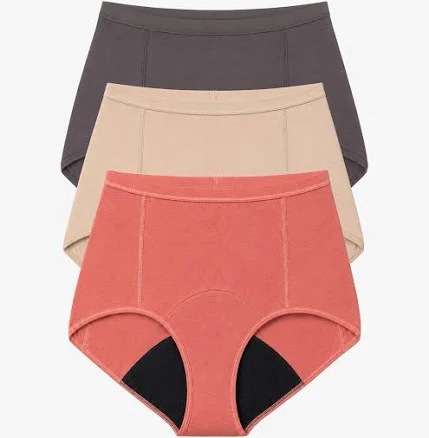
- organic cotton blend, water-resistant gusset
- The brand calls it PFAS-free, which we have not verified
- Microplastic shedding from water-resistant barrier

- Organic cotton, wood pulp fiber
- The brand calls it PFAS-free, which we have not verified
- Azo dyes and synthetic dyes
2 hazards checked on this product, all on its full breakdown.
More period underwear grades
How we score, every product runs through the same public 0-100 rubric based on materials, coatings, brand disclosure, lab findings, and recalls. See the full methodology → Spotted a mistake? Report an error.