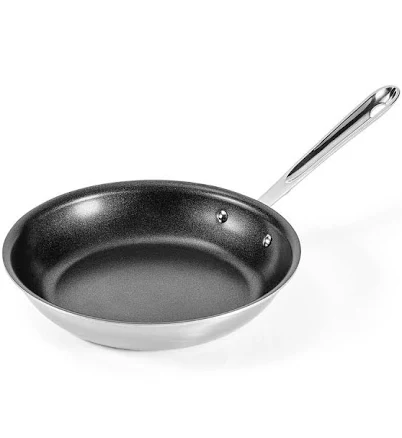
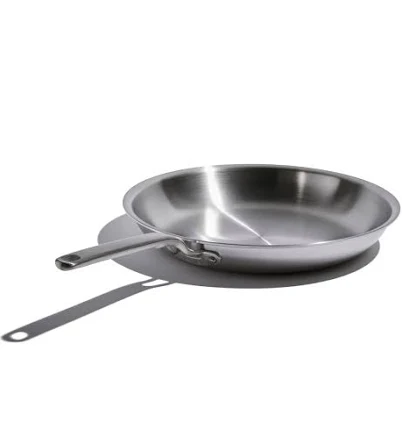
All-Clad D5 Brushed Nonstick Fry Pan 10"
Teflon-type coating non-stick coating, disclosed by the brand.
All-Clad says its nonstick contains Teflon-type coating, and lists its HA1, Essentials, NS1, D3 and D5 nonstick lines among its Teflon-type coating coated products. Teflon-type coating is a Teflon-family coating in the PFAS family.
The better-graded swap
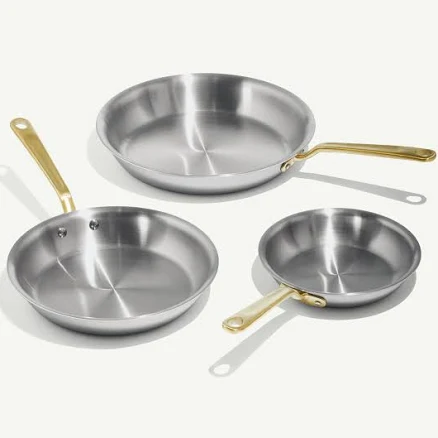
Made In
Made In Stainless Clad Frying Pan Set 3-Piece Professional-Grade 5-Layer Metal Construction
100/100 safety
Same rubric that flunked this product. The swap earned Excellent.
Still want this one anyway? Check the price on Amazon. We’d swap it.
Material
Teflon-type coating non-stick coating, as disclosed by All-Clad
Lab data
No public lab test
Is All-Clad D5 Brushed Nonstick Fry Pan 10" non-toxic? What it is made of
This pan uses Teflon-type coating (polytetrafluoroethylene) as its non-stick coating, disclosed by All-Clad. The cooking surface bonds to an aluminum core wrapped in stainless steel exterior (D5 refers to the five-ply construction). Teflon-type coating itself is chemically stable at normal cooking temperatures but degrades at high heat, releasing fluorinated compounds. The multi-ply build is designed to distribute heat evenly and reduce warping, a strength of the All-Clad line.
What’s concerning
No PFAS disclosure
No PFAS-free statement from the brand for this product.
PTFE / Teflon confirmed
The brand discloses a Teflon-type coating.
Category baseline
The starting point for this type of product, before anything specific to this product is counted.
Teflon-type coating thermal degradation and fume release
Teflon-type coating coatings release fluorinated compounds when heated above 400-500F; gradual heating to high temperatures during cooking can trigger this. All-Clad does not specify a maximum safe temperature in product literature, placing responsibility on the user to avoid overheating.
Aluminum leaching from core
The aluminum core is buffered by stainless steel and Teflon-type coating, reducing direct food contact. Leaching risk is low under normal use, but prolonged exposure to acidic or salty foods and coating degradation could increase it. No recalls on record for this specific product.
Coating wear and flaking over time
Teflon-type coating non-stick coatings naturally degrade with use and time, especially if subjected to metal utensils or high heat. Visible flaking or loss of non-stick properties is a sign the pan should be retired. All-Clad pans are designed for durability but do not have indefinite coating life.
What’s reassuring
Lead
No historical recalls or test reports document lead or cadmium in All-Clad D5 coatings. The brand maintains quality standards typical of US-manufactured premium cookware, but independent testing of individual batches is not publicly available.
Source, ATSDR ↗Off-gassing or VOC release from non-stick
Teflon-type coating itself does not emit volatile organic compounds at room temperature or normal cooking heat. No odor complaints or air quality issues are on record for this product line.
The full breakdown
The brand's record and disclosure
All-Clad clearly identifies Teflon-type coating non-stick in product descriptions and does not hide the coating type. The company has not published a formal PFAS reduction roadmap or phaseout commitment. All-Clad has maintained a strong reputation for cookware quality and longevity, with no recalls or safety controversies on record for this product line related to coating degradation or material leaching under normal use.
How it compares in its category
Teflon-type coating non-stick cookware remains common in premium kitchen lines, including from competitors like Calphalon and T-fal. Alternatives exist, ceramic non-stick (lower non-stick durability, may chip), uncoated stainless steel (requires more oil, steeper learning curve), and cast iron (maintenance-heavy but not a material linked to PFAS). All-Clad's D5 is priced at the high end; comparable Teflon-type coating pans from other brands offer similar hazard profiles at lower cost.
If you buy it
Never exceed 400-500 degrees Fahrenheit; Teflon-type coating thermal degradation accelerates above 500F. Use wooden or silicone utensils only; metal damages the coating and exposes underlying aluminum. Hand wash gently; dishwashers can degrade the coating over time. If the non-stick surface flakes, chips, or visibly wears after years of use, consider replacement. Proper temperature control is the single most important step to minimize Teflon-type coating release.
What we don’t know
- Basis
- Model estimate, 35% confidence, not a lab result
- Lab test
- None on record for this exact product
- Brand statement
- All-Clad has made a specific claim
Formulations change between production runs, so check the current label. How we grade.
Better-graded alternatives in Cookware
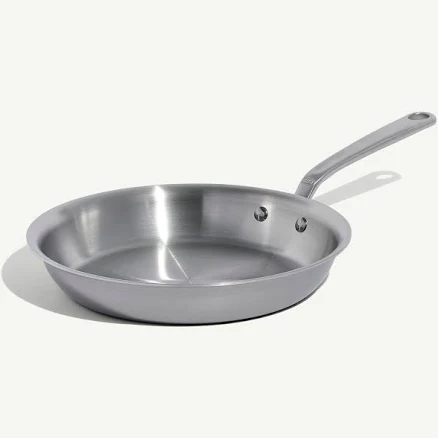
Made In
Stainless Clad Fry Pan
- Stainless steel clad construction, no nonstick coating
- The brand calls it PFAS-free, which we have not verified
- Clad separation or delamination over time
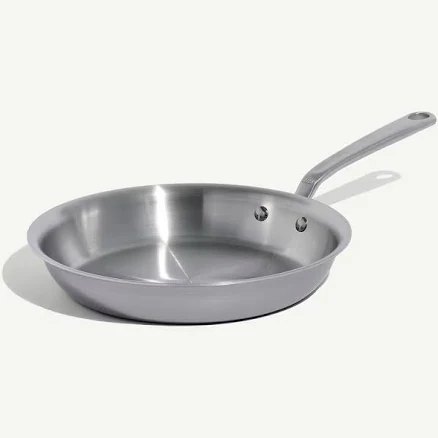
Made In
10' Stainless Clad Frying Pan
- stainless steel clad construction, no nonstick coating
- The brand calls it PFAS-free, which we have not verified
- Nickel leaching from stainless steel
3 hazards checked on this product. See all of them.
Heritage Steel
Eater Fry Pan
- Clad stainless steel, no coating
- The brand calls it PFAS-free, which we have not verified
- Metal ion release during cooking (iron, nickel, chromium)
More cookware grades
How we score, every product runs through the same public 0-100 rubric based on materials, coatings, brand disclosure, lab findings, and recalls. See the full methodology → Spotted a mistake? Report an error.