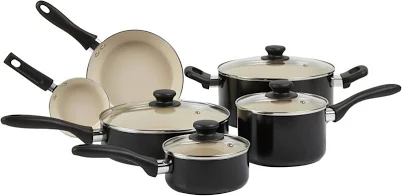
Amazon Basics 11-Piece Ceramic Non-Stick Pots and Pans Set, Is It Non-Toxic?
Ceramic coating suggests lower PFAS concern, no brand transparency.
Ceramic nonstick coating avoids Teflon-type coating chemistry. Amazon Basics does not disclose the coating formula or PFAS test results.
The better-graded swap
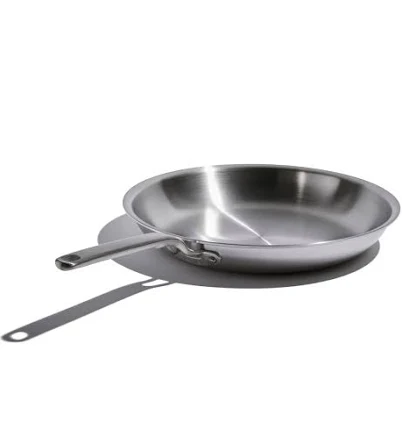
Heritage Steel
Heritage Steel Eater Fry Pan
100/100 safety
Same rubric that flunked this product. The swap earned Excellent.
Still want this one anyway? Check the price on Amazon. We’d swap it.
Material
ceramic non-stick coating over aluminum
Lab data
No public lab test
You may also be interested in
Top-graded picks in the categories readers replace first, every one scored on the same rubric.

- polypropylene filter housing, carbon/sediment cartridge
- We found no PFAS statement from the brand
- Bacterial growth in spent cartridges
3 hazards checked on this product, all on its full breakdown.

Aquasure
Premier Series 75 GPD Under Sink Reverse Osmosis Water Filtration System
- RO membrane, carbon filters, stainless steel housing
- We found no PFAS statement from the brand
- Bacterial and microbial growth in housing and filters
4 hazards checked on this product, all on its full breakdown.

Avocado
Vegan Mattress
- organic cotton, natural latex, coconut coir, recycled steel coils
- The brand calls it PFAS-free, which we have not verified
- Heavy metals
2 hazards checked on this product, all on its full breakdown.
Is Amazon Basics 11-Piece Ceramic Pans Set non-toxic? What it is made of
This set uses a ceramic non-stick coating applied over an aluminum cooking surface. Ceramic coatings are marketed as Teflon-type coating-free, avoiding the fume-release risk associated with traditional Teflon cookware when overheated. However, the durability and composition of ceramic coatings vary widely by manufacturer, and Amazon Basics does not publicly disclose the exact coating formula, thickness, or binders used. Aluminum itself can leach into acidic or salty foods if the coating chips or wears through.
What’s concerning
Category baseline
The starting point for this type of product, before anything specific to this product is counted.
No PFAS disclosure
No public statement from the brand about PFAS in this product.
Non-stick, chemistry undisclosed
Marketed as non-stick without stating the coating chemistry.
Aluminum leaching from coating degradation
Ceramic coatings are prone to chipping and peeling with normal use. Once the coating is compromised, aluminum contact with acidic foods (tomatoes, vinegar, citrus) or prolonged storage of cooked food can elevate aluminum intake. No testing data published for this specific product; risk level depends on user care and actual coating durability.
Coating durability and product lifespan uncertainty
Consumer reviews on Amazon and retail sites consistently report that this ceramic non-stick set's coating begins to flake or lose non-stick properties within 6-18 months of regular use. Premature degradation increases both aluminum leaching and the need for frequent replacement, raising long-term cost and waste concerns.
Lack of third-party certification or transparency
No NSF, CPSIA, or California Prop 65 disclosures are published by Amazon Basics for this product line. Absence of transparency does not confirm hazard but reflects a lower safety assurance standard than certified competitors.
What’s reassuring
Heavy metals
Amazon Basics does not disclose whether ceramic coating binders contain lead, cadmium, or other heavy metals as binding agents or colorants. Industry data show some budget ceramic cookware contains trace heavy metals in coatings, but no specific recalls or test results for this Amazon product are publicly available.
Source, FDA ↗Teflon-type coating fume risk from non-stick degradation
Ceramic coatings do not contain Teflon-type coating, so traditional Teflon fume syndrome (polymer fume fever at extreme heat) is not a mechanism for this product. However, if the ceramic coating contains any residual synthetic binders or polymers, overheating could theoretically release volatile compounds; Amazon provides no data on this.
How is this PFAS grade calculated?
The brand's record and disclosure
Amazon Basics does not publish material safety data, coating composition details, or third-party testing results for this cookware line. The brand has no publicly documented certifications from independent safety bodies (e.g., NSF, CPSIA compliance statements are absent from product marketing). Amazon's cookware safety disclosures lag far behind specialty cookware brands that provide lifetime warranty documentation or coating composition summaries. No major recalls specific to this ceramic non-stick line are on record, but this absence does not confirm safety; it reflects limited public scrutiny of budget cookware.
How it compares in its category
Ceramic non-stick cookware sits between budget Teflon-type coating-coated pans and premium stainless steel or cast iron. Unlike Teflon-type coating, ceramic avoids perfluorinated compound fumes at high heat, which is a measurable advantage. However, ceramic coatings are known to degrade faster than Teflon-type coating under normal use, and replacement intervals are typically 1-3 years versus 5-10 for quality Teflon-type coating or indefinite for cast iron. Amazon Basics' price point (under $50 for a 11-piece set) suggests corner-cutting on coating durability and aluminum gauge compared to brands like GreenPan or Caraway that cost 3-4x more and provide transparency on coating stability.
If you buy it
Avoid high heat above 400°F; ceramic non-stick performs optimally at medium to medium-high only. Hand-wash immediately after use and inspect the cooking surface monthly for chips, cracks, or dull patches that signal coating breakdown. Do not use metal utensils; silicone, wood, or plastic only. If you see visible coating loss or if food begins to stick uniformly, replace the pan rather than continuing to cook on degraded coating, as exposed aluminum contact with food increases leaching risk. Store lids separately to prevent scratching.
What is not known about PFAS in this product?
- Basis
- Model estimate, 62% confidence, not a lab result
- Lab test
- None on record for this exact product
- Brand statement
- Amazon Basics has made a specific claim
Formulations change between production runs, so check the current label. How we grade.
What are the PFAS-free alternatives to Amazon Basics 11-Piece Ceramic Non-Stick Pots and Pans Set?
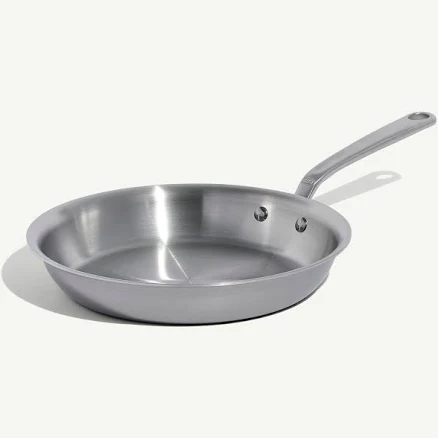
- Stainless steel clad construction, no nonstick coating
- The brand calls it PFAS-free, which we have not verified
- Clad separation or delamination over time
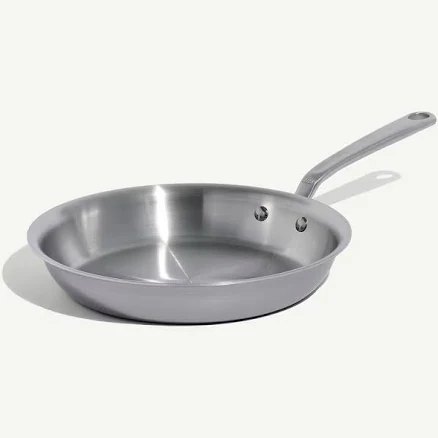
- stainless steel clad construction, no nonstick coating
- The brand calls it PFAS-free, which we have not verified
- Nickel leaching from stainless steel
3 hazards checked on this product, all on its full breakdown.
- Clad stainless steel, no coating
- The brand calls it PFAS-free, which we have not verified
- Metal ion release during cooking (iron, nickel, chromium)
More cookware grades
How we score, every product runs through the same public 0-100 rubric based on materials, coatings, brand disclosure, lab findings, and recalls. See the full methodology → Spotted a mistake? Report an error.