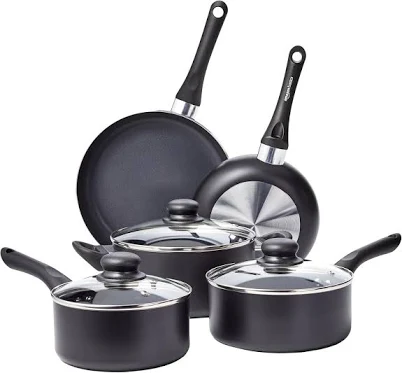
Amazon Basics 8-Piece Cookware Set, Is It Non-Toxic?
Pass on this until Amazon reveals nonstick coating details.
Amazon Basics won't explain what nonstick coating they use or whether it contains PFAS, and no independent tests exist to clarify.
The better-graded swap
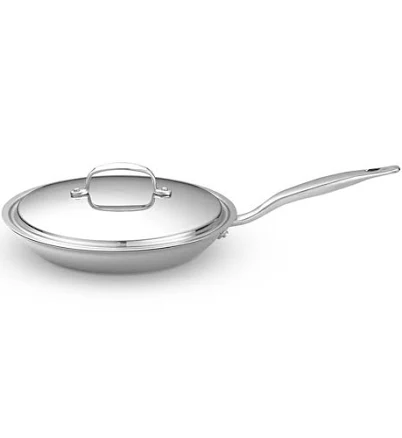
Heritage Steel
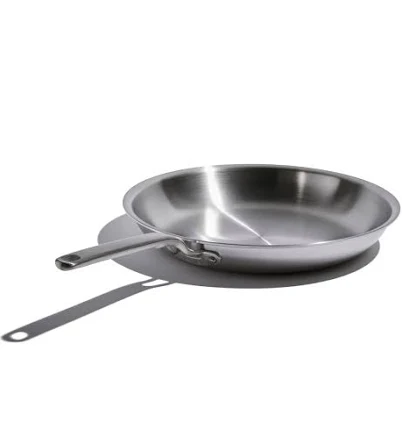
Heritage Steel 10.5" Fry Pan with Lid
100/100 safety
Same rubric that flunked this product. The swap earned Excellent.
Still want this one anyway? Check the price on Amazon. We’d swap it.
Material
nonstick coating, material unspecified
Lab data
No public lab test
You may also be interested in
Top-graded picks in the categories readers replace first, every one scored on the same rubric.

- polypropylene filter housing, carbon/sediment cartridge
- We found no PFAS statement from the brand
- Bacterial growth in spent cartridges
3 hazards checked on this product, all on its full breakdown.

Aquasure
Premier Series 75 GPD Under Sink Reverse Osmosis Water Filtration System
- RO membrane, carbon filters, stainless steel housing
- We found no PFAS statement from the brand
- Bacterial and microbial growth in housing and filters
4 hazards checked on this product, all on its full breakdown.

Avocado
Vegan Mattress
- organic cotton, natural latex, coconut coir, recycled steel coils
- The brand calls it PFAS-free, which we have not verified
- Heavy metals
2 hazards checked on this product, all on its full breakdown.
Is Amazon Basics 8-Piece Cookware Set non-toxic? What it is made of
Amazon Basics cookware uses a nonstick coating of unspecified chemistry, listed only as 'nonstick' without naming Teflon-type coating, ceramic, or alternative polymers. This opacity is the core safety concern, Teflon-type coating-based coatings (traditional Teflon) emit toxic fumes above 500°F; ceramic or newer polymer coatings have different thermal and durability profiles. Without Amazon's material disclosure, you cannot assess overheating risk or coating degradation pathways specific to this product. The underlying cookware body material (aluminum, stainless steel substrate) is also not fully specified in publicly available product listings.
What’s concerning
Category baseline
The starting point for this type of product, before anything specific to this product is counted.
No PFAS disclosure
No public statement from the brand about PFAS in this product.
Non-stick, chemistry undisclosed
Marketed as non-stick without stating the coating chemistry.
Teflon-type coating fume inhalation (if Teflon-type coating-based)
Unknown coating chemistry means Teflon-type coating risk cannot be ruled out. If this set uses traditional Teflon-type coating nonstick, overheating above 500°F can release toxic fumes; polymer fume fever risk is real but dose-dependent and rare at normal cooking temperatures. Amazon's silence prevents precautionary assessment.
Coating degradation and leaching
Budget nonstick coatings often wear faster than premium alternatives. As the coating chips or peels from normal use, underlying metal (likely aluminum) can leach into food, especially in acidic dishes. No published durability testing for this specific set exists in public safety databases.
Aluminum leaching (if aluminum substrate)
If the cookware base is aluminum (common in budget sets), acidic foods (tomatoes, citrus, vinegar) can erode both nonstick and bare aluminum, increasing leaching. Long-term aluminum exposure is debated in literature but flagged as a concern by some health agencies for vulnerable populations.
Manufacturing and certification gaps
No indication of FDA compliance statements, lead/cadmium testing for coatings, or third-party safety certifications on standard product pages. Lower-cost brands sometimes source from suppliers with less rigorous QC; this is a structural risk rather than a proven defect.
What’s reassuring
Lid and handle material unknowns
Product listings do not specify lid material (glass vs. plastic) or handle composition. Plastic lids may leach BPA or other polymers if overheated; silicone handles can offgas if poor quality. No recalls or complaints are documented for this set, but specificity is unavailable.
How is this PFAS grade calculated?
The brand's record and disclosure
Amazon Basics maintains minimal chemical transparency across its cookware line. No published safety data sheets, Teflon-type coating confirmation statements, or third-party certifications (e.g., GreenPan, Caraway) are standard. Amazon does not prominently disclose nonstick chemistry on product pages reviewed, relying on vague 'nonstick' labeling. The brand has no documented PFAS controversies or recalls in this category, but silence on ingredient sourcing is typical of Amazon's low-cost private-label strategy rather than a positive safety indicator.
How it compares in its category
Most budget cookware sets (T-fal, Calphalon, Rachael Ray) similarly avoid explicit Teflon-type coating naming but often indicate compliance with EPA/FDA nonstick safety standards. Brands like GreenPan and Our Place explicitly market Teflon-type coating-free coatings as a differentiator. Amazon Basics sits at the lower end of transparency; it is cheaper than mid-tier alternatives but offers less assurance than brands with published material specs or independent certifications. The 8-piece value proposition (pans, lids, utensils) attracts budget-conscious buyers but at an information cost.
If you buy it
Never exceed medium heat (around 400°F); preheating empty pans is the primary fume risk if Teflon-type coating-based. Hand wash and avoid metal utensils to slow coating wear. Inspect regularly for chipping or peeling after 6-12 months of normal use; degraded coating increases leaching and fume risk. Before purchase, contact Amazon customer service to ask for nonstick coating type and Teflon-type coating status in writing; a clear answer strengthens the case to keep; silence reinforces the skip argument.
What is not known about PFAS in this product?
- Basis
- Model estimate, 35% confidence, not a lab result
- Lab test
- None on record for this exact product
- Brand statement
- Amazon Basics has made a specific claim
Formulations change between production runs, so check the current label. How we grade.
What are the PFAS-free alternatives to Amazon Basics 8-Piece Cookware Set?
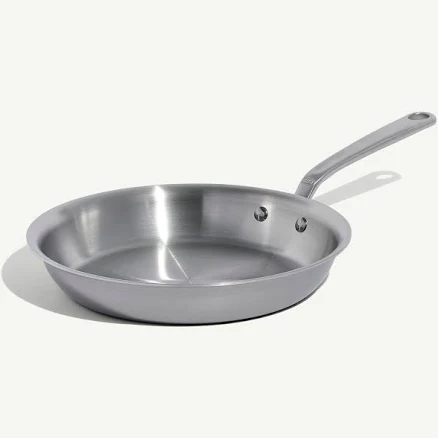
- Stainless steel clad construction, no nonstick coating
- The brand calls it PFAS-free, which we have not verified
- Clad separation or delamination over time
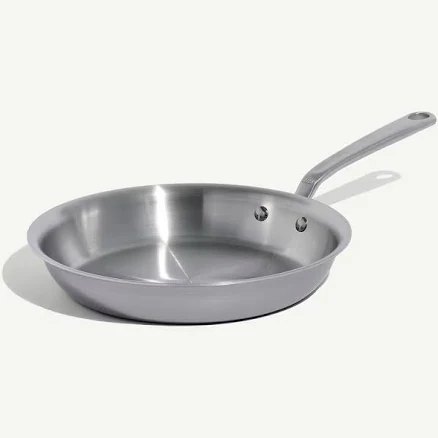
- stainless steel clad construction, no nonstick coating
- The brand calls it PFAS-free, which we have not verified
- Nickel leaching from stainless steel
3 hazards checked on this product, all on its full breakdown.
- Clad stainless steel, no coating
- The brand calls it PFAS-free, which we have not verified
- Metal ion release during cooking (iron, nickel, chromium)
More cookware grades
How we score, every product runs through the same public 0-100 rubric based on materials, coatings, brand disclosure, lab findings, and recalls. See the full methodology → Spotted a mistake? Report an error.