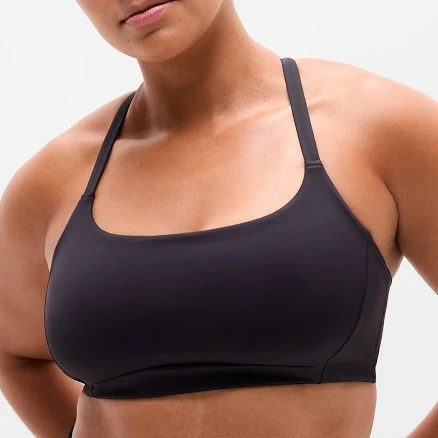
Athleta Women's Invigorate Sports Bra
Lower PFAS concern; standard athletic bra without known water-stain treatments.
This nylon-spandex bra lacks disclosed water-repellent coating or stain-resistant finishes, the primary PFAS risk in apparel. Athleta hasn't claimed PFAS-free status or disclosed Teflon-family coating treatments.
Still want this one anyway? Check the price on Amazon. We’d swap it.
Material
Nylon, spandex blend (standard performance fabric)
Brand disclosure
Brand is silent on PFAS
Lab data
No public lab test
You may also be interested in
Top-graded picks in the categories readers replace first, every one scored on the same rubric.

- polypropylene filter housing, carbon/sediment cartridge
- We found no PFAS statement from the brand
- Bacterial growth in spent cartridges
3 hazards checked on this product, all on its full breakdown.

Aquasure
Premier Series 75 GPD Under Sink Reverse Osmosis Water Filtration System
- RO membrane, carbon filters, stainless steel housing
- We found no PFAS statement from the brand
- Bacterial and microbial growth in housing and filters
4 hazards checked on this product, all on its full breakdown.

Avocado
Vegan Mattress
- organic cotton, natural latex, coconut coir, recycled steel coils
- The brand calls it PFAS-free, which we have not verified
- Heavy metals
2 hazards checked on this product, all on its full breakdown.
What Athleta Women's Invigorate Sports Bra is made of, ingredients and materials
The Invigorate uses a nylon and spandex blend, the industry standard for performance sports bras. Nylon is a synthetic polymer that resists moisture and maintains shape under stress, while spandex (elastane) provides stretch and recovery. This material combination does not involve ceramic coatings, lead-containing glazes, or inherent heavy metal risks; the primary chemical concern in synthetics is residual monomer content and finish treatments applied during manufacturing, not the base polymers themselves.
What’s concerning
Category baseline
The starting point for this type of product, before anything specific to this product is counted.
No PFAS disclosure
No public statement from the brand about PFAS in this product.
Formaldehyde / VOCs
Standard athletic fabrics may include formaldehyde-based resins to set dyes and improve wrinkle resistance. Athleta does not disclose finish chemistry; levels in untreated nylon-spandex are typically low, but new items may off-gas briefly. No documented complaints specific to this product.
Source, ATSDR ↗Azo dyes
The Invigorate is available in multiple colors; synthetic dyes used on performance fabrics may include azo compounds, which are restricted in some jurisdictions but legal in the United States. Athleta does not specify dye families. Risk is primarily occupational (dye workers) rather than consumer wear contact.
Spandex degradation and microfiber shedding
Spandex gradually breaks down with washing, UV exposure, and body heat, releasing microfibers. This is an inherent property of elastane, not a manufacturing defect; all spandex blends share this concern. Washing less frequently and using cold cycles minimizes shedding.
Residual monomer and volatile organics
Nylon and spandex may retain trace amounts of monomers or solvents from synthesis. New sports bras often have a chemical smell (caprolactam in nylon, dimethylformamide in spandex processing). This typically dissipates within a few washes and poses minimal health risk; rinsing before wear reduces exposure.
What’s reassuring
Base material not linked to PFAS
The main material recorded for this product is not one associated with PFAS.
Antimony in polyester/synthetic fibers
Antimony is used as a catalyst in polyester production but is not a component of nylon or spandex. This product does not contain polyester, so antimony contamination is not a concern.
How is this PFAS grade calculated?
The brand's record and disclosure
Athleta, owned by Gap Inc., does not publish detailed chemical disclosure reports or pursue third-party certifications such as Bluesign, GOTS, or OEKO-TEX for most products. The brand has not faced documented recalls or widespread chemical contamination claims related to apparel. However, the company maintains a general sustainability commitment without transparent chemical-restriction documentation, leaving finish treatments and dye chemistry largely unverified by independent standards.
How it compares in its category
Sports bras in this performance segment (nylon-spandex construction) are chemically similar across major brands. Athleta's offering lacks third-party eco-certification that competitors like Patagonia or Allbirds pursue; however, the base material hazard profile is not higher than unbranded athletic bras. Certified alternatives (e.g., those with Bluesign or GOTS) offer better dye and chemical documentation but command higher prices.
If you buy it
Wash in cool water and avoid heat drying to extend spandex lifespan and minimize any volatile organic compound release from finish treatments. Do not bleach or use fabric softeners, which can degrade elasticity and strip protective coatings. Replace after 12-18 months of regular wear, as spandex progressively loses recovery. Rinse new items before first wear to remove residual manufacturing dust and finishes.
What is not known about PFAS in this product?
- Basis
- Model estimate, 72% confidence, not a lab result
- Lab test
- None on record for this exact product
- Brand statement
- Athleta has made none
Formulations change between production runs, so check the current label. How we grade.
More sports bras grades
How we score, every product runs through the same public 0-100 rubric based on materials, coatings, brand disclosure, lab findings, and recalls. See the full methodology → Spotted a mistake? Report an error.