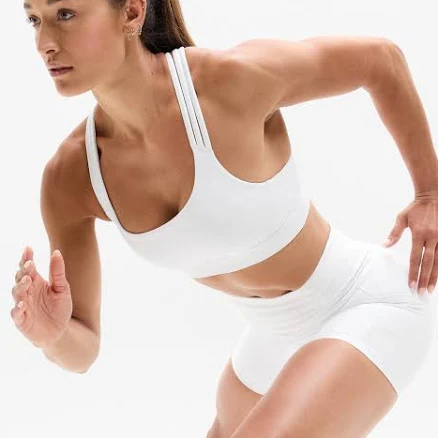
Athleta Women's Train Free Sports Bra
Lower concern for PFAS, but Athleta offers no public transparency on water-repellent coating treatments.
Athleta's nylon/polyester sports bra has no disclosed water-repellent or stain-resistant treatment. Athleta doesn't publicly disclose PFAS use or avoidance. Without explicit water-repellent coating claims, PFAS risk is lower than heavily treated gear.
Still want this one anyway? Check the price on Amazon. We’d swap it.
Material
Nylon/polyester blend, no reported waterproof or stain-resist coating
Brand disclosure
Brand is silent on PFAS
Lab data
No public lab test
You may also be interested in
Top-graded picks in the categories readers replace first, every one scored on the same rubric.

- polypropylene filter housing, carbon/sediment cartridge
- We found no PFAS statement from the brand
- Bacterial growth in spent cartridges
3 hazards checked on this product, all on its full breakdown.

Aquasure
Premier Series 75 GPD Under Sink Reverse Osmosis Water Filtration System
- RO membrane, carbon filters, stainless steel housing
- We found no PFAS statement from the brand
- Bacterial and microbial growth in housing and filters
4 hazards checked on this product, all on its full breakdown.

Avocado
Vegan Mattress
- organic cotton, natural latex, coconut coir, recycled steel coils
- The brand calls it PFAS-free, which we have not verified
- Heavy metals
2 hazards checked on this product, all on its full breakdown.
What Athleta Women's Train Free Sports Bra is made of, ingredients and materials
This sports bra is a nylon/polyester blend without reported waterproof, stain-resistant, or flame-retardant coatings, which eliminates major chemical treatment pathways in athletic wear. Nylon and polyester are synthetic polymers that do not inherently leach toxic monomers under normal wear and washing conditions. The absence of a water-repellent coating (water-repellent coating) treatment means no perfluorinated or fluorocarbon additives are likely present, reducing PFAS exposure compared to technical activewear.
What’s concerning
Category baseline
The starting point for this type of product, before anything specific to this product is counted.
No PFAS disclosure
No public statement from the brand about PFAS in this product.
Heavy metals
Dye chemistry for athletic wear is not publicly disclosed by Athleta; azo dyes used in dark or vibrant colors in nylon/polyester can release carcinogenic amines under certain conditions, though this is controlled under REACH and US regulations. Risk is low for typical hand or machine washing but unknown without testing.
Source, FDA ↗Microfiber shedding during laundering
Nylon and polyester garments shed microfibers when washed, contributing to microplastic pollution; this is inherent to synthetic fabrics and not specific to Athleta's production, but wearing and washing this bra will result in some fiber release.
What’s reassuring
Base material not linked to PFAS
The main material recorded for this product is not one associated with PFAS.
Formaldehyde / VOCs
No water-repellent or stain-resist coating reported; formaldehyde resin finishes are not a standard treatment for uncoated nylon/polyester blend sports bras, so this hazard is not anticipated for this specific product.
Source, ATSDR ↗Antimicrobial or odor-control additives
No antimicrobial silver, triclosan, or nanoparticle treatments are documented for this bra model. If present, such additives are not commonly disclosed by Athleta and are not standard for uncoated athletic wear.
Elastic degradation and latex sensitivity
Sports bra elastics are typically synthetic (polyurethane or elastane) and do not contain natural latex. No latex allergen risk is documented for Athleta products; degradation is a durability issue, not a toxicity hazard.
How is this PFAS grade calculated?
The brand's record and disclosure
Athleta (owned by Gap Inc.) does not maintain public-facing chemical transparency statements or third-party certifications like Oeko-Tex or GOTS on this product line. The brand has not faced major documented recalls for chemical contamination in undergarments. Athleta's parent company has committed to sustainability goals but does not disclose PFAS or formaldehyde testing protocols for sports bras, leaving a gap in verifiable safety data.
How it compares in its category
This product sits in the mainstream athletic wear segment where nylon/polyester blends are standard. Competitors like Lululemon and Nike offer similar construction but sometimes with water-repellent coating or antimicrobial treatments that introduce additional chemicals; Athleta's uncoated version avoids those additives. Certified organic or low-impact alternatives (e.g., Patagonia, prAna) exist but command higher prices; this bra offers a middle ground of conventional production with fewer deliberate chemical treatments.
If you buy it
Wash in cool water and avoid fabric softeners, which can degrade elastic and leave residue. Line-dry to preserve the fabric structure and avoid heat-induced shrinkage or polymer degradation. Replace when elastic loses tension (typically 1 to 2 years of regular use) or seams show separation. Do not bleach or dry-clean; these processes introduce solvents that can degrade nylon fibers.
What is not known about PFAS in this product?
- Basis
- Model estimate, 72% confidence, not a lab result
- Lab test
- None on record for this exact product
- Brand statement
- Athleta has made none
Formulations change between production runs, so check the current label. How we grade.
More sports bras grades
How we score, every product runs through the same public 0-100 rubric based on materials, coatings, brand disclosure, lab findings, and recalls. See the full methodology → Spotted a mistake? Report an error.