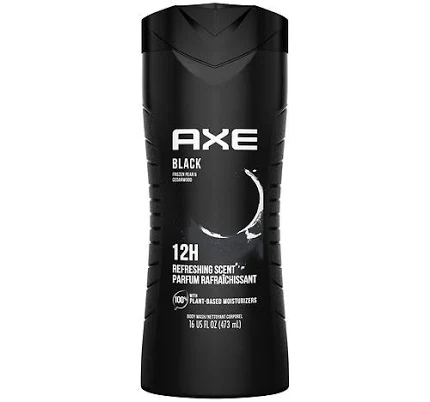
Axe Body Wash Black
Skip if concerned; body wash rarely disclosed for PFAS.
Axe Body Wash Black is a liquid cleansing product with no public PFAS claims or third-party verification. Standard body wash formulations pose lower concern than textiles or coatings, but Axe provides no transparency on ingredient sourcing or fluorochemicals.
We flunk more products than we pass. This one earned its grade. How we grade
Material
water, cleansing agents, fragrance, preservatives
Brand disclosure
Brand is silent on PFAS
Lab data
No public lab test
You may also be interested in
Top-graded picks in the categories readers replace first, every one scored on the same rubric.

- polypropylene filter housing, carbon/sediment cartridge
- We found no PFAS statement from the brand
- Bacterial growth in spent cartridges
3 hazards checked on this product, all on its full breakdown.

Aquasure
Premier Series 75 GPD Under Sink Reverse Osmosis Water Filtration System
- RO membrane, carbon filters, stainless steel housing
- We found no PFAS statement from the brand
- Bacterial and microbial growth in housing and filters
4 hazards checked on this product, all on its full breakdown.

Avocado
Vegan Mattress
- organic cotton, natural latex, coconut coir, recycled steel coils
- The brand calls it PFAS-free, which we have not verified
- Heavy metals
2 hazards checked on this product, all on its full breakdown.
What Axe Body Wash Black is made of, ingredients and materials
Axe Black is a water-based liquid cleanser containing surfactants (cleansing agents), fragrance compounds, and chemical preservatives typical of mass-market body wash. The fragrance load and preservative system are the primary chemical exposure points; water itself is inert. Unlike bar soaps, liquid body washes require preservative systems to prevent microbial growth, which introduces chemicals not found in anhydrous products.
What’s concerning
Category baseline
The starting point for this type of product, before anything specific to this product is counted.
No PFAS disclosure
No public statement from the brand about PFAS in this product.
Fragrance allergens and irritants (synthetic fragrance compounds)
Axe Black lists 'fragrance' as a single ingredient without component breakdown. Synthetic fragrance blends commonly include limonene, linalool, and geraniol; no public data confirms which compounds are in this specific formulation. Risk of contact dermatitis or respiratory irritation is higher in individuals with fragrance sensitivity.
Preservative system (paraben or phenoxyethanol likely)
Standard body washes use parabens (methylparaben, propylparaben) or phenoxyethanol to prevent microbial growth. Axe does not disclose the preservative type on public materials. These are approved by FDA and ECHA at specified concentrations, but some consumers report contact dermatitis or endocrine concerns with paraben exposure; no conclusive causality at rinse-off concentrations.
1,4-dioxane (possible contaminant in ethoxylated surfactants)
Liquid body washes often contain ethoxylated surfactants (polysorbates, ceteareth compounds) as emulsifiers. 1,4-dioxane is a known manufacturing byproduct of ethoxylation. Unilever and most major brands do not voluntarily test or disclose 1,4-dioxane levels; FDA does not limit it in cosmetics. Rinse-off products present lower absorption risk than leave-on products.
What’s reassuring
Base material not linked to PFAS
The main material recorded for this product is not one associated with PFAS.
Heavy metals
No recalls or reports of heavy metal contamination in Axe body wash products exist in public records. Most suppliers of synthetic dyes and colorants used in cosmetics are regulated, though third-party verification is not standard for this brand.
Source, FDA ↗Formaldehyde / VOCs
No evidence Axe Black uses formaldehyde releasers (imidazolidinyl urea, dmdm hydantoin). Modern mass-market formulations typically use parabens or phenoxyethanol instead. If used, they would be listed by INCI name on the ingredient list.
Source, ATSDR ↗How is this PFAS grade calculated?
The brand's record and disclosure
Axe (owned by Unilever) has no published independent certifications (e.g., EWG Verified, Ecocert) for this product line. The brand does not voluntarily disclose fragrance components or detailed preservative concentrations on packaging or websites. Axe has faced no documented recalls or safety actions for body wash in major markets, but ingredient opacity is standard for the brand.
How it compares in its category
Mass-market body washes like Axe Black occupy the middle tier, fewer allergen restrictions than dermatologist-recommended lines (CeraVe, Vanicream) but more fragrance and preservative load than minimalist alternatives. Most competitors at this price point use similar synthetic fragrance blends and paraben or phenoxyethanol preservatives, so Axe is category-typical, not an outlier.
If you buy it
Use a small amount (coin-sized) and rinse thoroughly with water; prolonged skin contact with fragranced cleansers can irritate sensitive skin. Do not ingest. Store in a cool, dry place away from direct heat or sunlight to preserve preservative efficacy. Discontinue use if rash, itching, or burning develops, and patch-test on inner arm first if you have known fragrance sensitivities.
What is not known about PFAS in this product?
- Basis
- Model estimate, 72% confidence, not a lab result
- Lab test
- None on record for this exact product
- Brand statement
- Axe has made none
Formulations change between production runs, so check the current label. How we grade.
More body wash grades
How we score, every product runs through the same public 0-100 rubric based on materials, coatings, brand disclosure, lab findings, and recalls. See the full methodology → Spotted a mistake? Report an error.