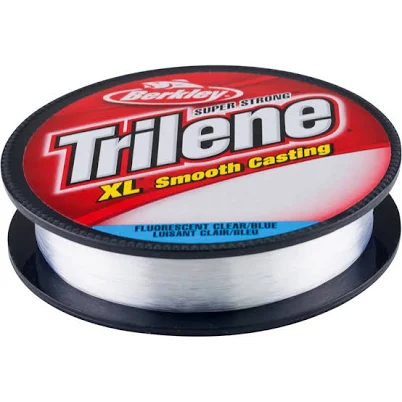
Berkley Trilene XL
Fishing line with no PFAS transparency; inherent risk is unclear.
Berkley Trilene XL is monofilament nylon line with no disclosed PFAS information. Whether processing or treatments involve fluorochemicals remains unknown.
We flunk more products than we pass. This one earned its grade. How we grade
Material
Nylon monofilament fishing line
Brand disclosure
Brand is silent on PFAS
Lab data
No public lab test
What Berkley Trilene XL is made of, ingredients and materials
Berkley Trilene XL is a nylon monofilament (single-strand polymer fiber) fishing line, meaning it is extruded from polyamide resin into a single continuous strand. Nylon monofilament does not typically leach toxic monomers or additives into water under normal fishing conditions, as the material is chemically stable and hydrophobic (water-resistant). The primary concern with nylon fishing line is environmental persistence and wildlife entanglement rather than chemical toxicity during use.
What’s concerning
Category baseline
The starting point for this type of product, before anything specific to this product is counted.
No PFAS disclosure
No public statement from the brand about PFAS in this product.
UV and thermal degradation of nylon
Nylon monofilament degrades under sunlight and heat, becoming brittle and prone to breaking. Degraded fragments persist in aquatic environments for years, posing entanglement risk to wildlife; no chemical toxicity directly linked, but environmental hazard is established.
Unknown additives (slip agents, UV stabilizers, colorants)
Berkley does not disclose what processing aids or additives are incorporated into Trilene XL during extrusion. Standard nylon monofilaments may contain Teflon-family coating slip agents, heavy metal stabilizers, or dye components; presence and levels are not publicly confirmed for this product.
Microplastic generation via fragmentation
Nylon fishing line fragments into microplastics when broken or degraded in water. While not a direct chemical hazard to the user, the product is a documented source of aquatic microplastic pollution and wildlife ingestion risk over its lifetime.
What’s reassuring
Base material not linked to PFAS
The main material recorded for this product is not one associated with PFAS.
Heavy metals
No specific reports of cadmium, lead, or other heavy metal heat stabilizers in Berkley Trilene XL. Industry standard nylon monofilaments typically use calcium or tin-based stabilizers, but Berkley does not publicly specify their stabilizer chemistry.
Source, FDA ↗The full breakdown
The brand's record and disclosure
Berkley (owned by Pure Fishing, a Rapala subsidiary) does not publicly disclose PFAS content, processing aids, or Teflon-family coating coatings in their monofilament product line. The company has not published transparency reports on PFAS use or committed to phase-out timelines. No major product recalls or chemical safety controversies specific to Trilene XL are on record, but silence on PFAS in a fishing line product (where fluorocarbon lines are common alternatives) suggests potential risk that is not being communicated.
How it compares in its category
Nylon monofilament is the baseline fishing line category; it is cheaper and less likely to contain intentional PFAS than premium fluorocarbon lines (which are inherently PFAS-heavy). However, nylon lines may include Teflon-family coating slip agents or coatings during manufacture. Berkley does not distinguish Trilene XL's additives from competitors, making direct safety comparison difficult. The category itself poses minimal chemical hazard during water use once cast.
If you buy it
Store the spool indoors away from direct sunlight to slow UV degradation and embrittlement. Replace the line annually or after heavy use, as nylon loses tensile strength and becomes brittle over time, increasing breakage and environmental release. Do not incinerate old line; dispose in solid waste. Avoid exposing opened spools to prolonged heat (above 60°C / 140°F), as this can degrade the material and release volatile compounds.
What we don’t know
- Basis
- Model estimate, 72% confidence, not a lab result
- Lab test
- None on record for this exact product
- Brand statement
- Berkley has made none
Formulations change between production runs, so check the current label. How we grade.
More fishing line grades
How we score, every product runs through the same public 0-100 rubric based on materials, coatings, brand disclosure, lab findings, and recalls. See the full methodology → Spotted a mistake? Report an error.