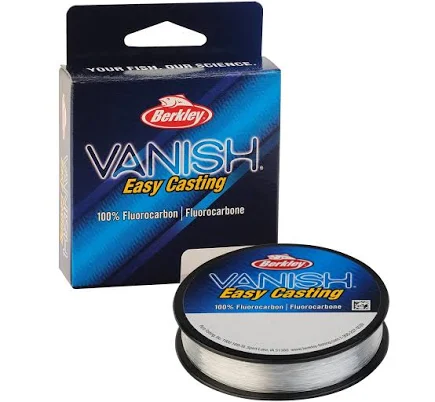
Berkley Vanish Fluorocarbon
Fluorocarbon line likely contains PFAS, avoid concerned.
Berkley Vanish is fluorocarbon fishing line. Fluorocarbon polymers commonly contain or are PFAS-based, but Berkley makes no PFAS disclosure.
The better-graded swap
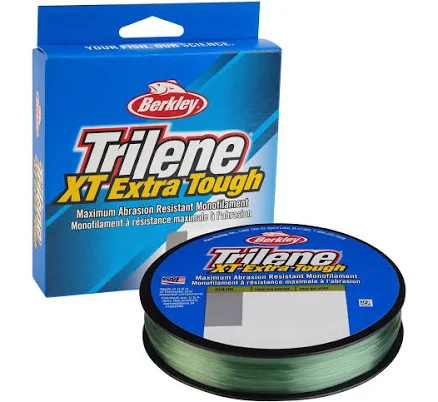
Berkley
Berkley Trilene XT Monofilament Fishing Line
85/100 safety
Same rubric that flunked this product. The swap earned Excellent.
Still want this one anyway? Check the price on Amazon. We’d swap it.
Material
Fluorocarbon monofilament fishing line
Brand disclosure
Brand is silent on PFAS
Lab data
No public lab test
What Berkley Vanish Fluorocarbon is made of, ingredients and materials
Berkley Vanish Fluorocarbon is a monofilament fishing line composed of polyvinylidene fluoride (PVDF) or similar fluorinated polymer compounds. Fluorocarbon lines are engineered for low visibility underwater and high abrasion resistance, but the fluorine chemistry that gives them these properties raises PFAS concerns because fluorocarbons are persistent fluorinated compounds that do not readily break down in the environment. The 'Vanish' product line is marketed for invisibility in water, a performance feature that comes inherently from its fluorinated backbone.
What’s concerning
Category baseline
The starting point for this type of product, before anything specific to this product is counted.
No PFAS disclosure
No public statement from the brand about PFAS in this product.
Fluoropolymer detected
A Teflon-family coating is recorded for this product.
PFAS
Fluorocarbon monofilament lines contain fluorinated polymers that persist in the environment indefinitely and bioaccumulate in aquatic organisms, particularly when line is lost or improperly disposed of in water. Berkley has not disclosed mitigation or chemical composition details.
Source, ATSDR ↗Thermal degradation hazard on heating
Fluorocarbon polymers can release perfluorinated volatile compounds if exposed to high heat (e.g., accidental line incineration or contact with hot surfaces). Home incineration or improper disposal near heat sources poses minor but documented risk.
Microplastic generation from abrasion and breakdown
All monofilament fishing lines shed microfibers during use and degradation in water. Fluorocarbon line fragments have been documented in freshwater and marine microplastics surveys, though harm quantification remains incomplete.
Lack of product-specific safety data disclosure
Berkley does not publish material safety data sheets or chemical composition summaries for Vanish Fluorocarbon, limiting consumer ability to assess specific PFAS congeners, additives, or manufacturing process controls.
Ingestion or entanglement risk (animal welfare, not chemical)
Lost fluorocarbon line can entangle or be ingested by birds, fish, and marine mammals; the line's visibility-reduction design may increase entanglement risk because wildlife cannot easily detect it. This is a physical hazard rather than a chemical one.
The full breakdown
The brand's record and disclosure
Berkley (owned by Pure Fishing, a subsidiary of Newell Brands) has not publicly disclosed detailed chemical composition or PFAS content for Vanish Fluorocarbon or committed to phase-out timelines. The brand maintains a fishing-industry standard of minimal transparency on fluorocarbon chemistry. No recalls or safety warnings specific to this product are on record. Berkley does not appear to offer fluorocarbon alternatives without fluorinated compounds.
How it compares in its category
Fluorocarbon monofilament lines across all brands (Seaguar, Sunline, Daiwa, etc.) share the same PFAS composition concern because the material class itself is fluorinated. Nylon monofilament and braided lines are available as lower-PFAS alternatives, though they offer reduced invisibility and different handling properties. Fluorocarbon remains the dominant choice for saltwater and clear-water fishing due to its performance edge, making this product category-typical in its hazard profile rather than an outlier.
If you buy it
Do not incinerate used line; heat decomposition of fluorocarbons can release fluorinated gases. Dispose of spent line in household trash or contact your local waste facility about fishing-line-specific disposal programs; never release line into waterways. Replace line when it shows visible wear, degradation, or reduced strength, as fluorocarbon degrades over seasons of UV and saltwater exposure. If PFAS exposure is a primary concern, consider nylon alternatives for freshwater applications where visibility is less critical.
What we don’t know
- Basis
- Model estimate, 62% confidence, not a lab result
- Lab test
- None on record for this exact product
- Brand statement
- Berkley has made none
Formulations change between production runs, so check the current label. How we grade.
Better-graded alternatives in Fishing Line
Ande
Monofilament
- Monofilament nylon fishing line
- We found no PFAS statement from the brand
- Microplastic shedding during use
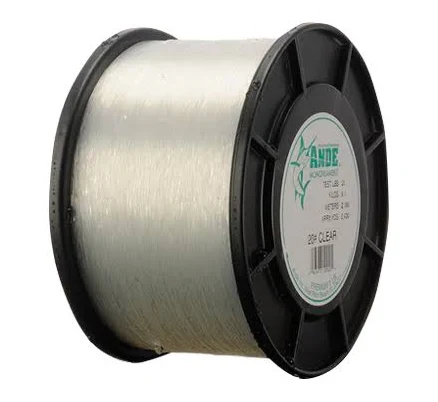
Ande
Premium Monofilament (Bulk) 100LB BY THE YARD
- Monofilament nylon fishing line
- We found no PFAS statement from the brand
- Microplastic fragmentation
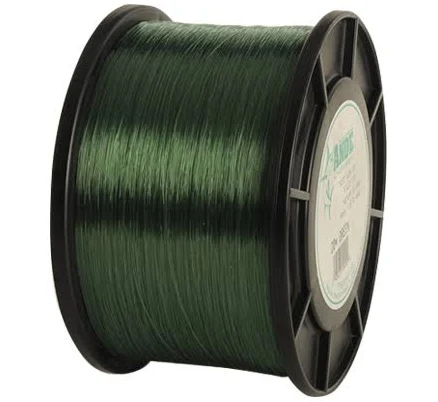
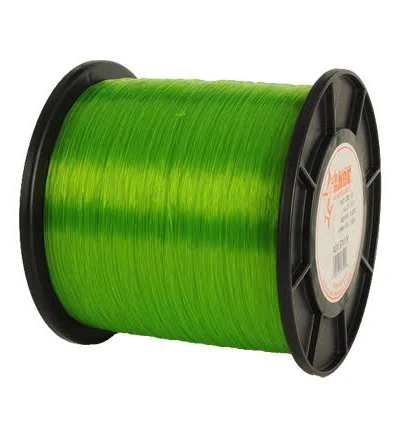
Ande
Premium Green 1/4 Spool
- Monofilament nylon fishing line
- We found no PFAS statement from the brand
- UV degradation and polymer brittleness
2 hazards checked on this product. See all of them.
More fishing line grades
How we score, every product runs through the same public 0-100 rubric based on materials, coatings, brand disclosure, lab findings, and recalls. See the full methodology → Spotted a mistake? Report an error.