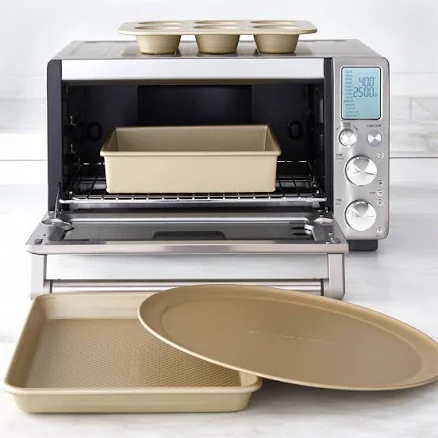
Breville Smart Oven Air Fryer Pro & Goldtouch Pro Nonstick 4-Piece Bundle
Wait for Breville to disclose coating chemistry or pick PFAS-free cookware.
The bundled Goldtouch Pro cookware has a nonstick coating but Breville doesn't disclose whether it uses Teflon-type coating, Teflon-family coating, or PFAS-based water repellents. No PFAS-free claim exists.
The better-graded swap
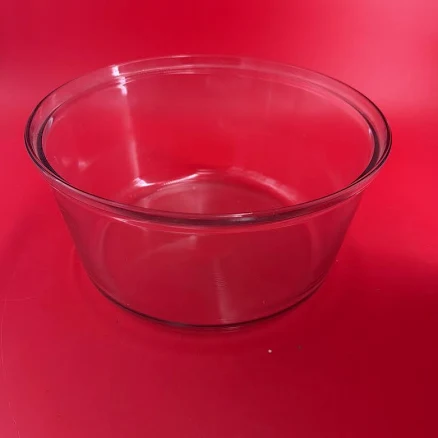
Big Boss
Big Boss Oil Less Fryer Air Fryer 16 Quart Replacement Clear Glass
75/100 safety
Same rubric that flunked this product. The swap earned Excellent.
Still want this one anyway? Check the price on Amazon. We’d swap it.
Material
Nonstick coating (type unspecified); hard-anodized aluminum cookware
Lab data
No public lab test
You may also be interested in
Top-graded picks in the categories readers replace first, every one scored on the same rubric.

- polypropylene filter housing, carbon/sediment cartridge
- We found no PFAS statement from the brand
- Bacterial growth in spent cartridges
3 hazards checked on this product, all on its full breakdown.

Aquasure
Premier Series 75 GPD Under Sink Reverse Osmosis Water Filtration System
- RO membrane, carbon filters, stainless steel housing
- We found no PFAS statement from the brand
- Bacterial and microbial growth in housing and filters
4 hazards checked on this product, all on its full breakdown.

Avocado
Vegan Mattress
- organic cotton, natural latex, coconut coir, recycled steel coils
- The brand calls it PFAS-free, which we have not verified
- Heavy metals
2 hazards checked on this product, all on its full breakdown.
What Breville Smart Oven Air 4-Piece Bundle is made of, ingredients and materials
The Goldtouch Pro cookware in this bundle features a nonstick coating applied to hard-anodized aluminum. Breville does not publicly disclose whether the nonstick layer uses Teflon-type coating (traditional Teflon-type) or newer fluorine-free chemistries. Hard-anodized aluminum itself is inert and does not leach aluminum into food under normal use, unlike bare aluminum. The safety profile of the nonstick surface therefore hinges entirely on coating composition and durability over time.
What’s concerning
Category baseline
The starting point for this type of product, before anything specific to this product is counted.
No PFAS disclosure
No public statement from the brand about PFAS in this product.
Non-stick, chemistry undisclosed
Marketed as non-stick without stating the coating chemistry.
Nonstick coating degradation and chemical release
Breville does not disclose nonstick chemistry; if Teflon-type coating-based, degradation from thermal stress or physical damage poses low but non-zero risk of polymer fume inhalation and particulate ingestion. Risk increases with age and improper use.
Thermal fume risk from undisclosed coating
Without confirmation of PFAS-free composition, accidental overheating or coating damage cannot be ruled out as a source of fumes. Teflon-type coating-type coatings historically degrade above 500°F; normal air fryer operation stays below this, but mechanical damage lowers this threshold.
Coating adhesion and durability over time
General wear on hard-anodized nonstick cookware is well-documented; flaking or peeling can introduce coating particles into food. Breville cookware has not been specifically flagged, but the 4-piece bundle suggests frequent use, which accelerates degradation.
Manufacturing process volatiles (off-gassing on first use)
New nonstick cookware may release small amounts of manufacturing solvents or residues; running the air fryer empty at high temperature before first food use can reduce this. This is temporary and not unique to Breville.
What’s reassuring
Aluminum leaching from anodized base
Hard-anodized aluminum does not leach aluminum into food under normal cooking conditions; the anodization creates a protective oxide barrier. Risk is negligible unless the coating is damaged or acidic foods are stored long-term.
How is this PFAS grade calculated?
The brand's record and disclosure
Breville has not published information about PFAS content, coating chemistry, or certifications like GREENGUARD. The company's silence on nonstick composition is typical of mainstream cookware brands but represents a missed opportunity for transparency that consumers increasingly expect. No major recalls specific to coating degradation or chemical leaching have been documented for this product line, though the lack of disclosure limits assessment. Breville's parent company, Sunbeam Products, follows industry standards but does not lead on chemical safety communication.
How it compares in its category
Air fryer baskets and cookware are typically hard-anodized aluminum with nonstick coatings; this bundle is mainstream in construction. Competitors like Cuisinart, Ninja, and Instant Pot similarly avoid public PFAS disclosure. Brands like Our Place and GreenPan explicitly advertise PFAS-free coatings and achieve comparable nonstick performance, making those alternatives stronger choices if PFAS avoidance is a priority. Breville's strength lies in temperature precision and design; chemical transparency is not a competitive advantage.
If you buy it
Do not exceed the manufacturer's recommended temperature (typically 400-425°F for air fryer functions); overheating accelerates nonstick degradation and chemical volatilization regardless of coating type. Hand-wash the cookware rather than using a dishwasher, which degrades the coating faster. Inspect the nonstick surface every 6-12 months for chipping, peeling, or discoloration; replace the cookware if damage is visible. Avoid using metal utensils or abrasive scrubbers; these compromise the coating and increase leaching risk over time.
What is not known about PFAS in this product?
- Basis
- Model estimate, 35% confidence, not a lab result
- Lab test
- None on record for this exact product
- Brand statement
- Breville has made a specific claim
Formulations change between production runs, so check the current label. How we grade.
What are the PFAS-free alternatives to Breville Smart Oven Air Fryer Pro & Goldtouch Pro Nonstick 4-Piece Bundle?
- borosilicate glass, bare uncoated
- We found no PFAS statement from the brand
- Thermal shock and fracture
2 hazards checked on this product, all on its full breakdown.
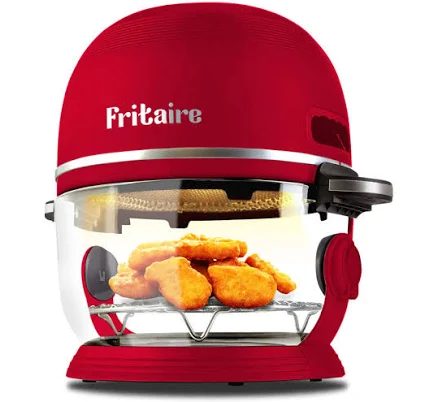
- borosilicate glass
- We found no PFAS statement from the brand
- Aluminum leaching from base/housing
4 hazards checked on this product, all on its full breakdown.
Find an alternative on Amazon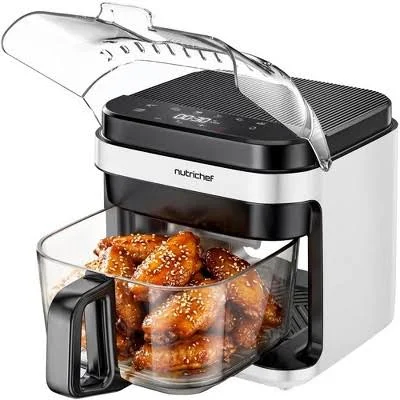
- glass bowl, stainless steel exterior
- We found no PFAS statement from the brand
- Thermal stress and glass breakage
2 hazards checked on this product, all on its full breakdown.
Find an alternative on AmazonMore air fryers grades
How we score, every product runs through the same public 0-100 rubric based on materials, coatings, brand disclosure, lab findings, and recalls. See the full methodology → Spotted a mistake? Report an error.