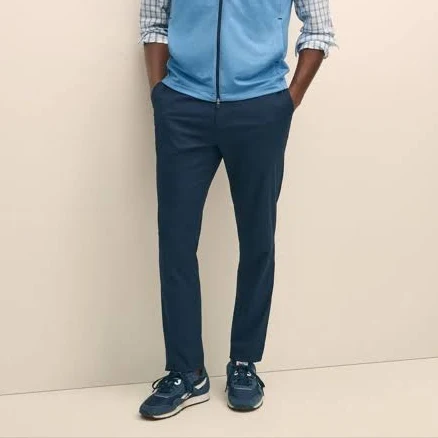
Brooks Brothers · Stain-Resistant Professional Workwear
Brooks Brothers Men's Performance Series Trousers
Skip until Brooks Brothers discloses finish composition and PFAS status.
Brooks Brothers Performance Series trousers feature water and stain resistant treatments, common vectors for PFAS. The brand provides no public disclosure on finish chemistry or PFAS content, and no independent testing or certifications found.
Still want this one anyway? Check the price on Amazon. We’d swap it.
Material
cotton/synthetic blend with water-repellent coating and stain resistance finish
Brand disclosure
Brand is silent on PFAS
Lab data
No public lab test
What Brooks Brothers Men's Performance Series is made of, ingredients and materials
Brooks Brothers Performance Series trousers are a cotton-synthetic blend (typically 60-70% cotton, 30-40% polyester) treated with a water-repellent coating (water-repellent coating) finish and stain-resistance coating. The water-repellent coating finish is the critical unknown, legacy water-repellent coating formulations often relied on long-chain PFAS (PFOA, PFOS), while newer alternatives may use shorter-chain PFAS or non-fluorinated chemistry. The polyester content introduces potential for antimony catalysts (used in polyester manufacturing), though migration into skin contact is low under normal wear. Synthetic fibers also shed microfibers when laundered, though this is an environmental rather than wearer hazard.
What’s concerning
Category baseline
The starting point for this type of product, before anything specific to this product is counted.
No PFAS disclosure
No public statement from the brand about PFAS in this product.
Waterproof / stain-resistant treatment
Water-repellent coating treatments have historically used PFAS.
PFAS
Undisclosed finish chemistry; Brooks Brothers has not confirmed PFAS-free alternatives. Long-chain PFAS (PFOA/PFOS) were historically standard in textile water-repellent coating; migration to skin is low but bioaccumulation through repeated wear across multiple garments remains a concern, especially for frequent wearers.
Source, ATSDR ↗Formaldehyde / VOCs
Some stain-resistance finishes use formaldehyde-releasing resins for durability. Off-gassing is typically minimal after initial manufacture and laundering, but undisclosed finish chemistry means this cannot be ruled out.
Source, ATSDR ↗Microfiber shedding and degradation
Synthetic-blend garments shed microfibers during washing; this is environmental rather than direct wearer risk, but reflects material durability and end-of-life concerns.
What’s reassuring
Antimony in polyester
Polyester content (~30-40%) may contain antimony catalysts from synthesis. Migration into sweat or skin contact is minimal under normal wear conditions and no recalls or issues are on record for Brooks Brothers trousers.
Heavy metals
Brooks Brothers does not use intentionally problematic dyes, and no recalls for azo dye violations or heavy metal contamination are on record for this brand.
Source, FDA ↗The full breakdown
The brand's record and disclosure
Brooks Brothers has not publicly disclosed the specific chemistry of its water-repellent coating or stain-resistance finishes, nor has the brand committed to PFAS-free alternatives or third-party testing transparency. The company is not known for aggressive chemical disclosure practices compared to outdoor and athletic brands (Arc'teryx, Patagonia, The North Face) that have moved toward PFAS-free water repellency. No major recalls or regulatory actions specific to this product line are on record. The silence on finish composition is the primary concern for informed purchasing.
How it compares in its category
Most premium menswear trousers at this price point (Brooks Brothers sits in mid-to-upper tier) include water-repellent coating or stain-resistance finishes; unfinished cotton alternatives exist but sacrifice performance and durability. Brands like Banana Republic and J.Crew apply similar finishes with equivalent disclosure gaps. Premium outdoor/performance brands (Smartwool, REI Co-op trousers) increasingly disclose PFAS-free certifications and testing, making them differentiated but costlier alternatives. Brooks Brothers' approach is typical for traditional menswear, not exceptional or particularly laggard.
If you buy it
Follow care label instructions strictly, wash in cool water, avoid fabric softeners (which can degrade water-repellent coating coatings), and air dry to preserve finish longevity and reduce microfiber shedding. Do not dry clean if avoidable, as solvents can interact unpredictably with finish chemistry. Expect the water-repellent coating/stain-resistance to diminish after 30-50 washes; re-application products exist but may reintroduce PFAS if not explicitly PFAS-free certified. Replace trousers when wear is visible (crotch, hems, pockets) rather than when finish fades, as wearing them out reduces per-wear environmental cost.
What we don’t know
- Basis
- Model estimate, 35% confidence, not a lab result
- Lab test
- None on record for this exact product
- Brand statement
- Brooks Brothers has made none
Formulations change between production runs, so check the current label. How we grade.
Better-graded alternatives in Stain-Resistant Professional Workwear

Banana Republic
Women's High-Rise Straight Stretch Linen-Viscose Utility Pants
- linen-viscose blend, no water-resistant finish
- We found no PFAS statement from the brand
- Formaldehyde / VOCs
3 hazards checked on this product. See all of them.
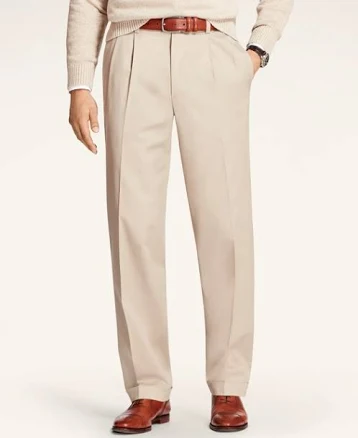
Brooks Brothers
Men's Pleated Cotton Chino Pants
- 100% cotton, pleated, no stated treatment
- We found no PFAS statement from the brand
- Residual azo dyes and synthetic dye intermediates
2 hazards checked on this product. See all of them.
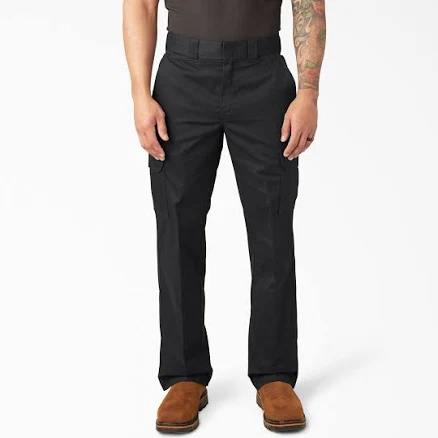
Dickies
Men's Relaxed Fit Straight Leg Cargo Work Pants
- 100% cotton twill, no water-resistant treatment
- We found no PFAS statement from the brand
- Azo dyes and residual finishing agents
2 hazards checked on this product. See all of them.
More stain-resistant professional workwear grades
How we score, every product runs through the same public 0-100 rubric based on materials, coatings, brand disclosure, lab findings, and recalls. See the full methodology → Spotted a mistake? Report an error.