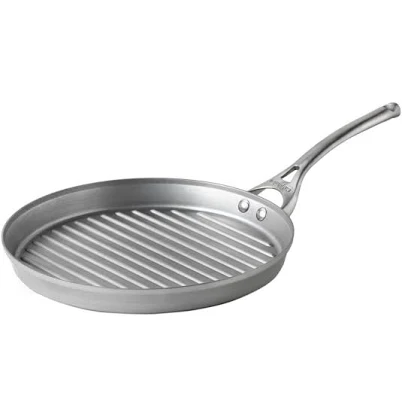
Calphalon Contemporary Stainless Steel Round Grill Pan, Is It Non-Toxic?
Lower concern; stainless steel grill pan with no nonstick coating reduces PFAS risk significantly.
This Calphalon grill pan is stainless steel without nonstick coating, which avoids the primary cookware vector for PFAS. Stainless steel is durable and inert with established lower PFAS concern than coated nonstick.
The better-graded swap
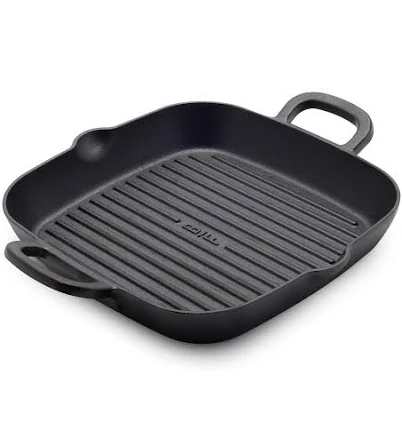
GreenPan
GreenPan Bobby Flay 11" Cast Iron Square Grill Pan
70/100 safety
Same rubric that flunked this product. The swap earned Good.
Still want this one anyway? Check the price on Amazon. We’d swap it.
Material
stainless steel, non-nonstick
Lab data
No public lab test
You may also be interested in
Top-graded picks in the categories readers replace first, every one scored on the same rubric.

- polypropylene filter housing, carbon/sediment cartridge
- We found no PFAS statement from the brand
- Bacterial growth in spent cartridges
3 hazards checked on this product, all on its full breakdown.

Aquasure
Premier Series 75 GPD Under Sink Reverse Osmosis Water Filtration System
- RO membrane, carbon filters, stainless steel housing
- We found no PFAS statement from the brand
- Bacterial and microbial growth in housing and filters
4 hazards checked on this product, all on its full breakdown.

Avocado
Vegan Mattress
- organic cotton, natural latex, coconut coir, recycled steel coils
- The brand calls it PFAS-free, which we have not verified
- Heavy metals
2 hazards checked on this product, all on its full breakdown.
Is Calphalon Contemporary Round Grill Pan non-toxic? What it is made of
This pan is stainless steel with no nonstick coating, meaning no Teflon-family coating layer (Teflon-type coating/PFOA) and no ceramic or enamel glaze that could chip or leach. Stainless steel is chemically inert under normal cooking conditions and does not degrade into food at typical stovetop or grill temperatures. The lack of any coating significantly reduces the chemical hazard profile compared to nonstick or coated alternatives.
What’s concerning
Category baseline
The starting point for this type of product, before anything specific to this product is counted.
No PFAS disclosure
No public statement from the brand about PFAS in this product.
Stainless steel nickel or chromium leaching under acidic conditions
Stainless steel can release trace amounts of nickel and chromium in prolonged contact with strong acids (vinegar, wine, citrus); the risk is low for occasional grill use but slightly elevated if pan is misused for long-term acidic food storage. This is a standard property of stainless steel cookware across the category, not brand-specific.
What’s reassuring
Bare uncoated material
Recorded as a bare, uncoated material with no surface coating or treatment.
Aluminum leaching
This product is stainless steel, not aluminum, so aluminum leaching is not a concern.
Teflon-type coating fume risk (nonstick coating degradation)
No nonstick coating present; this is bare stainless steel, so Teflon-type coating fume risk is eliminated entirely.
Lead
No enamel, glaze, or ceramic coating; bare stainless steel has no glazed surface to test or degrade.
Source, ATSDR ↗Coating degradation and chipping over time
No coating present, so there is no coating to chip, flake, or degrade into food.
How is this PFAS grade calculated?
The brand's record and disclosure
Calphalon has not made public statements specifically addressing PFAS or chemical safety in their cookware lines. The brand has faced historical scrutiny over nonstick coatings in other product lines but has not faced documented recalls for lead, cadmium, or aluminum leaching in stainless steel cookware. No third-party certifications (NSF, FDA approval letters) are prominently documented for this specific model.
How it compares in its category
Stainless steel grill pans without nonstick coatings present lower concern in the cookware category because they reduce two major hazard vectors, Teflon-type coating fume risk and coating degradation. This is a more conservative choice than ceramic-coated or nonstick grill pans, which carry potential for chipping and leaching. Cast iron and bare stainless steel dominate the low-chemical segment of this category.
If you buy it
Use metal or silicone utensils to avoid scratching (though the bare steel surface is less vulnerable than coated pans). Preheat gradually rather than over high heat immediately, as rapid temperature swings can warp the pan over years. Hand wash or use the dishwasher; stainless steel tolerates both. Replace only if structural damage (warping, handle loosening) occurs, not for surface wear.
What is not known about PFAS in this product?
- Basis
- Model estimate, 82% confidence, not a lab result
- Lab test
- None on record for this exact product
- Brand statement
- Calphalon has made a specific claim
Formulations change between production runs, so check the current label. How we grade.
More grill pans grades
How we score, every product runs through the same public 0-100 rubric based on materials, coatings, brand disclosure, lab findings, and recalls. See the full methodology → Spotted a mistake? Report an error.