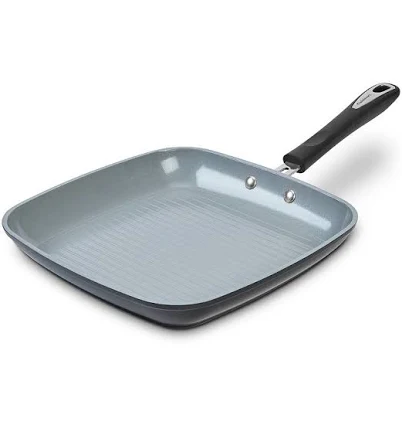
Cuisinart Ceramica XT Nonstick 11-Inch Grill Pan, Is It Non-Toxic?
Avoid until Cuisinart discloses coating chemistry or provides third-party testing.
Cuisinart's Ceramica XT branding suggests a ceramic-hybrid nonstick, but the company discloses no PFAS-related information or testing. The coating remains proprietary without lab verification or explicit PFAS-free commitment.
The better-graded swap
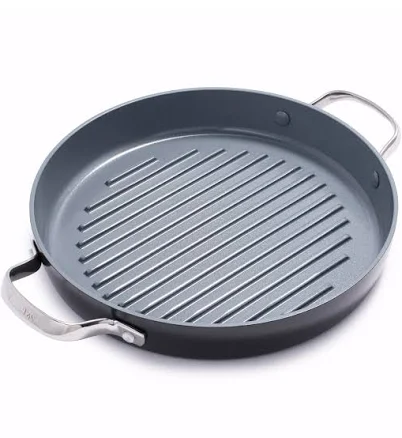
GreenPan
GreenPan Valencia Pro Ceramic Nonstick 11" Round Grill Pan
70/100 safety
Same rubric that flunked this product. The swap earned Good.
Still want this one anyway? Check the price on Amazon. We’d swap it.
Material
Ceramic XT nonstick coating (proprietary, unspecified)
Lab data
No public lab test
You may also be interested in
Top-graded picks in the categories readers replace first, every one scored on the same rubric.

- polypropylene filter housing, carbon/sediment cartridge
- We found no PFAS statement from the brand
- Bacterial growth in spent cartridges
3 hazards checked on this product, all on its full breakdown.

Aquasure
Premier Series 75 GPD Under Sink Reverse Osmosis Water Filtration System
- RO membrane, carbon filters, stainless steel housing
- We found no PFAS statement from the brand
- Bacterial and microbial growth in housing and filters
4 hazards checked on this product, all on its full breakdown.

Avocado
Vegan Mattress
- organic cotton, natural latex, coconut coir, recycled steel coils
- The brand calls it PFAS-free, which we have not verified
- Heavy metals
2 hazards checked on this product, all on its full breakdown.
Is Cuisinart Ceramica XT Nonstick Grill Pan non-toxic? What it is made of
The Ceramica XT pan uses a proprietary ceramic-based nonstick coating that Cuisinart does not publicly specify in detail. Ceramic nonstick coatings are generally formulated as ceramic-type silica or alumina compounds bonded to the substrate, but without Cuisinart's full chemical disclosure, the exact binders, hardeners, or additives remain opaque. The underlying pan body is typically hard-anodized aluminum. The lack of transparency on coating composition makes independent hazard assessment difficult.
What’s concerning
Category baseline
The starting point for this type of product, before anything specific to this product is counted.
No PFAS disclosure
No public statement from the brand about PFAS in this product.
Non-stick, chemistry undisclosed
Marketed as non-stick without stating the coating chemistry.
Teflon-type coating or fluorinated nonstick compounds (proprietary coating)
Ceramica XT formula is not disclosed. While some ceramic coatings are marketed as not containing PFAS, Cuisinart's silence on chemistry means PFAS presence cannot be ruled out. Request material safety data sheet from manufacturer before purchase if PFAS avoidance is a priority.
Aluminum leaching from substrate
The underlying aluminum core can leach if the ceramic coating becomes compromised (chips, scratches, peeling). Hard-anodized aluminum resists this better than bare aluminum, but coating integrity is critical; inspect regularly and discontinue use if coating fails.
Ceramic coating degradation and flaking
Ceramic nonstick coatings are durable but not exempt from wear. Flaking or powdering into food is possible with age or misuse; this is a cosmetic and potential ingestion risk. No long-term safety data specifically on Cuisinart's proprietary formula exists in public domain.
Thermal fume inhalation from nonstick coating breakdown
If the coating contains fluorinated compounds and is heated above its thermal stability threshold (typically 400-600F for ceramic formulas), breakdown could release irritant fumes. Avoid preheating empty and maintain appropriate cooking temperatures.
What’s reassuring
Lead
Cuisinart cookware has not been subject to widely publicized lead/cadmium violations. However, no third-party testing results for Ceramica XT specifically are on record; this remains unverified.
Source, ATSDR ↗How is this PFAS grade calculated?
The brand's record and disclosure
Cuisinart has not published a PFAS-free certification or provided third-party testing results for this line. The company has remained silent on whether Ceramic XT contains fluorinated compounds, which is a notable gap given industry movement toward PFAS-free alternatives. Cuisinart does not appear in major databases of brands with explicit PFAS phase-out commitments. This silence is the primary driver of safety uncertainty for this product.
How it compares in its category
Ceramic nonstick pans sit in a middle tier, lower concern for fume risk if coating fails compared to older Teflon-type coating-based designs, but less established in long-term testing than stainless steel or cast iron. Many competitors (including some Cuisinart lines) now explicitly claim PFAS-free ceramic or offer Teflon-type coating alternatives with clear SaferChoice or other certifications. The Ceramica XT's lack of any public safety certification puts it behind more transparent brands in the same price range.
If you buy it
Keep heat below medium-high; ceramic coatings can degrade faster at high temperatures, increasing risk of coating flaking into food. Hand-wash rather than dishwasher to extend coating life. Replace the pan if the nonstick surface visibly chips, peels, or dulls significantly within the first 1-2 years, as this suggests degradation and potential ceramic particle shedding. Store with pan protectors to minimize impact damage that can initiate coating breakdown.
What is not known about PFAS in this product?
- Basis
- Model estimate, 35% confidence, not a lab result
- Lab test
- None on record for this exact product
- Brand statement
- Cuisinart has made a specific claim
Formulations change between production runs, so check the current label. How we grade.
What are the PFAS-free alternatives to Cuisinart Ceramica XT Nonstick 11-Inch Grill Pan?
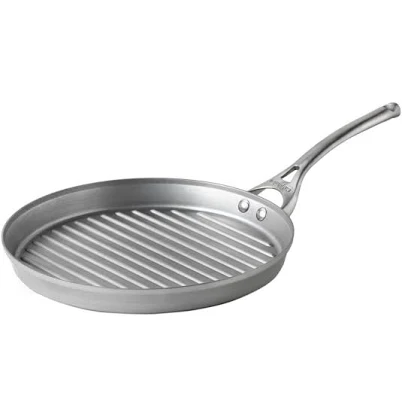
- stainless steel, non-nonstick
- Stainless steel nickel or chromium leaching under acidic conditions
- Ceramic nonstick coating (Teflon-type coating-free proprietary formulation)
- The brand calls it PFAS-free, which we have not verified
- Aluminum leaching
3 hazards checked on this product, all on its full breakdown.
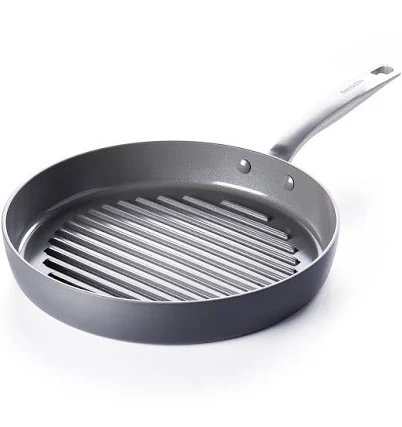
- Ceramic nonstick coating (proprietary, Teflon-type coating-free)
- The brand calls it PFAS-free, which we have not verified
- Ceramic coating degradation and flaking
3 hazards checked on this product, all on its full breakdown.
More grill pans grades
How we score, every product runs through the same public 0-100 rubric based on materials, coatings, brand disclosure, lab findings, and recalls. See the full methodology → Spotted a mistake? Report an error.