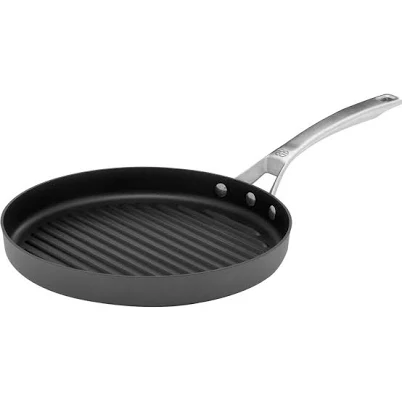
Calphalon Signature Nonstick 12-in. Round Grill Pan, Is It Non-Toxic?
Nonstick coating chemistry not stated. PFAS concern cannot be assessed.
Calphalon markets this grill pan as nonstick without disclosing the coating chemistry. The brand has no PFAS statement on record and provides no third-party certification.
The better-graded swap
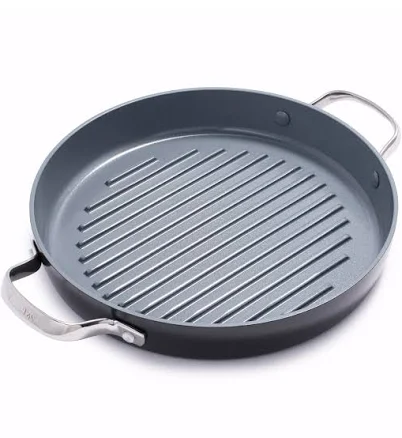
GreenPan
GreenPan Valencia Pro Ceramic Nonstick 11" Round Grill Pan
70/100 safety
Same rubric that flunked this product. The swap earned Good.
Still want this one anyway? Check the price on Amazon. We’d swap it.
Material
Nonstick coating (type unspecified)
Lab data
No public lab test
You may also be interested in
Top-graded picks in the categories readers replace first, every one scored on the same rubric.

- polypropylene filter housing, carbon/sediment cartridge
- We found no PFAS statement from the brand
- Bacterial growth in spent cartridges
3 hazards checked on this product, all on its full breakdown.

Aquasure
Premier Series 75 GPD Under Sink Reverse Osmosis Water Filtration System
- RO membrane, carbon filters, stainless steel housing
- We found no PFAS statement from the brand
- Bacterial and microbial growth in housing and filters
4 hazards checked on this product, all on its full breakdown.

Avocado
Vegan Mattress
- organic cotton, natural latex, coconut coir, recycled steel coils
- The brand calls it PFAS-free, which we have not verified
- Heavy metals
2 hazards checked on this product, all on its full breakdown.
Is Calphalon Signature Round Grill Pan non-toxic? What it is made of
Calphalon Signature uses a nonstick coating of unspecified chemistry. The brand does not publicly disclose whether the coating contains Teflon-type coating (Teflon) or a Teflon-type coating-free alternative, which is the critical safety distinction for grill pans. Without this information, the potential for fume emission at high heat and the durability of the coating over repeated use cycles remain uncharacterized. The underlying pan material is typically hard-anodized aluminum, which is generally stable when properly coated.
What’s concerning
Category baseline
The starting point for this type of product, before anything specific to this product is counted.
No PFAS disclosure
No public statement from the brand about PFAS in this product.
Non-stick, chemistry undisclosed
Marketed as non-stick without stating the coating chemistry.
Teflon-type coating fume risk (thermal decomposition)
If the coating is Teflon-type coating-based (unconfirmed by Calphalon), heating above 500F can release fluorinated polymer fumes, causing polymer fume fever in humans and acute toxicity in pet birds. Grill pans are often used at high heat, increasing this risk if the coating is Teflon-type coating.
Coating degradation and microparticle release
Nonstick coatings on grill pans degrade faster due to high heat cycles and mechanical stress from grilling. As the coating flakes or peels, ingestion of coating particles is possible; long-term effects of nonstick polymer microparticles are not well established but merit caution.
Aluminum leaching from bare substrate
If the nonstick coating is breached or worn, the underlying hard-anodized aluminum substrate can contact acidic foods. Leaching is generally minimal from hard-anodized aluminum, but repeated exposure to citrus, vinegar, or tomato-based marinades over years presents low-level risk.
Lack of use-temperature guidance
Calphalon does not prominently specify the maximum temperature threshold for this grill pan, leaving users without clear guidance. Standard nonstick cookware is often rated 400-500F, but grill pans are frequently used hotter; this ambiguity increases misuse risk.
How is this PFAS grade calculated?
The brand's record and disclosure
Calphalon maintains a largely silent position on nonstick coating composition across its product line, neither confirming nor denying PFOA or Teflon-type coating use in the Signature series. The company has made no prominent sustainability commitments or transparency initiatives regarding PFAS phaseout. Calphalon has faced no major recalls specifically tied to nonstick coating hazards in recent years, but the lack of proactive disclosure is a red flag for informed purchasing.
How it compares in its category
Calphalon Signature is a mid-range nonstick grill pan. Competitors like GreenPan explicitly market Teflon-type coating-free ceramic coatings and disclose their chemistry; T-fal and Tefal similarly provide coating information. Higher-end brands like Le Creuset and Staub offer cast-iron and enameled options with full material transparency. The Calphalon Signature sits in a gray zone where disclosure is weak relative to competitors, making direct safety comparison difficult.
If you buy it
Use this pan below 400F to minimize any potential fume risk from an uncharacterized nonstick coating. Hand wash only; avoid scouring pads and metal utensils that degrade the coating quickly. Inspect the surface monthly for chips, cracks, or peeling; discard the pan if coating integrity is visibly compromised. Replace within 3-5 years of regular use, as nonstick coatings degrade with thermal cycling and cannot be reliably renewed.
What is not known about PFAS in this product?
- Basis
- Model estimate, 35% confidence, not a lab result
- Lab test
- None on record for this exact product
- Brand statement
- Calphalon has made a specific claim
Formulations change between production runs, so check the current label. How we grade.
What are the PFAS-free alternatives to Calphalon Signature Nonstick 12-in. Round Grill Pan?
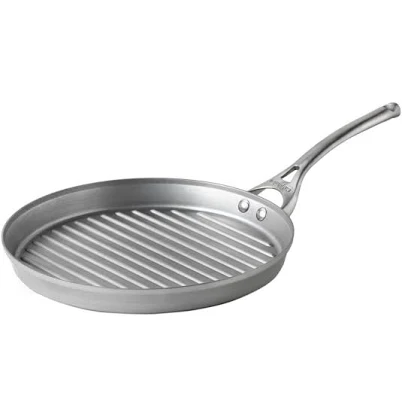
- stainless steel, non-nonstick
- Stainless steel nickel or chromium leaching under acidic conditions
- Ceramic nonstick coating (Teflon-type coating-free proprietary formulation)
- The brand calls it PFAS-free, which we have not verified
- Aluminum leaching
3 hazards checked on this product, all on its full breakdown.
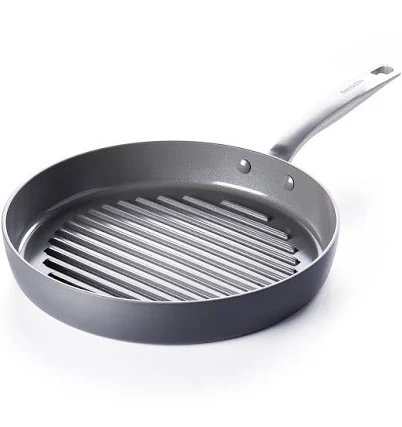
- Ceramic nonstick coating (proprietary, Teflon-type coating-free)
- The brand calls it PFAS-free, which we have not verified
- Ceramic coating degradation and flaking
3 hazards checked on this product, all on its full breakdown.
More grill pans grades
How we score, every product runs through the same public 0-100 rubric based on materials, coatings, brand disclosure, lab findings, and recalls. See the full methodology → Spotted a mistake? Report an error.