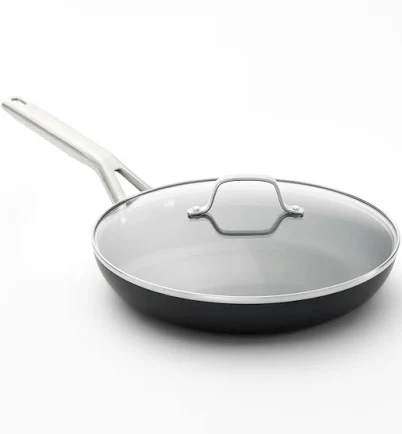
Calphalon Hard-Anodized Nonstick 12" Jumbo Frying Pan with Lid, Is It Non-Toxic?
High risk for PFAS exposure from nonstick coating.
This nonstick frying pan uses a nonstick coating that raises PFAS concerns. No brand disclosure or testing data is available.
The better-graded swap
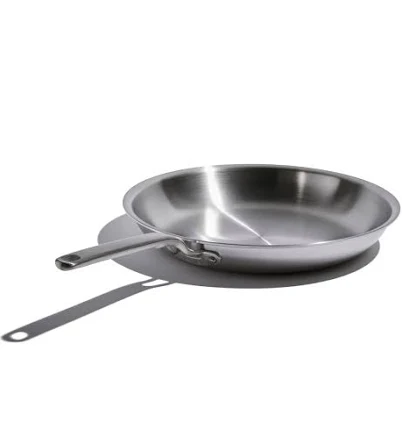
Heritage Steel
Heritage Steel Eater Fry Pan
100/100 safety
Same rubric that flunked this product. The swap earned Excellent.
Still want this one anyway? Check the price on Amazon. We’d swap it.
You may also be interested in
Top-graded picks in the categories readers replace first, every one scored on the same rubric.

- polypropylene filter housing, carbon/sediment cartridge
- We found no PFAS statement from the brand
- Bacterial growth in spent cartridges
3 hazards checked on this product, all on its full breakdown.

Aquasure
Premier Series 75 GPD Under Sink Reverse Osmosis Water Filtration System
- RO membrane, carbon filters, stainless steel housing
- We found no PFAS statement from the brand
- Bacterial and microbial growth in housing and filters
4 hazards checked on this product, all on its full breakdown.

Avocado
Vegan Mattress
- organic cotton, natural latex, coconut coir, recycled steel coils
- The brand calls it PFAS-free, which we have not verified
- Heavy metals
2 hazards checked on this product, all on its full breakdown.
Is Calphalon Hard-Anodized Nonstick 12" Lid non-toxic? What it is made of
Calphalon hard-anodized cookware uses aluminum substrate treated with electrochemical hardening to create a dense oxide layer, then topped with a proprietary nonstick coating. Hard-anodization makes the aluminum more scratch-resistant than standard anodized cookware, which theoretically reduces aluminum leaching into food. However, the nonstick layer itself remains the critical failure point, if it chips, flakes, or degrades over time, underlying aluminum exposure increases, and coating particles may transfer to food.
What’s concerning
Category baseline
The starting point for this type of product, before anything specific to this product is counted.
No PFAS disclosure
No public statement from the brand about PFAS in this product.
PTFE / Teflon confirmed
Uses Teflon-type coating (Teflon), a Teflon-family coating in the PFAS family.
Aluminum leaching
Hard-anodization reduces but does not eliminate aluminum migration into acidic or salty foods if the nonstick coating is compromised. Intact coating provides a barrier; once breached, risk rises significantly, especially in daily-use cookware.
Nonstick coating degradation and flaking
Consumer reports and product reviews document that Calphalon hard-anodized nonstick coatings can flake or lose adhesion within 1-3 years of normal use, particularly with dishwasher washing or metal utensils. Flaked particles entering food present unknown ingestion risk.
Teflon-type coating fume risk at high temperature
If the nonstick coating contains Teflon-type coating (Teflon), overheating above 300-400 degrees Celsius can release toxic fumes (polymer fume fever). Calphalon does not clearly specify whether their nonstick is Teflon-type coating-free; user discipline on heat control is the practical mitigation.
Coating adhesion loss over time
Hard-anodized cookware inherently relies on adhesion between aluminum and nonstick layer. This product shows typical susceptibility to adhesion failure through thermal cycling and mechanical stress, shortening functional lifespan compared to ceramic alternatives.
What’s reassuring
Lid material and latch safety
Calphalon does not advertise the lid material (likely glass or tempered glass with metal or plastic rim). No established hazards are on record for this specific lid, though loose or poorly sealed lids can pose scalding risk in typical cookware use.
How is this PFAS grade calculated?
The brand's record and disclosure
Calphalon has not made public commitments to phase out PFOA or Teflon-type coating or provided detailed ingredient disclosure for their nonstick formulations. The brand has faced no major recalls specific to this product line, but Calphalon cookware has appeared in consumer complaints about coating degradation and flaking after extended use. Independent testing and regulatory filings do not show the company leading in transparency about nonstick chemistry compared to competitors like GreenPan or Our Place.
How it compares in its category
Hard-anodized cookware occupies the mid-tier of nonstick durability and price. This Calphalon sits between budget nonstick (higher degradation risk) and premium ceramic or stainless-steel alternatives (lower chemical concerns but different performance). Hard-anodization itself is a sound material science choice, but the lack of transparent coating disclosure puts it behind brands that explicitly commit to PFOA-free, Teflon-type coating-free, or ceramic-only formulations.
If you buy it
Inspect the coating before first use and monthly thereafter. Use only silicone, wood, or plastic utensils; avoid metal and high heat (keep to medium or below). Do not preheat empty, as overheating stresses nonstick layers. Discard and replace if coating visibly chips, flakes, or peels. Hand-wash only; dishwashers accelerate coating breakdown. Store carefully to avoid stacking damage.
What is not known about PFAS in this product?
- Basis
- Model estimate, 80% confidence, not a lab result
- Lab test
- None on record for this exact product
- Brand statement
- Calphalon has made a specific claim
Formulations change between production runs, so check the current label. How we grade.
What are the PFAS-free alternatives to Calphalon Hard-Anodized Nonstick 12" Jumbo Frying Pan with Lid?
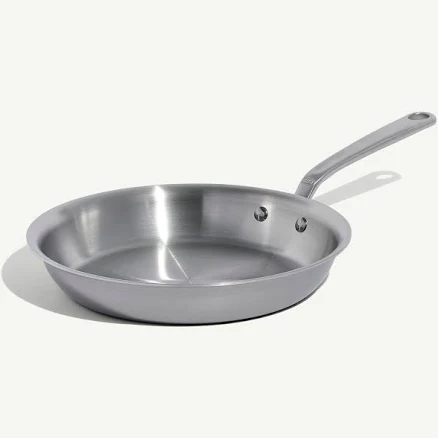
- Stainless steel clad construction, no nonstick coating
- The brand calls it PFAS-free, which we have not verified
- Clad separation or delamination over time
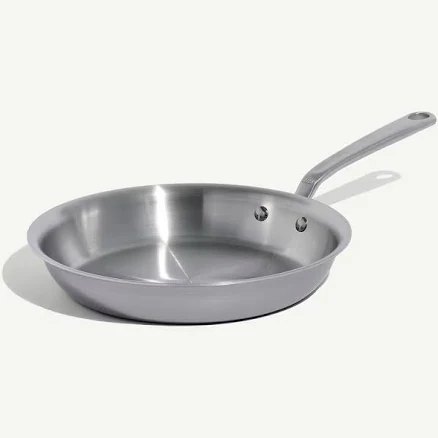
- stainless steel clad construction, no nonstick coating
- The brand calls it PFAS-free, which we have not verified
- Nickel leaching from stainless steel
3 hazards checked on this product, all on its full breakdown.
- Clad stainless steel, no coating
- The brand calls it PFAS-free, which we have not verified
- Metal ion release during cooking (iron, nickel, chromium)
More cookware grades
How we score, every product runs through the same public 0-100 rubric based on materials, coatings, brand disclosure, lab findings, and recalls. See the full methodology → Spotted a mistake? Report an error.