CeraVe Review, Is CeraVe Non-Toxic?
CeraVe averages 75 out of 100 on PFAS Authority's PFAS and toxin screen across the 11 CeraVe products graded as of October 2026, and all 11 reach its 70 point pass mark.
CeraVe grades Excellent on our four-band scale.
PFAS Authority is a scoring system, not a laboratory. We do not test products ourselves. Grades are model-based, built from published ingredients, materials, certifications, brand disclosures and third-party lab results where they exist. See the rubric.
What CeraVe says and does about PFAS
We found no PFAS statement from CeraVe itself. The ingredient list on CeraVe’s page for its Hydrating Mineral Sunscreen Face Lotion SPF 30 contains no fluorinated ingredient, and we found no independent PFAS test naming CeraVe products.
- MaterialsThe ingredient list on CeraVe’s page for Hydrating Mineral Sunscreen Face Lotion SPF 30 contains no fluorinated ingredient. CeraVe ↗
Sources checked September 14, 2026. A brand statement is the company’s own claim, which we report but have not verified. Our grades are model-based estimates, not lab tests.
CeraVe is one of the brands we researched by hand for our record of what every brand has published about PFAS, where the same question is answered for each of them in one line.
You may also be interested in
Top-graded picks in the categories readers replace first, every one scored on the same rubric.

- polypropylene filter housing, carbon/sediment cartridge
- We found no PFAS statement from the brand
- Bacterial growth in spent cartridges
3 hazards checked on this product, all on its full breakdown.

Aquasure
Premier Series 75 GPD Under Sink Reverse Osmosis Water Filtration System
- RO membrane, carbon filters, stainless steel housing
- We found no PFAS statement from the brand
- Bacterial and microbial growth in housing and filters
4 hazards checked on this product, all on its full breakdown.

Avocado
Vegan Mattress
- organic cotton, natural latex, coconut coir, recycled steel coils
- The brand calls it PFAS-free, which we have not verified
- Heavy metals
2 hazards checked on this product, all on its full breakdown.
Does CeraVe have PFAS, by category
Which CeraVe products are PFAS-free? Good or better, best-graded first
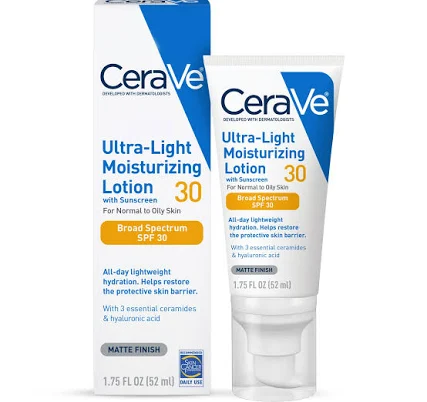
- Aqueous lotion with mineral sunscreen (titanium dioxide/zinc oxide) and ceramides
- Fragrance allergens and sensitizers. Product formulation details on fragrance sourcing are not publicly…
2 hazards checked on this product, all on its full breakdown.
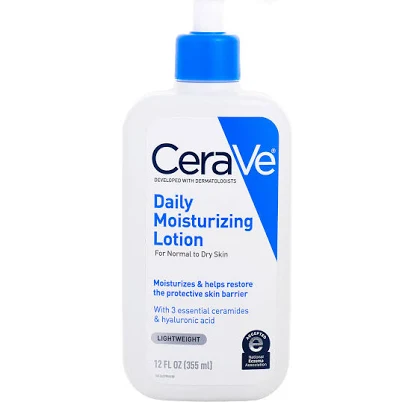
- water, glycerin, cetyl alcohol, niacinamide, ceramides (emulsion lotion)
- Comedogenicity and skin barrier disruption. Cetyl alcohol and glycerin are non-comedogenic at typical…
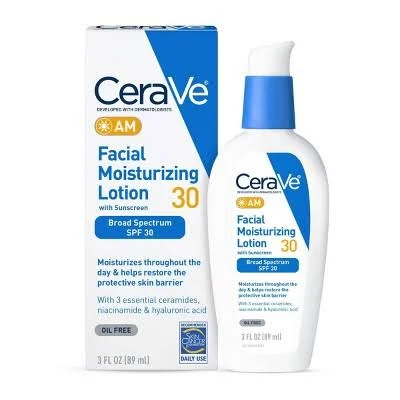
- water-based lotion emulsion with mineral UV filters (zinc oxide/titanium dioxide)
- Preservative sensitization (methylisothiazolinone). Methylisothiazolinone is a contact allergen in sensitive…
2 hazards checked on this product, all on its full breakdown.
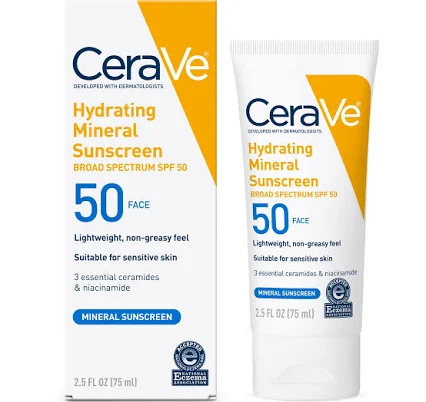
- mineral sunscreen (zinc oxide, titanium dioxide)
- Fragrance allergens and sensitizers. Product contains fragrance ingredients not fully itemized on label…
2 hazards checked on this product, all on its full breakdown.
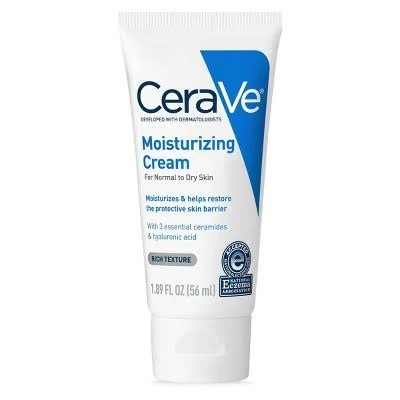
- Water, glycerin, ceramides, humectants (cream emulsion)
- 1,4-dioxane (synthetic contaminant in emulsifiers). Cosmetic emulsifiers like polysorbate 80 and cetyl…
2 hazards checked on this product, all on its full breakdown.
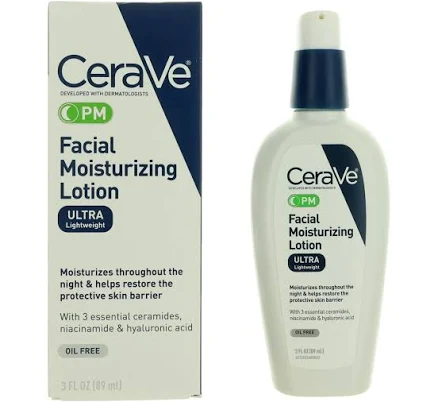
- water-based emulsion lotion with ceramides, hyaluronic acid, glycerin
- 1,4-dioxane contamination. Water-based cosmetics may contain trace 1,4-dioxane as a byproduct of ethoxylation…
2 hazards checked on this product, all on its full breakdown.
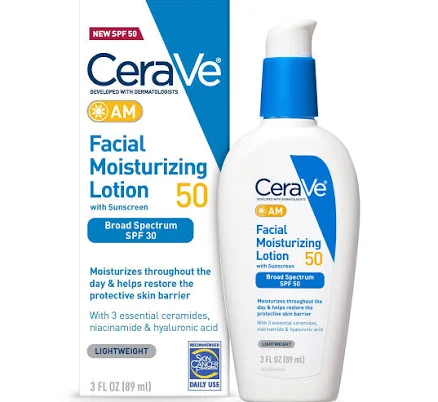
- Water-based lotion with mineral sunscreen actives (zinc oxide/titanium dioxide), humectants, ceramides…
- Fragrance allergens. CeraVe AM comes in both fragrance-free and lightly fragranced versions. The fragrance…
2 hazards checked on this product, all on its full breakdown.
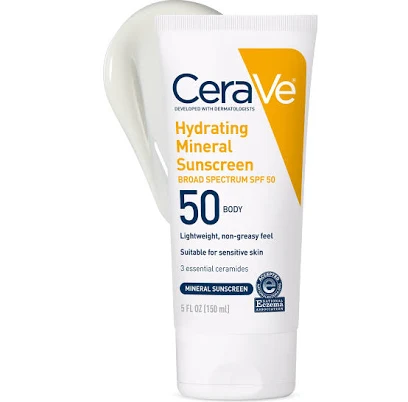
- mineral sunscreen (zinc oxide/titanium dioxide base)
- Fragrance allergens. CeraVe mineral sunscreens typically include fragrance compounds to mask the metallic…
3 hazards checked on this product, all on its full breakdown.
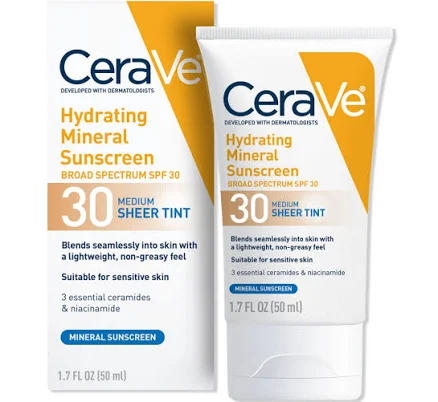
- mineral sunscreen (zinc oxide, titanium dioxide)
- Fragrance allergens and sensitizers. CeraVe Hydrating Mineral Sunscreen is labeled fragrance-free, reducing…
2 hazards checked on this product, all on its full breakdown.
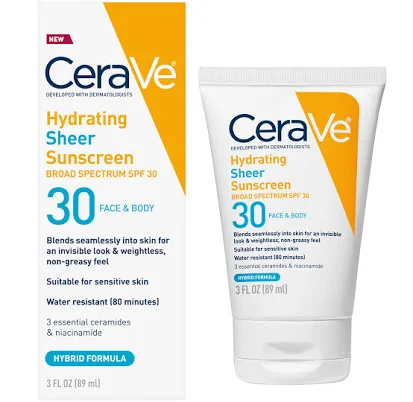
- Mineral and chemical UV filters in emulsion base; no intentional water-resistant coating disclosed
- Chemical UV filter allergenicity and photosensitivity. Oxybenzone, avobenzone, and cinnamate esters are…
4 hazards checked on this product, all on its full breakdown.
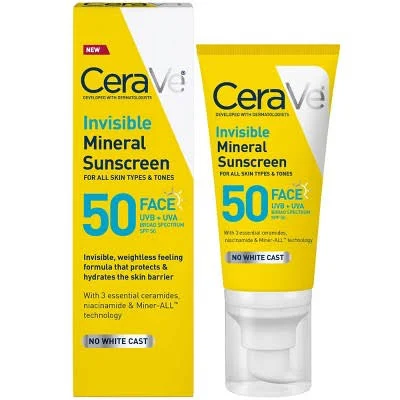
- Mineral UV filters (zinc oxide, titanium dioxide) in emulsion base
- Heavy metals. Zinc oxide and titanium dioxide as mined materials may contain trace contaminants including…
3 hazards checked on this product, all on its full breakdown.
What to buy instead Good or better, in the categories CeraVe sells
- Mineral sunscreen, zinc oxide base
- A third party reports verifying it as PFAS-free
- 1,4-dioxane (non-intentional contaminant from surfactants/emulsifiers)
2 hazards checked on this product, all on its full breakdown.
- mineral sunscreen (zinc oxide or titanium dioxide base)
- The brand calls it PFAS-free, which we have not verified
- Synthetic fragrance allergens
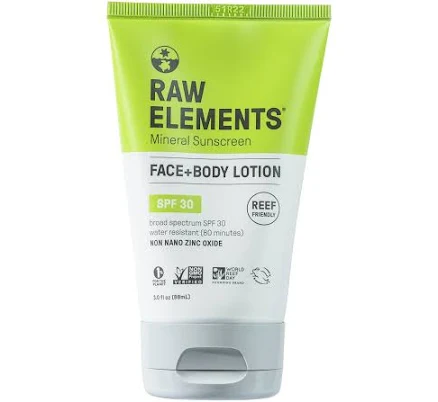
- mineral sunscreen (zinc oxide, titanium dioxide)
- We found no PFAS statement from the brand
- Fragrance allergens and undisclosed fragrance components
CeraVe and PFAS, common questions
- Does CeraVe have PFAS?
- CeraVe averages 75 out of 100 on PFAS Authority's PFAS and toxin screen across the 11 CeraVe products graded as of October 2026, and all 11 reach its 70 point pass mark. Grades are model-based estimates built from published materials, ingredients and disclosures, not lab tests. We found no PFAS statement from CeraVe, and the ingredient list for its Hydrating Mineral Sunscreen SPF 30 contains no fluorinated ingredient.
- Is CeraVe non-toxic?
- CeraVe Ultra-Light Moisturizing Lotion SPF 30 is the highest-graded CeraVe product we have scored, at 75/100. It depends on the product line rather than the brand, so check the grade of the exact item you are buying.
- Which CeraVe products are lower concern for PFAS?
- The highest-graded CeraVe products we have scored are CeraVe Ultra-Light Moisturizing Lotion SPF 30, CeraVe Daily Moisturizing Lotion, CeraVe Facial Moisturizing Lotion AM SPF 30. That is our model-based estimate from materials and public disclosure, not a lab test.
Every grade uses the same public rubric. How grades work →