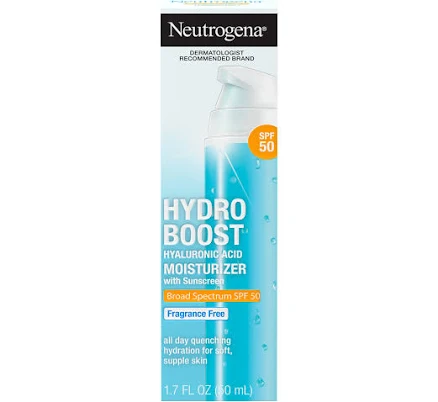
Neutrogena Hydro Boost SPF 50 Moisturizer
Lower PFAS concern for standard moisturizer, but brand transparency is absent.
This water-based moisturizer with hyaluronic acid has no water-repellent, stain-resistant, nonstick coatings, or Teflon-family coating treatments. Neutrogena hasn't disclosed PFAS status.
We flunk more products than we pass. This one earned its grade. How we grade
Material
Water-based moisturizer with humectants (hyaluronic acid); no coating or treatment
Lab data
No public lab test
You may also be interested in
Top-graded picks in the categories readers replace first, every one scored on the same rubric.

- polypropylene filter housing, carbon/sediment cartridge
- We found no PFAS statement from the brand
- Bacterial growth in spent cartridges
3 hazards checked on this product, all on its full breakdown.

Aquasure
Premier Series 75 GPD Under Sink Reverse Osmosis Water Filtration System
- RO membrane, carbon filters, stainless steel housing
- We found no PFAS statement from the brand
- Bacterial and microbial growth in housing and filters
4 hazards checked on this product, all on its full breakdown.

Avocado
Vegan Mattress
- organic cotton, natural latex, coconut coir, recycled steel coils
- The brand calls it PFAS-free, which we have not verified
- Heavy metals
2 hazards checked on this product, all on its full breakdown.
What Neutrogena Hydro Boost SPF 50 Moisturizer is made of, ingredients and materials
This is a water-based moisturizer relying on hyaluronic acid as its primary humectant, a hygroscopic molecule that draws moisture into skin. Water-based formulas eliminate the coating and degradation risks seen in oil-based or silicone-heavy products. The formula does not require enamel, ceramic, or polymer coatings, and hyaluronic acid itself is a naturally occurring compound with no established dermal toxicity at cosmetic use levels.
What’s concerning
Category baseline
The starting point for this type of product, before anything specific to this product is counted.
No PFAS disclosure
No public statement from the brand about PFAS in this product.
Fragrance allergens
Most Neutrogena SPF moisturizers include fragrance or fragrance compounds; hypoallergenic variants exist but ingredient lists vary by market region. Individuals with sensitive skin or fragrance sensitivity should verify the specific SKU or conduct a patch test.
1,4-dioxane (manufacturing residue)
This contaminant can form during synthesis of some emulsifiers and surfactants used in water-based moisturizers. FDA does not mandate 1,4-dioxane declaration on labels because it is not an intentional ingredient; Neutrogena products are not known to carry elevated levels, but no public testing data is available for this specific SKU.
Formaldehyde / VOCs
Water-based moisturizers typically use preservatives such as methylisothiazolinone or parabens to prevent microbial growth. If the product lists DMDM hydantoin or imidazolidinyl urea, those can release trace formaldehyde; Neutrogena formulations vary by region, so ingredient verification is recommended for sensitive individuals.
Source, ATSDR ↗What’s reassuring
Base material not linked to PFAS
The main material recorded for this product is not one associated with PFAS.
Heavy metals
Water-based moisturizers with minimal pigmentation (this product is typically colorless or lightly tinted) carry negligible risk. Titanium dioxide (used in mineral-style SPF versions) is not associated with bioaccumulation in cosmetic-use concentrations.
Source, FDA ↗Microplastics
This product does not contain intentional microbeads or synthetic polymer spheres. Hyaluronic acid is a biopolymer but does not fragment into microplastics during use or disposal.
Source, EPA ↗How is this PFAS grade calculated?
The brand's record and disclosure
Neutrogena is owned by Johnson & Johnson and operates under FDA cosmetic compliance and CIR (Cosmetic Ingredient Review) ingredient safety standards. The brand does not publish detailed PFAS avoidance statements but has no major recalls for this product line on record. Neutrogena maintains SPF efficacy testing and dermatologist recommendations, though transparency on per-ingredient sourcing remains limited across the category.
How it compares in its category
Water-based SPF moisturizers are among the lowest-risk cosmetic categories; this product is typical for mass-market options. Premium alternatives (CeraVe, La Roche-Posay) offer similar ingredient profiles with slightly more detailed transparency. Budget alternatives carry similar hazard profiles; specialty formulations (mineral-only sunscreens) differ primarily in UV-blocking mechanism, not moisturizer safety.
If you buy it
Apply to clean, dry skin and allow 15 minutes for full sun protection before outdoor exposure. Store in a cool, dry place away from direct heat; do not leave in hot vehicles, as water-based products can separate under sustained high temperatures. Replace once per year or after 12 months of opening, as hyaluronic acid formulations may begin to lose humectant efficacy. Monitor for any signs of skin irritation; discontinue if redness or itching develops.
What is not known about PFAS in this product?
- Basis
- Model estimate, 78% confidence, not a lab result
- Lab test
- None on record for this exact product
- Brand statement
- Neutrogena has made a specific claim
Formulations change between production runs, so check the current label. How we grade.
What are the PFAS-free alternatives to Neutrogena Hydro Boost SPF 50 Moisturizer?
- Plant oils, butters, waxes
- We found no PFAS statement from the brand
- Fragrance allergens
2 hazards checked on this product, all on its full breakdown.
- Water, oils, glycerin, botanical extracts
- The brand calls it PFAS-free, which we have not verified
- Fragrance allergens (botanical extracts)
3 hazards checked on this product, all on its full breakdown.
- Water-based serum, niacinamide and zinc actives in glycerin base
- We found no PFAS statement from the brand
- 1,4-dioxane as a manufacturing byproduct
2 hazards checked on this product, all on its full breakdown.
More moisturizer grades
How we score, every product runs through the same public 0-100 rubric based on materials, coatings, brand disclosure, lab findings, and recalls. See the full methodology → Spotted a mistake? Report an error.