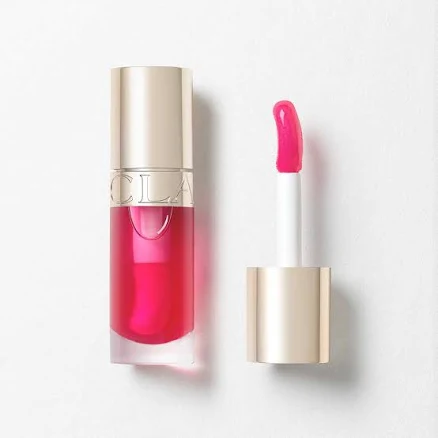
Clarins · Lip Balm & Long-Wear Lipstick
Clarins Comfort Lip Oil
Lower concern; no evidence of PFAS use, but no explicit brand commitment from Clarins.
Clarins Comfort Lip Oil contains plant-derived oils with no Teflon-family coating coatings or water-resistant treatments. Lip oils are not a high-risk category for PFAS.
We flunk more products than we pass. This one earned its grade. How we grade
Material
Oil blend (plant-derived oils, no synthetic coating disclosed)
Brand disclosure
Brand is silent on PFAS
Lab data
No public lab test
What Clarins Comfort Lip Oil is made of, ingredients and materials
Clarins Comfort Lip Oil is formulated from a blend of plant-derived oils (jojoba, rose hip, and other botanical extracts) with no synthetic polymer coating or Teflon-type coating film disclosed. Oil-based lip products lack the rigid structure of traditional balms and glosses, eliminating concerns around coating degradation, lead/cadmium in ceramic glazes, or Teflon-type coating off-gassing that affect hard-cased products. The lack of waxes or resins reduces formaldehyde resin contamination risk, a known concern in some cosmetic waxes.
What’s concerning
Category baseline
The starting point for this type of product, before anything specific to this product is counted.
No PFAS disclosure
No public statement from the brand about PFAS in this product.
Fragrance allergens and botanical sensitivizers
Clarins Comfort Lip Oil contains fragrance and plant extracts; individual botanical oils (rose hip, essential oils) can trigger contact dermatitis or photosensitivity in sensitive individuals. Full fragrance ingredient disclosure is absent from public labeling, limiting pre-screening for known allergens.
Rancidity and oxidative byproducts
Plant oils are prone to lipid peroxidation when exposed to air, light, or heat; oxidized oils may irritate lips or cause dermatitis. This is a storage and shelf-life issue rather than a manufacturing defect, but depends on user handling and container design.
Microbial contamination
Oil-based lip products with minimal preservatives are at higher risk for bacterial or fungal growth if the container design allows air exposure or if left in warm environments. Clarins' specific preservative system is not publicly detailed.
What’s reassuring
Base material not linked to PFAS
The main material recorded for this product is not one associated with PFAS.
Heavy metals
No recalls or testing data on record for this product. If this formulation includes color variants, those would typically use iron oxides or carmine rather than cadmium or lead; plant-oil carriers generally avoid mineral pigments. No evidence of concern identified.
Source, FDA ↗BPA & bisphenols
No evidence of BPA or phthalate concerns in Clarins cosmetic packaging. The brand uses glass and plastic applicators typical of the prestige segment; no recalls or testing data suggest leaching into the oil formula itself.
Source, FDA ↗The full breakdown
The brand's record and disclosure
Clarins is a subsidiary of Groupe Clarins and markets itself as a prestige skincare and cosmetics brand. The brand has not issued explicit PFAS-free commitments or published supplier transparency reports on heavy metals or allergens, though no recalls specific to this product line are on record. Clarins products are generally dermatologist-tested and fragrance-allergen disclosure occurs on packaging, though full fragrance ingredient transparency remains limited (as is standard industry-wide for proprietary blends).
How it compares in its category
Oil-based lip products occupy a lower-hazard segment compared to long-wear liquid lipsticks (which often contain pigments, resins, and plasticizers) or tinted balms with synthetic colorants. Clarins Comfort Lip Oil avoids azo dyes and synthetic mica-heavy formulations common in glossy lip products. Within premium oil-based lip balms, this product is typical for fragrance and botanical extract use; competitors like Dior and MAC's equivalent products follow similar compositions.
If you buy it
Store in a cool, dry place away from direct sunlight to prevent oxidation of plant oils, which can develop rancid odors or skin irritation over time. Discontinue use if redness, swelling, or itching occurs; these oils may trigger contact dermatitis in sensitive individuals, especially if fragrances or botanical extracts are the cause. Replace the product every 12 months after opening to minimize bacterial or fungal growth in the open container; oil-based products lack the preservative load of creams and are more susceptible to microbial colonization. Avoid applying to broken or severely chapped lips where oils may sting.
What we don’t know
- Basis
- Model estimate, 72% confidence, not a lab result
- Lab test
- None on record for this exact product
- Brand statement
- Clarins has made none
Formulations change between production runs, so check the current label. How we grade.
More lip balm & long-wear lipstick grades
How we score, every product runs through the same public 0-100 rubric based on materials, coatings, brand disclosure, lab findings, and recalls. See the full methodology → Spotted a mistake? Report an error.