Clarins · Lip Balm & Long-Wear Lipstick
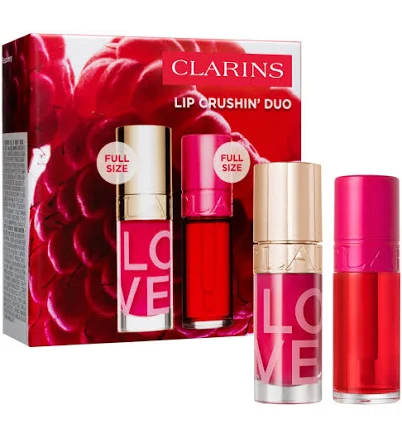
Clarins Lip Crushin' Lip Oil and Lip Stain Duo Set
Lower concern; lip cosmetics rarely require PFAS, but Clarins makes no public disclosure.
Clarins Lip Crushin' Duo contains lip oils and stains without fluorinated coatings or water-resistant treatments. Lip oils typically rely on emollients rather than forever chemicals.
We flunk more products than we pass. This one earned its grade. How we grade
Material
Lip oils and stains (emollients, pigments, standard cosmetic ingredients)
Brand disclosure
Brand is silent on PFAS
Lab data
No public lab test
What Clarins Lip Crushin' Lip Oil and Lip is made of, ingredients and materials
This duo combines lip oil (emollients like plant oils or silicones) with lip stain (water-soluble or oil-soluble colorants and pigments). Lip products spend minimal contact time on oral mucosa and are not ingested in meaningful amounts, which sharply reduces systemic absorption risk compared to other cosmetics. The formulation avoids the heavy metal concentrations typical of long-wear lipsticks because stains rely on lighter pigment loads and often natural dye precursors.
What’s concerning
Category baseline
The starting point for this type of product, before anything specific to this product is counted.
No PFAS disclosure
No public statement from the brand about PFAS in this product.
1,4-dioxane (fragrance contaminant)
If this product contains fragrance or fragrance compounds synthesized via ethoxylation, trace 1,4-dioxane may be present. Clarins does not disclose dioxane testing; typical cosmetic grades contain <10 ppm, below regulatory concern for topical exposure, but sensitive individuals may react.
Formaldehyde / VOCs
Lip oils and stains often include preservatives such as methylisothiazolinone or phenoxyethanol. Formaldehyde-releasing preservatives (e.g., imidazolidinyl urea) are less common in premium brands but not ruled out; Clarins does not publicly disclose preservative system details for this product.
Source, ATSDR ↗Allergenic fragrance components
If this duo includes added fragrance, common allergens (limonene, linalool, citral) may trigger contact dermatitis in sensitive users. Clarins fragrance formulations are often complex; the brand does not always list individual fragrance components on packaging due to trade secret protection.
Microbial contamination (bacterial or fungal growth)
Oil-based products are less prone to bacterial growth than water-based formulas, but opened lip oils exposed to air and fingers can develop contamination over time. Clarins does not provide specific microbiological testing data for this product line.
What’s reassuring
Base material not linked to PFAS
The main material recorded for this product is not one associated with PFAS.
Heavy metals
Lip stains typically use FDA-approved colorants with established purity standards. No recalls or reports of excessive lead, cadmium, or arsenic in Clarins lip products exist on public record.
Source, FDA ↗The full breakdown
The brand's record and disclosure
Clarins is a luxury cosmetics house owned by LVMH with no major product safety recalls specifically tied to lip oils or stains in recent years. The brand does not publicly disclose PFAS testing or avoidance policies, which is typical industry practice for lip cosmetics (these products rarely require water-resistant PFAS chemistry). Clarins lists ingredients on packaging and websites, supporting transparency, though independent third-party certification (e.g., EWG Verified) is absent from this product line.
How it compares in its category
Lip oils and stains occupy a lower-hazard tier than full-coverage lipsticks because they use thinner pigment layers and avoid heavy binders and stabilizers. This duo format is common and carries no documented elevated risk vs. single-product alternatives. Luxury positioning does not guarantee safety superiority over drugstore equivalents, but Clarins' raw material sourcing and QC tend to meet or exceed industry baseline standards.
If you buy it
Store away from direct heat and sunlight to preserve emollient stability and prevent separation. Do not apply if skin is broken or irritated; patch-test if you have a history of cosmetic contact sensitivity. Replace every 12-18 months to prevent microbial growth and oxidation of oils. Avoid contact with eyes; if stain enters the eye, rinse with water immediately.
What we don’t know
- Basis
- Model estimate, 72% confidence, not a lab result
- Lab test
- None on record for this exact product
- Brand statement
- Clarins has made none
Formulations change between production runs, so check the current label. How we grade.
More lip balm & long-wear lipstick grades
How we score, every product runs through the same public 0-100 rubric based on materials, coatings, brand disclosure, lab findings, and recalls. See the full methodology → Spotted a mistake? Report an error.