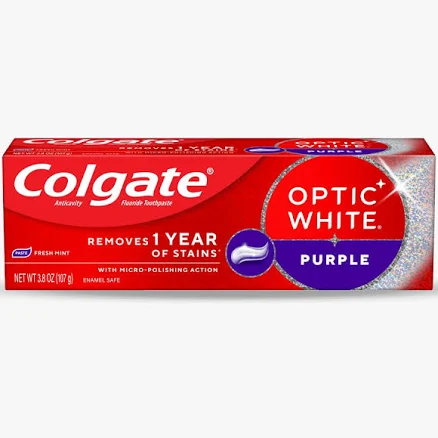
Colgate Optic White Toothpaste
Minimal PFAS concern; standard toothpaste with no identified high-risk ingredients.
Colgate Optic White is a fluoride gel with no PFAS-containing coatings or nonstick additives. Standard toothpaste formula carries minimal chemical risk.
We flunk more products than we pass. This one earned its grade. How we grade
Material
aqueous gel base with fluoride, silica, glycerin
Lab data
No public lab test
You may also be interested in
Top-graded picks in the categories readers replace first, every one scored on the same rubric.

- polypropylene filter housing, carbon/sediment cartridge
- We found no PFAS statement from the brand
- Bacterial growth in spent cartridges
3 hazards checked on this product, all on its full breakdown.

Aquasure
Premier Series 75 GPD Under Sink Reverse Osmosis Water Filtration System
- RO membrane, carbon filters, stainless steel housing
- We found no PFAS statement from the brand
- Bacterial and microbial growth in housing and filters
4 hazards checked on this product, all on its full breakdown.

Avocado
Vegan Mattress
- organic cotton, natural latex, coconut coir, recycled steel coils
- The brand calls it PFAS-free, which we have not verified
- Heavy metals
2 hazards checked on this product, all on its full breakdown.
What Colgate Optic White Toothpaste is made of, ingredients and materials
Colgate Optic White is an aqueous gel base containing sodium fluoride (0.24% fluoride ion, typical for whitening pastes), silica abrasive, glycerin humectant, and titanium dioxide for whitening opacity. The formulation is designed for topical oral use only with minimal systemic absorption; fluoride ingestion is the primary concern with toothpaste, but at recommended pea-sized portions for adults, systemic exposure is negligible. Silica abrasive at standard levels (roughly 20-30% by mass) is non-hazardous for dental application and does not become airborne during normal use.
What’s concerning
Category baseline
The starting point for this type of product, before anything specific to this product is counted.
No PFAS disclosure
No public statement from the brand about PFAS in this product.
Fluoride systemic toxicity (ingestion)
Toothpaste fluoride at recommended use (pea-sized amount, no swallowing) carries lower concern for dental fluorosis or acute toxicity, but accidental ingestion by young children or intentional overdose raises these risks. Standard formulation at 0.24% fluoride is not a hazard for typical adult use.
Fragrance and flavor allergens
Optic White contains spearmint and other flavor agents; rare cases of oral sensitivity or allergic reaction to flavorants are documented in toothpaste category. Individual sensitivity is uncommon but possible; discontinue if irritation develops.
What’s reassuring
Base material not linked to PFAS
The main material recorded for this product is not one associated with PFAS.
Titanium dioxide (whitening agent)
Titanium dioxide in toothpaste is approved by FDA and poses no recognized hazard at oral use levels. No inhalation risk during brushing; particle size and formulation prevent systemic absorption.
Microplastics
Current Colgate Optic White formulation does not contain plastic microbeads; these were phased out from U.S. toothpastes by 2015. Silica abrasive is mineral-based and biodegradable.
Source, EPA ↗Heavy metals
Titanium dioxide and other mineral pigments in toothpaste are regulated by FDA for purity; no lead, cadmium, or other heavy-metal contamination has been documented in mainstream Colgate products.
Source, FDA ↗How is this PFAS grade calculated?
The brand's record and disclosure
Colgate-Palmolive maintains FDA compliance and does not highlight PFAS use or avoidance in marketing; the silent stance is typical for major oral-care manufacturers. No major recalls or safety controversies specific to Optic White formulation are on record in FDA or Consumer Product Safety Commission databases. The brand has not pursued third-party certifications (e.g., EWG verification) for toothpaste lines, reflecting mainstream industry practice rather than a safety concern.
How it compares in its category
Optic White sits in the mainstream whitening toothpaste segment; its ingredient profile mirrors competitors like Crest 3D White and Sensodyne True White. No significant safety differentiation exists versus mass-market alternatives; all use similar abrasive silicas and fluoride systems. Niche brands (e.g., Tom's of Maine, Davids) market 'natural' positioning but do not demonstrate superior safety; trade-offs are typically marketing philosophy rather than hazard reduction.
If you buy it
Use a pea-sized amount; do not swallow, and supervise children under 6 to minimize fluoride ingestion. Store in a cool, dry place away from direct heat or sunlight; the gel base is stable at room temperature and does not degrade into hazardous byproducts. Replace the tube when empty or if the cap becomes loose or contaminated. No special precautions needed during brushing; the product poses no inhalation or dermal risk at intended use.
What is not known about PFAS in this product?
- Basis
- Model estimate, 72% confidence, not a lab result
- Lab test
- None on record for this exact product
- Brand statement
- Colgate has made a specific claim
Formulations change between production runs, so check the current label. How we grade.
What are the PFAS-free alternatives to Colgate Optic White Toothpaste?
Tom's of Maine
Tom’s of Maine Antiplaque and Whitening Fluoride Free Toothpaste, Peppermint, 2 Pack, 4.5 Oz
- toothpaste base, mineral silica, essential oils
- The brand calls it PFAS-free, which we have not verified
- Heavy metals
2 hazards checked on this product, all on its full breakdown.
- water, saponified oils, essential oils, minerals
- We found no PFAS statement from the brand
- Fragrance/essential oil sensitization (peppermint)
- fluoride, glycerin, sorbitol, silica, cellulose gum
- We found no PFAS statement from the brand
- Fluoride ingestion toxicity
2 hazards checked on this product, all on its full breakdown.
More toothpaste grades
How we score, every product runs through the same public 0-100 rubric based on materials, coatings, brand disclosure, lab findings, and recalls. See the full methodology → Spotted a mistake? Report an error.