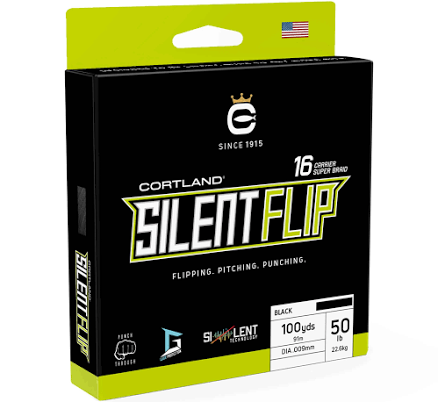
Cortland Silent Flip Braided Fishing Line
Low concern; standard braided line has no inherent PFAS trigger.
Braided nylon and polyester typically avoid PFAS coatings. Cortland makes no PFAS disclosure, which is normal for commodity fishing line but leaves gaps for cautious buyers.
We flunk more products than we pass. This one earned its grade. How we grade
Material
Braided nylon/polyester fishing line
Brand disclosure
Brand is silent on PFAS
Lab data
No public lab test
You may also be interested in
Top-graded picks in the categories readers replace first, every one scored on the same rubric.

- polypropylene filter housing, carbon/sediment cartridge
- We found no PFAS statement from the brand
- Bacterial growth in spent cartridges
3 hazards checked on this product, all on its full breakdown.

Aquasure
Premier Series 75 GPD Under Sink Reverse Osmosis Water Filtration System
- RO membrane, carbon filters, stainless steel housing
- We found no PFAS statement from the brand
- Bacterial and microbial growth in housing and filters
4 hazards checked on this product, all on its full breakdown.

Avocado
Vegan Mattress
- organic cotton, natural latex, coconut coir, recycled steel coils
- The brand calls it PFAS-free, which we have not verified
- Heavy metals
2 hazards checked on this product, all on its full breakdown.
What Cortland Silent Flip Braided Fishing Line is made of, ingredients and materials
Cortland Silent Flip is a braided nylon and polyester blend, durable synthetic polymers widely used in fishing line for strength and knot-holding. Braided construction (as opposed to monofilament) creates more surface area and slightly higher UV exposure risk during storage, but no inherent chemical leaching concern since fishing line does not contact food or potable water in normal use. Polyester and nylon themselves are chemically stable once cured and do not typically off-gas volatile compounds at ambient temperatures or in water.
What’s concerning
Category baseline
The starting point for this type of product, before anything specific to this product is counted.
No PFAS disclosure
No public statement from the brand about PFAS in this product.
Microfiber/microplastic shedding
Braided nylon and polyester can shed fine fibers during casting and when line breaks or is cut; these enter aquatic environments. This is an environmental concern rather than a direct consumer health hazard, but important for users aware of microplastic pollution.
What’s reassuring
Base material not linked to PFAS
The main material recorded for this product is not one associated with PFAS.
Azo dyes (color fastness)
Braided fishing line uses synthetic colorants to achieve visibility on the water; no documented use of restricted azo dyes (which can release aromatic amines) in Cortland products, and water-only contact minimizes dermal or ingestion risk even if present.
Heavy metals
No published testing or recalls indicate lead, cadmium, or other heavy metals in Cortland Silent Flip dyes. Fishing line is not ingested and does not leach into food or drinking water, so risk profile is very low even if trace metals were present in colorants.
Source, FDA ↗UV and thermal degradation byproducts
Prolonged sunlight exposure can degrade polyester and nylon, theoretically releasing trace monomers or oligomers, but no documented health incidents from fishing line storage or use. Water contact does not accelerate leaching risk significantly.
Dye allergen contact (skin sensitivity)
Some users with known dye sensitivities report mild contact dermatitis from handling brightly colored fishing lines for extended periods; risk is rare and product-specific testing is unavailable. Rinsing hands after use eliminates exposure.
How is this PFAS grade calculated?
The brand's record and disclosure
Cortland is a major fishing line manufacturer with a long market presence but maintains limited public disclosure on material sourcing, dye chemistry, or manufacturing practices. No major safety recalls or chemical controversies are documented for this product line. The company does not advertise third-party certifications (e.g., for heavy metals or banned dyes) and does not publicly address PFAS use in their braiding process or in dye packages, which reflects the broader fishing-line industry's general silence on chemical transparency.
How it compares in its category
Braided fishing lines present lower concern than monofilament because they avoid the need for some solvent-based softening agents used in single-strand extrusion. Cortland competes alongside brands like Berkley and Spiderwire; all three rely on similar nylon and polyester chemistry with comparable lack of transparency. Compared to specialty eco-brands that publish dye certifications or heavy-metal testing, Cortland offers no differentiation but also no known worse practice.
If you buy it
Store in a cool, dry place away from direct sunlight to minimize UV degradation and colorant fading, which could theoretically allow minor fiber shedding. Rinse line with fresh water after saltwater use to prevent corrosion and salt-induced microcracking. Replace annually or after heavy use to ensure knot integrity; do not reuse old spools. Avoid prolonged heating (e.g., leaving in direct sun in a closed vehicle), as heat can soften polyester and may increase any residual monomer release, though risk is minimal in real-world conditions.
What is not known about PFAS in this product?
- Basis
- Model estimate, 72% confidence, not a lab result
- Lab test
- None on record for this exact product
- Brand statement
- Cortland has made none
Formulations change between production runs, so check the current label. How we grade.
More fishing line grades
How we score, every product runs through the same public 0-100 rubric based on materials, coatings, brand disclosure, lab findings, and recalls. See the full methodology → Spotted a mistake? Report an error.