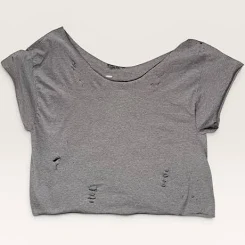
Plain Grey Chop Shop Crop Top
Lower concern. Plain cotton crop top with no applied finishes.
Plain grey cotton or cotton-blend crop top with no water-repellent or stain-resistant treatments mentioned. No PFAS-related coatings typical for bare fabric apparel.
Still want this one anyway? Check the price on Amazon. We’d swap it.
Material
Cotton or cotton-blend fabric, plain weave
Brand disclosure
Brand is silent on PFAS
Lab data
No public lab test
You may also be interested in
Top-graded picks in the categories readers replace first, every one scored on the same rubric.

Aqua Pure
3M Aqua-Pure AP802B Whole House Filter Housing
- polypropylene filter housing, carbon/sediment cartridge
- We found no PFAS statement from the brand
- Bacterial growth in spent cartridges
3 hazards checked on this product. See all of them.

Aquasure
Premier Series 75 GPD Under Sink Reverse Osmosis Water Filtration System
- RO membrane, carbon filters, stainless steel housing
- We found no PFAS statement from the brand
- Bacterial and microbial growth in housing and filters
4 hazards checked on this product. See all of them.

Avocado
Vegan Mattress
- organic cotton, natural latex, coconut coir, recycled steel coils
- The brand calls it PFAS-free, which we have not verified
- Heavy metals
2 hazards checked on this product. See all of them.
What Plain Grey Chop Shop Crop Top is made of, ingredients and materials
This crop top is cotton or cotton-blend plain weave with no described coatings, water-repellent finishes, or specialty treatments. Cotton fibre itself does not bioaccumulate toxic residues, but the dyes and processing chemicals used during manufacturing and finishing can introduce hazards. Plain weave construction with no visible lamination or membrane means no Teflon-type coating or synthetic polymer coating risks typical of technical apparel.
What’s concerning
Category baseline
The starting point for this type of product, before anything specific to this product is counted.
No PFAS disclosure
No public statement from the brand about PFAS in this product.
Formaldehyde / VOCs
Plain cotton can be treated with formaldehyde-based resins to improve wrinkle resistance or shape retention during manufacturing. No finish is described for this product, so exposure is lower than for treated pieces, but the possibility is not ruled out by material type alone.
Source, ATSDR ↗Heavy metals
The grey colour indicates the yarn was dyed or the fabric piece-dyed post-weave. Azo dyes banned in some markets and heavy metals used as mordants or stabilizers may be present; no dye standard is stated by the brand.
Source, FDA ↗Antimony in polyester (if cotton-blend)
If the blend includes polyester (not specified), antimony catalyst residue can remain in the fibre. Cotton-only products avoid this hazard; context does not confirm fibre ratio, so blend composition should be verified on the label.
What’s reassuring
Base material not linked to PFAS
The main material recorded for this product is not one associated with PFAS.
Pesticide residue
Conventional cotton farming uses pesticides; residues are largely removed in ginning and processing but trace levels may remain. No evidence of this hazard in this product on record; certified organic cotton would eliminate this concern.
Source, EPA ↗Flame retardants
Plain apparel does not typically receive flame retardant treatment unless marketed as such. No flame retardant claim is present, so this hazard is not expected.
Source, EPA ↗The full breakdown
The brand's record and disclosure
Chop Shop has not publicly disclosed material sourcing, dye standards, or chemical management practices; this silence is typical of smaller or emerging casualwear brands rather than indicative of deliberate concealment. No recalls or established controversies are on record for this product or brand. The lack of third-party certification (e.g., OEKO-TEX, GOTS) means chemical handling is not independently verified, but the simple plain-weave construction limits the scope of applied chemicals.
How it compares in its category
Plain cotton crop tops are among the lowest-complexity garments in apparel; they typically pose lower formaldehyde and azo-dye risk than printed, dyed, or treated pieces. This product's lack of any stated finish or treatment puts it in a lower-hazard segment compared to water-resistant, antimicrobial, or flame-retardant versions. Certified organic or OEKO-TEX alternatives exist but command a premium and are not required for this material type to be acceptable.
If you buy it
Wash before wearing to reduce residual dye and processing chemicals. Use warm water and standard detergent; plain cotton tolerates frequent laundering without degradation. No special care is needed unless the fabric label specifies it. Inspect the garment on arrival for unusual odour (which would suggest excess formaldehyde residue) and return if present; normal cotton smell is acceptable.
What we don’t know
- Basis
- Model estimate, 78% confidence, not a lab result
- Lab test
- None on record for this exact product
- Brand statement
- crop shop has made none
Formulations change between production runs, so check the current label. How we grade.
More activewear grades
How we score, every product runs through the same public 0-100 rubric based on materials, coatings, brand disclosure, lab findings, and recalls. See the full methodology → Spotted a mistake? Report an error.