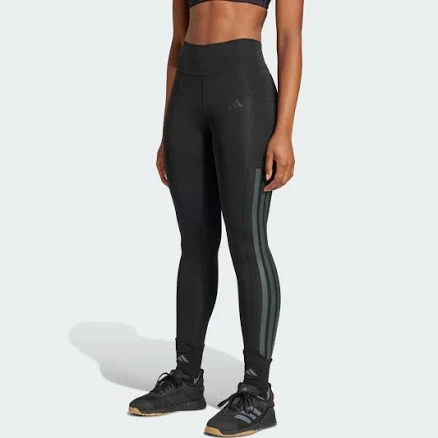
Women's adidas Optime 3-Stripes Full-Length Leggings
Lower concern, no water-repellent coating finish means minimal PFAS risk.
These are standard performance leggings made from polyester and nylon blend without marketed water-repellent or stain-resistant treatments, the most common PFAS vectors. Adidas makes no public PFAS disclosures.
Still want this one anyway? Check the price on Amazon. We’d swap it.
Material
polyester/nylon blend with standard weave
Lab data
No public lab test
You may also be interested in
Top-graded picks in the categories readers replace first, every one scored on the same rubric.

- polypropylene filter housing, carbon/sediment cartridge
- We found no PFAS statement from the brand
- Bacterial growth in spent cartridges
3 hazards checked on this product, all on its full breakdown.

Aquasure
Premier Series 75 GPD Under Sink Reverse Osmosis Water Filtration System
- RO membrane, carbon filters, stainless steel housing
- We found no PFAS statement from the brand
- Bacterial and microbial growth in housing and filters
4 hazards checked on this product, all on its full breakdown.

Avocado
Vegan Mattress
- organic cotton, natural latex, coconut coir, recycled steel coils
- The brand calls it PFAS-free, which we have not verified
- Heavy metals
2 hazards checked on this product, all on its full breakdown.
What Women's adidas Optime 3-Stripes Leggings is made of, ingredients and materials
These leggings are a polyester-nylon blend, a common base for stretch activewear that offers durability and moisture-wicking properties. Polyester itself is chemically stable during normal wear and washing. The absence of a water-repellent coating (water-repellent coating) finish on standard adidas activewear means no fluorinated compounds were applied to repel water, which eliminates a major PFAS pathway in athletic textiles. Nylon adds elasticity but does not inherently pose hazards in apparel form.
What’s concerning
Category baseline
The starting point for this type of product, before anything specific to this product is counted.
No PFAS disclosure
No public statement from the brand about PFAS in this product.
Azo dyes and color fastness
Polyester leggings are typically dyed with azo dyes, which can release hazardous amines under conditions of bacterial decomposition or prolonged moisture exposure. No specific testing for this product is public; risk is managed by proper laundering and storage in dry conditions.
Microfiber shedding
All polyester-nylon textiles shed microfibers during washing and wear. While not acutely toxic to the wearer, repeated laundering releases synthetic fragments into wastewater. This is a known property of the material class, not unique to adidas.
What’s reassuring
Base material not linked to PFAS
The main material recorded for this product is not one associated with PFAS.
Antimony in polyester
Antimony is used as a catalyst in polyester synthesis but remains bound within the polymer matrix during normal wear. No independent testing of this specific legging for antimony leaching has been published; risk is negligible in apparel versus direct skin contact.
Flame retardants
Activewear is not subject to flammability regulations and typically does not contain intentional flame retardants. No evidence of added flame retardants in standard adidas leggings.
Source, EPA ↗Formaldehyde / VOCs
Formaldehyde-based resins are used in wrinkle-resistant or shape-retention treatments. Standard adidas leggings have no such finish claimed; risk is not established for this product.
Source, ATSDR ↗How is this PFAS grade calculated?
The brand's record and disclosure
Adidas has not publicly committed to PFAS phase-out or full chemical transparency for apparel, though the brand has faced pressure from environmental advocacy on microfiber shedding and textile dyes. No major recalls or established contamination issues specific to adidas leggings have been documented in public health databases. The company does not routinely disclose hazardous dye classes or heavy metal testing for consumer products, which is typical across the activewear industry but limits independent verification.
How it compares in its category
Standard polyester-nylon leggings are the baseline for mass-market activewear and carry typical risks of the material class, not elevated ones. Competitors like Nike and Lululemon follow similar formulations. Adidas's lack of water-repellent finish actually positions this product at lower PFAS risk than many premium or 'performance' leggings marketed with advanced moisture management, which often rely on PFAS-based coatings.
If you buy it
Wash in cold water (under 30 degrees Celsius) to minimize microfiber shedding and dye migration; avoid bleach and fabric softeners, which can degrade elastane and nylon. Do not expose to direct heat (dryers, direct sunlight for extended periods) as polyester can soften and lose shape. Expect color fading and pilling around high-friction zones (waistband, thighs) within 12-24 months of regular use. Replace when elastic waistband loses tension or seams begin separating, not when minor discoloration appears.
What is not known about PFAS in this product?
- Basis
- Model estimate, 72% confidence, not a lab result
- Lab test
- None on record for this exact product
- Brand statement
- Adidas has made a specific claim
Formulations change between production runs, so check the current label. How we grade.
More activewear grades
How we score, every product runs through the same public 0-100 rubric based on materials, coatings, brand disclosure, lab findings, and recalls. See the full methodology → Spotted a mistake? Report an error.