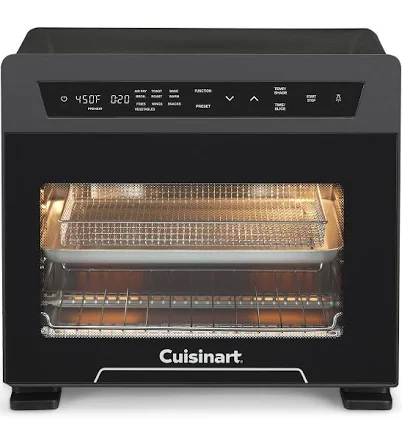
Cuisinart 10-in-1 XL Digital Air Fryer Oven
Wait for Cuisinart to disclose nonstick coating composition.
Cuisinart doesn't reveal the chemical makeup of this air fryer's nonstick interior. Without Teflon-type coating-free or PFAS-free confirmation, risk is unknown.
The better-graded swap
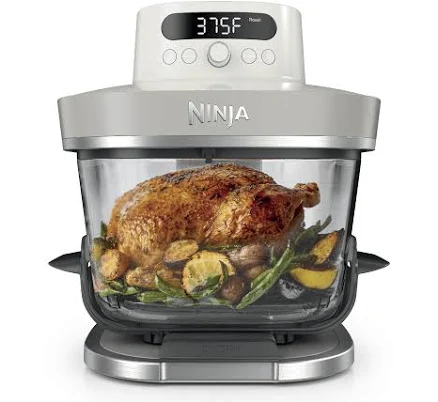
Ninja
Ninja Crispi Pro 6-in-1 Glass Air Fryer
75/100 safety
Same rubric that flunked this product. The swap earned Excellent.
Still want this one anyway? Check the price on Amazon. We’d swap it.
Material
Nonstick-coated interior (composition unspecified)
Lab data
No public lab test
You may also be interested in
Top-graded picks in the categories readers replace first, every one scored on the same rubric.

- polypropylene filter housing, carbon/sediment cartridge
- We found no PFAS statement from the brand
- Bacterial growth in spent cartridges
3 hazards checked on this product, all on its full breakdown.

Aquasure
Premier Series 75 GPD Under Sink Reverse Osmosis Water Filtration System
- RO membrane, carbon filters, stainless steel housing
- We found no PFAS statement from the brand
- Bacterial and microbial growth in housing and filters
4 hazards checked on this product, all on its full breakdown.

Avocado
Vegan Mattress
- organic cotton, natural latex, coconut coir, recycled steel coils
- The brand calls it PFAS-free, which we have not verified
- Heavy metals
2 hazards checked on this product, all on its full breakdown.
What Cuisinart 10-in-1 XL Air Fryer Oven is made of, ingredients and materials
The Cuisinart 10-in-1 XL features a nonstick-coated interior, but Cuisinart has not publicly disclosed the specific Teflon-family coating or alternative chemistry used in the coating. This opacity is the core safety issue, nonstick coatings can contain Teflon-type coating (polytetrafluoroethylene) or newer fluorine-based alternatives, each with different thermal decomposition profiles. Without knowing the exact material, users cannot reliably assess whether the coating remains stable at the unit's maximum operating temperature or predict degradation risk over time.
What’s concerning
Category baseline
The starting point for this type of product, before anything specific to this product is counted.
No PFAS disclosure
No public statement from the brand about PFAS in this product.
Non-stick, chemistry undisclosed
Marketed as non-stick without stating the coating chemistry.
Teflon-type coating thermal decomposition and fume inhalation
If the nonstick coating contains conventional Teflon-type coating, overheating above 500°F can decompose the polymer into fluorinated compounds and particulates. Cuisinart does not disclose a safe operating ceiling for the coating, making accidental overheating a risk.
Coating degradation and ingestion of particles
Scratched, peeling, or worn nonstick coatings can shed microparticles into food. The extent of risk depends on the coating's binder chemistry and adhesion; Cuisinart provides no data on long-term durability or particle size if shedding occurs.
Off-gassing of volatile compounds from heating elements and insulation
Heating elements, seals, and internal insulation may emit VOCs or other volatiles during initial use or chronic heating. No third-party testing is publicly available for this specific model.
Electrical and burn hazards (standard for category)
Air fryers generally pose burn risk from internal coils and steam. Cuisinart's model has no unusual electrical history on record, but users should follow standard precautions for convection appliances.
What’s reassuring
Aluminum leaching from substrate
Air fryer interiors are typically aluminum with nonstick topcoat. If the coating degrades unevenly or if acidic foods contact bare aluminum, minor leaching is possible, though the nonstick layer should provide primary protection.
How is this PFAS grade calculated?
The brand's record and disclosure
Cuisinart has not issued public statements about PFAS phase-out, alternatives to traditional nonstick coatings, or third-party testing of this model's coating. The brand does not prominently certify products as PFAS-free or provide detailed material safety data sheets for cookware coatings to consumers. This silence contrasts with competitors (e.g., GreenPan, Our Place) that market PFAS-free nonstick explicitly. Lack of transparency is a significant red flag for a product category where chemical composition directly affects user safety.
How it compares in its category
Most air fryer ovens in this price and feature tier use nonstick-coated wire baskets or interiors; few specify the chemistry. Some brands (Instant Pot, Ninja) have begun labeling models as Teflon-type coating-free or using ceramic-hybrid coatings, though details remain sparse industry-wide. The Cuisinart's 10-in-1 feature set (convection, rotisserie, etc.) is competitive, but the lack of coating disclosure puts it behind transparency leaders. If PFAS-free performance matters to you, this model offers no reassurance.
If you buy it
Never exceed 400-450°F (check the manual for the exact limit); sustained high heat accelerates coating degradation and potential fume release. Hand-wash the nonstick interior with soft sponges and non-abrasive soap; dishwasher use and metal utensils degrade the coating. Inspect the interior monthly for scratches, peeling, or discoloration; if the coating visibly degrades, discontinue use of that element. Ensure adequate kitchen ventilation during use, especially during preheating and the first few minutes of cooking, to disperse any off-gassing.
What is not known about PFAS in this product?
- Basis
- Model estimate, 35% confidence, not a lab result
- Lab test
- None on record for this exact product
- Brand statement
- Cuisinart has made a specific claim
Formulations change between production runs, so check the current label. How we grade.
What are the PFAS-free alternatives to Cuisinart 10-in-1 XL Digital Air Fryer Oven?
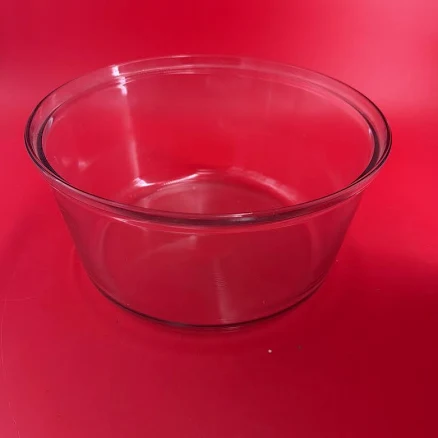
- borosilicate glass, bare uncoated
- We found no PFAS statement from the brand
- Thermal shock and fracture
2 hazards checked on this product, all on its full breakdown.
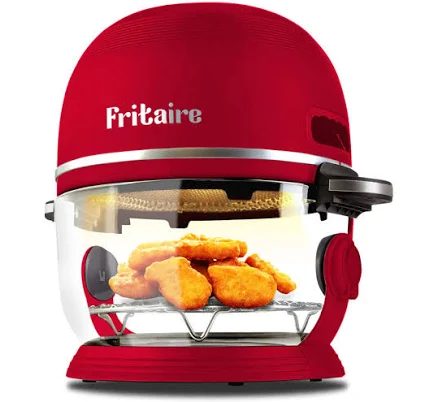
- borosilicate glass
- We found no PFAS statement from the brand
- Aluminum leaching from base/housing
4 hazards checked on this product, all on its full breakdown.
Find an alternative on Amazon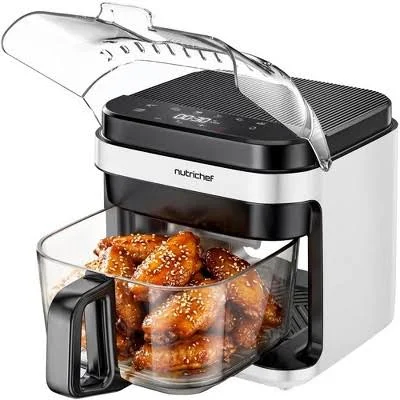
- glass bowl, stainless steel exterior
- We found no PFAS statement from the brand
- Thermal stress and glass breakage
2 hazards checked on this product, all on its full breakdown.
Find an alternative on AmazonMore air fryers grades
How we score, every product runs through the same public 0-100 rubric based on materials, coatings, brand disclosure, lab findings, and recalls. See the full methodology → Spotted a mistake? Report an error.