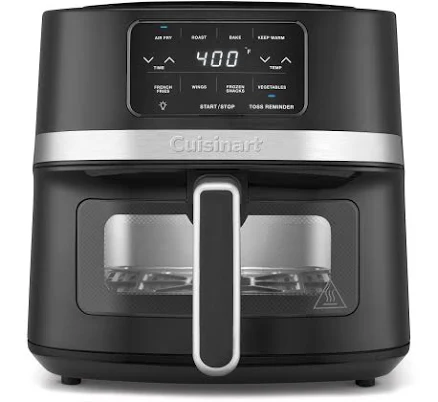
Cuisinart 4.5 Qt Basket Air Fryer
Wait for Cuisinart to reveal basket coating or confirm it's PFAS-free.
Cuisinart keeps its nonstick basket coating formula secret. Air fryer baskets typically use Teflon-type coating or Teflon-family coating that may contain or release PFAS when heated.
The better-graded swap
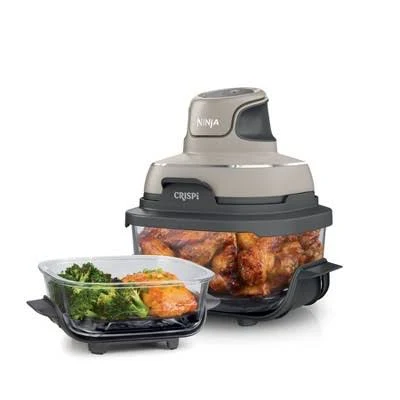
Ninja
Ninja Crispi 4-in-1 Portable Glass Air Fryer Cooking System
75/100 safety
Same rubric that flunked this product. The swap earned Excellent.
Still want this one anyway? Check the price on Amazon. We’d swap it.
Material
nonstick-coated basket (coating type unspecified)
Lab data
No public lab test
You may also be interested in
Top-graded picks in the categories readers replace first, every one scored on the same rubric.

- polypropylene filter housing, carbon/sediment cartridge
- We found no PFAS statement from the brand
- Bacterial growth in spent cartridges
3 hazards checked on this product, all on its full breakdown.

Aquasure
Premier Series 75 GPD Under Sink Reverse Osmosis Water Filtration System
- RO membrane, carbon filters, stainless steel housing
- We found no PFAS statement from the brand
- Bacterial and microbial growth in housing and filters
4 hazards checked on this product, all on its full breakdown.

Avocado
Vegan Mattress
- organic cotton, natural latex, coconut coir, recycled steel coils
- The brand calls it PFAS-free, which we have not verified
- Heavy metals
2 hazards checked on this product, all on its full breakdown.
What Cuisinart 4.5 Qt Basket Air Fryer is made of, ingredients and materials
The 4.5 Qt basket features a nonstick coating of unknown chemistry. Cuisinart does not disclose whether this is Teflon-type coating (Teflon), ceramic, or proprietary Teflon-family coating. Air fryers operate at sustained high heat (typically 350-400F, sometimes to 450F), which is the thermal window where degraded Teflon-type coating can off-gas perfluorooctanoic acid (PFOA) and other volatile compounds. The basket's aluminum substrate itself is generally food-safe at normal cooking temperatures, but the coating integrity over time determines actual exposure risk.
What’s concerning
Category baseline
The starting point for this type of product, before anything specific to this product is counted.
No PFAS disclosure
No public statement from the brand about PFAS in this product.
Non-stick, chemistry undisclosed
Marketed as non-stick without stating the coating chemistry.
Teflon-type coating fume emission (thermal degradation)
If the basket coating is Teflon-type coating or Teflon-type coating-like Teflon-family coating, sustained use above 400F or overheating events can degrade the coating and release volatile fluorinated compounds. Cuisinart's silence on coating type makes this risk unquantifiable for this specific model.
Nonstick coating delamination and microflaking
Scratched or abraded nonstick coatings on air fryer baskets are a known wear mode across brands. Flaked particles are unlikely to pose acute toxicity but represent loss of nonstick function and potential ingestion of coating fragments.
What’s reassuring
Aluminum leaching
The aluminum substrate is sealed by the nonstick coating; intact coating prevents direct food contact with aluminum. If coating degrades significantly, mild acidic foods (tomato sauce, citrus) could interact with exposed aluminum, though levels are unlikely to exceed dietary norms in short term.
Unidentified fragrance or adhesive off-gassing
No recalls or reports of odor complaints specific to this Cuisinart model. New nonstick cookware may emit a mild chemical smell during first use; this typically resolves after seasoning and ventilation.
Heating element or electrical hazard
Cuisinart has a reasonable track record for electrical safety in small appliances. No known defects in this air fryer model; standard usage precautions apply.
How is this PFAS grade calculated?
The brand's record and disclosure
Cuisinart has not published transparent material specifications or PFAS content statements for this model. The company has no widely documented history of proactive nonstick safety messaging or third-party certifications (e.g., GREENGUARD). No recalls for this specific air fryer related to coating degradation or fume emissions are on record, but absence of recall does not confirm safety or confirm the company tests for these hazards. Cuisinart's parent company (Conair) is not recognized as a PFAS disclosure leader in cookware.
How it compares in its category
Most commercial air fryer baskets use Teflon-type coating or similar Teflon-family coating because they enable high-temperature non-stick performance at scale. Ceramic-coated or stainless-steel alternatives exist (e.g., Philips, some Instant Vortex models) but command premium pricing and may sacrifice nonstick performance. Cuisinart's positioning is mid-market; its lack of disclosure is typical for the segment but lags behind brands (rare) that explicitly state Teflon-type coating-free formulations. The 4.5 Qt capacity is standard; hazard profile is category-level, not size-related.
If you buy it
Never exceed 400F; consult the manual for exact limits and stick to them. Hand-wash the basket with soft sponges to avoid coating scratches that accelerate delamination. Replace the basket if the coating visibly flakes, peels, or discolors. Store in a cool, dry location; avoid nesting or stacking cookware on top of it. Ensure your kitchen has good ventilation during use, especially at upper temperature ranges. Consider contacting Cuisinart directly to request coating composition and PFAS status; consumer demand can drive disclosure.
What is not known about PFAS in this product?
- Basis
- Model estimate, 45% confidence, not a lab result
- Lab test
- None on record for this exact product
- Brand statement
- Cuisinart has made a specific claim
Formulations change between production runs, so check the current label. How we grade.
What are the PFAS-free alternatives to Cuisinart 4.5 Qt Basket Air Fryer?
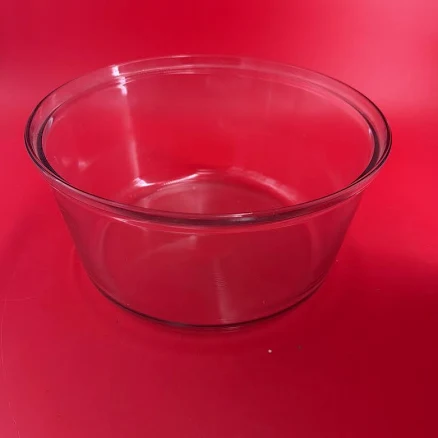
- borosilicate glass, bare uncoated
- We found no PFAS statement from the brand
- Thermal shock and fracture
2 hazards checked on this product, all on its full breakdown.
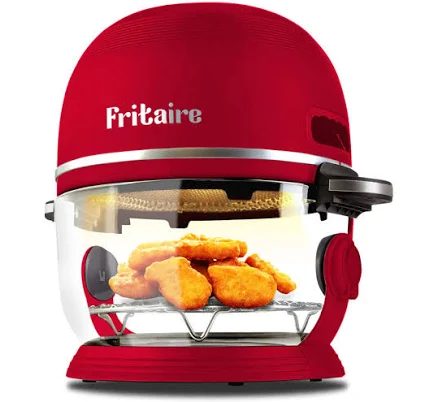
- borosilicate glass
- We found no PFAS statement from the brand
- Aluminum leaching from base/housing
4 hazards checked on this product, all on its full breakdown.
Find an alternative on Amazon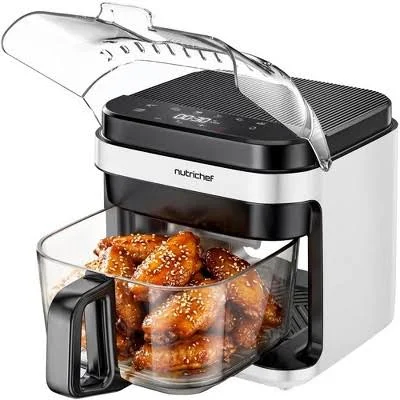
- glass bowl, stainless steel exterior
- We found no PFAS statement from the brand
- Thermal stress and glass breakage
2 hazards checked on this product, all on its full breakdown.
Find an alternative on AmazonMore air fryers grades
How we score, every product runs through the same public 0-100 rubric based on materials, coatings, brand disclosure, lab findings, and recalls. See the full methodology → Spotted a mistake? Report an error.