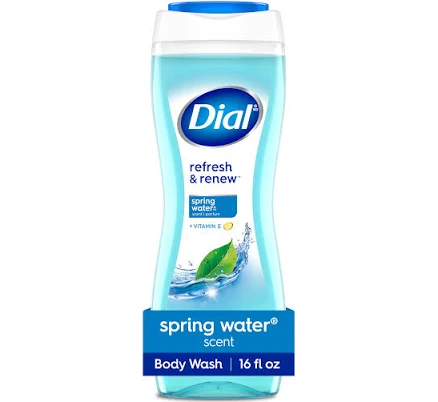
Dial Body Wash
Lower concern for liquid body wash typically avoiding PFAS-prone coatings.
This liquid cleanser has no documented PFAS use or known Teflon-family coating coatings typical of the category. Dial does not disclose PFAS-free status.
We flunk more products than we pass. This one earned its grade. How we grade
Material
aqueous surfactant solution (liquid body wash)
Brand disclosure
Brand is silent on PFAS
Lab data
No public lab test
You may also be interested in
Top-graded picks in the categories readers replace first, every one scored on the same rubric.

- polypropylene filter housing, carbon/sediment cartridge
- We found no PFAS statement from the brand
- Bacterial growth in spent cartridges
3 hazards checked on this product, all on its full breakdown.

Aquasure
Premier Series 75 GPD Under Sink Reverse Osmosis Water Filtration System
- RO membrane, carbon filters, stainless steel housing
- We found no PFAS statement from the brand
- Bacterial and microbial growth in housing and filters
4 hazards checked on this product, all on its full breakdown.

Avocado
Vegan Mattress
- organic cotton, natural latex, coconut coir, recycled steel coils
- The brand calls it PFAS-free, which we have not verified
- Heavy metals
2 hazards checked on this product, all on its full breakdown.
What Dial Body Wash is made of, ingredients and materials
Dial Body Wash is an aqueous liquid formulation based on synthetic surfactants (detergents) that lift oils and dirt from skin. The product contains water, anionic and amphoteric surfactants, preservatives, fragrance, and colorants dissolved or suspended in solution. Unlike solid soaps or bar formulations, liquid body washes do not require ceramic glazes, metal cookware, or fabric coatings that introduce lead, cadmium, or Teflon-type coating risks. The aqueous matrix is chemically stable at room and shower temperatures, minimizing leaching of active ingredients into skin.
What’s concerning
Category baseline
The starting point for this type of product, before anything specific to this product is counted.
No PFAS disclosure
No public statement from the brand about PFAS in this product.
1,4-dioxane (surfactant contaminant)
Ethoxylated surfactants used in liquid body washes can contain trace 1,4-dioxane as a byproduct of manufacturing. Dial does not disclose testing or removal steps; presence is not confirmed but plausible in mainstream formulations without dedicated purification. Exposure via body wash is transdermal and typically low-concentration.
Fragrance allergens and sensitizers
Dial Body Wash contains fragrance compounds listed generically as 'fragrance' or 'parfum'; common allergens (e.g., limonene, linalool) are not itemized on labels. Individuals with fragrance sensitivity or atopic dermatitis may experience contact dermatitis or irritation. Dial offers unscented or hypoallergenic variants for these consumers.
Parabens
Dial Body Wash formulations may include methylisothiazolinone (MI) or paraben preservatives to prevent microbial growth. MI has been linked to contact dermatitis in sensitive individuals; parabens are controversial but not conclusively harmful at cosmetic concentrations. Dial does not publicly disclose which preservative is used in each variant.
Source, FDA ↗What’s reassuring
Base material not linked to PFAS
The main material recorded for this product is not one associated with PFAS.
Microplastics
No published data indicates Dial Body Wash contains microplastic beads or synthetic microfibers. Rinse-off body washes are lower-risk for microplastic persistence than leave-on products, though some mass-market brands have included them historically; check ingredient lists for polyethylene or polypropylene if this is a concern.
Source, EPA ↗Lead
Liquid body washes do not use ceramic glazes or metal-based pigments that introduce lead or cadmium risk. FD&C-approved colorants in cosmetics are subject to FDA limits; no specific recalls or contamination data exist for Dial Body Wash. Risk is low given the product format and regulatory oversight.
Source, ATSDR ↗How is this PFAS grade calculated?
The brand's record and disclosure
Dial (Henkel subsidiary) does not publish detailed safety disclosures or third-party certifications (e.g., EWG Verified, Cradle to Cradle) for this product, nor has it made public commitments to PFAS avoidance. The brand has no major recalls or established safety controversies on record for Dial Body Wash specifically. Dial markets the product on antimicrobial efficacy rather than clean-ingredient or toxicity-reduction credentials, which reflects a traditional personal-care positioning rather than transparency-first culture.
How it compares in its category
Dial Body Wash occupies the mainstream mass-market segment alongside Dove, Ivory, and store-brand liquids. It lacks third-party safety or environmental certifications that differentiate premium or 'clean' alternatives (e.g., Seventh Generation, Mrs. Meyer's). In the same price and distribution tier, Dial is chemically unremarkable, no reported heavy metals, no known formaldehyde donors, and surfactant chemistry consistent with industry standards. If allergen sensitivity or ingredient transparency is a priority, certified alternatives offer more detailed disclosures.
If you buy it
Store Dial Body Wash at room temperature away from direct sunlight to preserve preservative efficacy and prevent separation. Use as directed on the label; no special dilution, heating, or prolonged contact with skin (beyond normal shower duration) is required. Dial Body Wash does not require maintenance or replacement beyond normal consumption; discard if discoloration, separation, or odor changes occur, which may indicate microbial contamination or preservative failure. If you have sensitive skin or fragrance allergies, patch-test on a small area first or consult ingredient lists for known irritants.
What is not known about PFAS in this product?
- Basis
- Model estimate, 78% confidence, not a lab result
- Lab test
- None on record for this exact product
- Brand statement
- Dial has made none
Formulations change between production runs, so check the current label. How we grade.
More body wash grades
How we score, every product runs through the same public 0-100 rubric based on materials, coatings, brand disclosure, lab findings, and recalls. See the full methodology → Spotted a mistake? Report an error.