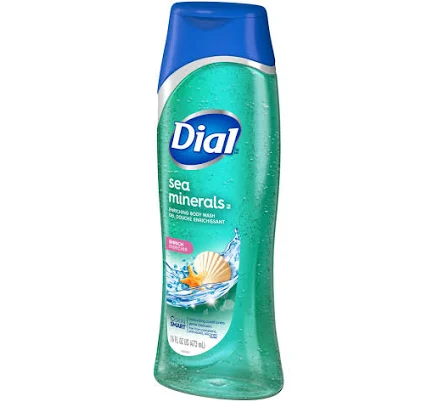
Dial Body Wash Sea Minerals
Lower-concern liquid body wash without known PFAS triggers.
This liquid cleanser has no inherent PFAS-prone materials since it is not waterproof, nonstick, or stain-resistant. Dial makes no PFAS claims.
We flunk more products than we pass. This one earned its grade. How we grade
Material
aqueous surfactant blend, mineral fragrance compounds
Brand disclosure
Brand is silent on PFAS
Lab data
No public lab test
You may also be interested in
Top-graded picks in the categories readers replace first, every one scored on the same rubric.

- polypropylene filter housing, carbon/sediment cartridge
- We found no PFAS statement from the brand
- Bacterial growth in spent cartridges
3 hazards checked on this product, all on its full breakdown.

Aquasure
Premier Series 75 GPD Under Sink Reverse Osmosis Water Filtration System
- RO membrane, carbon filters, stainless steel housing
- We found no PFAS statement from the brand
- Bacterial and microbial growth in housing and filters
4 hazards checked on this product, all on its full breakdown.

Avocado
Vegan Mattress
- organic cotton, natural latex, coconut coir, recycled steel coils
- The brand calls it PFAS-free, which we have not verified
- Heavy metals
2 hazards checked on this product, all on its full breakdown.
What Dial Body Wash Sea Minerals is made of, ingredients and materials
Dial Body Wash Sea Minerals is a water-based surfactant blend designed to cleanse skin. The 'sea minerals' refers to fragrance compounds and trace mineral compounds added for scent and marketing appeal, not functional benefit. Body washes are rinse-off products, meaning exposure time to skin is brief and most ingredients wash away; this category carries lower systemic risk than leave-on cosmetics or ingested products. The aqueous base (mostly water and common cleansing agents like sodium lauryl sulfate derivatives) has a long history of use at consumer concentrations without documented concern for PFAS contamination.
What’s concerning
Category baseline
The starting point for this type of product, before anything specific to this product is counted.
No PFAS disclosure
No public statement from the brand about PFAS in this product.
Fragrance allergens and irritants
Dial Body Wash Sea Minerals contains fragrance compounds ('mineral fragrance compounds'). Synthetic fragrances in rinse-off products pose low acute risk due to brief skin contact, but individuals with sensitive skin, dermatitis, or fragrance allergies may experience itching, redness, or contact dermatitis. No specific allergen incidents are on record for this formulation.
What’s reassuring
Base material not linked to PFAS
The main material recorded for this product is not one associated with PFAS.
Formaldehyde / VOCs
Body washes require preservatives to prevent bacterial growth, and some preservative systems release trace formaldehyde. Dial does not publicly disclose its preservative system for this product. If formaldehyde-releaser preservatives are used, residual formaldehyde in rinse-off products is typically negligible and does not pose known health concern, but full ingredient transparency is unavailable.
Source, ATSDR ↗1,4-Dioxane contamination in surfactants
1,4-Dioxane is a potential contaminant in ethoxylated surfactants (e.g., sodium laureth sulfate). No reports of 1,4-dioxane in Dial Body Wash are on record. If present, rinse-off exposure is brief and systemic absorption is minimal; the risk is primarily a manufacturing transparency issue rather than acute consumer hazard.
Microbial growth or contamination if stored improperly
Body wash is a water-based formulation vulnerable to bacterial or mold growth if the bottle cap is left off or if water is allowed to enter. Proper storage (sealed container, dry shelf) prevents this. No contamination incidents are recorded for Dial Body Wash.
How is this PFAS grade calculated?
The brand's record and disclosure
Dial (Henkel subsidiary) manufactures mainstream personal care products and has not faced major safety recalls or toxicity scandals for this body wash line in public records. The brand does not publicly disclose detailed ingredient sourcing or PFAS avoidance commitments, which is typical of conventional mass-market brands but less transparent than premium or clean-label competitors. No certifications (e.g., dermatologist-tested, fragrance-free, EWG-verified) are marketed for this specific formulation. Dial's general stance on chemical safety is conventional industry standard, neither exceptional nor flagged.
How it compares in its category
Dial Body Wash sits in the mass-market mainstream segment alongside Dove, Caress, and store-brand equivalents. It is not hypoallergenic, fragrance-free, or marketed for sensitive skin, so it carries typical fragrance allergen risk present in most commercial body washes. Most competitors in this price and distribution tier use similar surfactant chemistry and offer comparable safety profiles; this product is neither ahead nor behind category norms. If fragrance sensitivity or minimalism is a concern, fragrance-free or dermatologist-formulated alternatives (e.g., CeraVe, Cetaphil) are available at similar or slightly higher cost.
If you buy it
Use as directed, apply to wet skin, lather, and rinse thoroughly with water. No special storage precautions are needed beyond keeping the bottle sealed and away from extreme heat. Body wash does not require replacement or maintenance; discard when empty and purchase fresh. If skin irritation or rash develops during use, discontinue and rinse skin thoroughly; this may indicate fragrance or surfactant sensitivity rather than contamination. Keep away from eyes and do not ingest.
What is not known about PFAS in this product?
- Basis
- Model estimate, 72% confidence, not a lab result
- Lab test
- None on record for this exact product
- Brand statement
- Dial has made none
Formulations change between production runs, so check the current label. How we grade.
More body wash grades
How we score, every product runs through the same public 0-100 rubric based on materials, coatings, brand disclosure, lab findings, and recalls. See the full methodology → Spotted a mistake? Report an error.