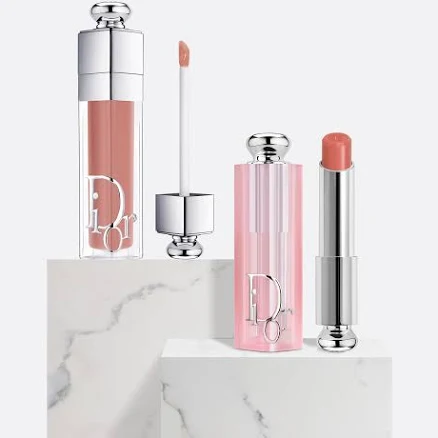
Dior · Lip Balm & Long-Wear Lipstick
Dior Lip Glow Duo
Lower concern for standard lip cosmetic, but Dior offers no brand transparency.
This wax-based lip balm lacks publicized waterproofing treatment or Teflon-family coating that would indicate PFAS use. Dior does not disclose PFAS content or make PFAS-free claims.
We flunk more products than we pass. This one earned its grade. How we grade
Material
Wax, oils, emollients, pigments (standard lip balm formula)
Brand disclosure
Brand is silent on PFAS
Lab data
No public lab test
What Dior Lip Glow Duo is made of, ingredients and materials
Dior Lip Glow Duo is a wax-based lip balm with oils, emollients, and pigments typical of the category. The formula contains no reported Teflon-type coating (Teflon) coatings, ceramic glazes, or plastic microbeads that would introduce acute chemical hazards. Wax and natural oil bases are chemically stable at skin temperature and do not leach metals or problematic breakdown products under normal use conditions. The pigments used are standard colorants (likely iron oxides or carmine for the signature 'glow' tint) rather than heavy-metal-laden alternatives.
What’s concerning
Category baseline
The starting point for this type of product, before anything specific to this product is counted.
No PFAS disclosure
No public statement from the brand about PFAS in this product.
Fragrance allergens and sensitization
Dior Lip Glow formulas include fragrance compounds for the signature scent. While fragrance in lip balms is generally mild, individuals with fragrance sensitivities or lip dermatitis may experience localized irritation; this is a user-dependent reaction rather than a toxicity hazard.
What’s reassuring
Base material not linked to PFAS
The main material recorded for this product is not one associated with PFAS.
Lead
No recalls or testing data indicate heavy-metal contamination in Dior Lip Glow Duo. Standard colorants (iron oxides, carmine) used in mainstream lip balms do not bioaccumulate in lip tissue; any trace metals are within unregulated US cosmetic limits and unlikely to pose systemic risk from topical application.
Source, ATSDR ↗Formaldehyde / VOCs
Lip balms rely on wax and oil stability rather than aggressive preservatives; formaldehyde releasers (common in lotions or body washes) are not typical in this product class. No public data suggests Dior uses such preservatives in this line.
Source, ATSDR ↗Talc contamination
This product is a solid wax balm, not a powder; talc is not part of the formula. No safety concern applies.
Microplastics
Wax-based balms do not contain microbeads or plastic polymers that shed into the mouth or environment. Wax is stable and does not fragment into microplastics under normal use or environmental conditions.
Source, EPA ↗The full breakdown
The brand's record and disclosure
Dior Beauty does not publicly disclose detailed ingredient sourcing, heavy-metal testing, or PFAS avoidance statements for this product line. The brand has no major recalls or safety controversies tied to lip products on public record. Dior is owned by LVMH, a group that follows EU cosmetics regulation (which bans certain heavy metals and formaldehyde releasers) but operates under US standards in North America, where disclosure rules are less stringent. No third-party certifications (e.g., EWG Verified, Leaping Bunny) are listed for this specific product.
How it compares in its category
Lip balms with wax and oil bases are formulated with ingredients not typically linked to PFAS concerns; this product sits in the mainstream formulation tier, similar to Chapstick or Carmex. Premium lip products from Dior and competitors rarely contain talc (a historical concern in loose powders) or 1,4-dioxane (more common in creamy foundations or shampoos). Compared to liquid lipsticks or long-wear formulas, which may contain stronger solvents or film-formers, this solid balm avoids volatile organic compounds and synthetic polymer coatings that can irritate or accumulate.
If you buy it
Store away from direct sunlight and high heat (above 80°F or 27°C) to prevent wax softening or separation, though this will not create chemical hazards. Replace every 12-18 months or if discoloration, separation, or rancid odor develops, indicating oil oxidation. Discontinue use if redness, swelling, or dermatitis develops; allergic reactions to wax or fragrance components are rare but possible. Avoid applying over cracked, bleeding, or severely chapped lips until they heal, as the product may sting but poses no toxicity risk.
What we don’t know
- Basis
- Model estimate, 72% confidence, not a lab result
- Lab test
- None on record for this exact product
- Brand statement
- Dior has made none
Formulations change between production runs, so check the current label. How we grade.
More lip balm & long-wear lipstick grades
How we score, every product runs through the same public 0-100 rubric based on materials, coatings, brand disclosure, lab findings, and recalls. See the full methodology → Spotted a mistake? Report an error.