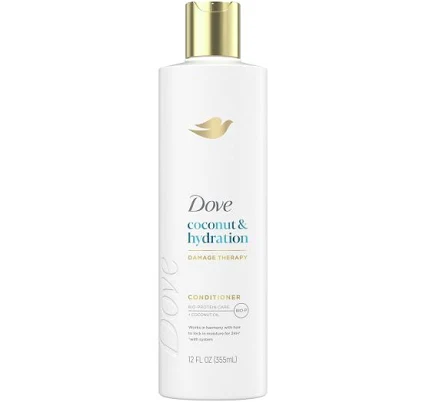
Dove Coconut & Hydration Conditioner
Lower concern. Standard conditioner formulation unlikely to include fluorochemicals.
Rinse-off hair conditioner with no known PFAS-prone ingredients or treatments, and no water-repellent or non-stick coatings. Dove makes no PFAS claims either way, typical for mainstream cosmetics without waterproofing needs.
We flunk more products than we pass. This one earned its grade. How we grade
Material
Aqueous liquid conditioner (surfactants, oils, emollients)
Lab data
No public lab test
You may also be interested in
Top-graded picks in the categories readers replace first, every one scored on the same rubric.

- polypropylene filter housing, carbon/sediment cartridge
- We found no PFAS statement from the brand
- Bacterial growth in spent cartridges
3 hazards checked on this product, all on its full breakdown.

Aquasure
Premier Series 75 GPD Under Sink Reverse Osmosis Water Filtration System
- RO membrane, carbon filters, stainless steel housing
- We found no PFAS statement from the brand
- Bacterial and microbial growth in housing and filters
4 hazards checked on this product, all on its full breakdown.

Avocado
Vegan Mattress
- organic cotton, natural latex, coconut coir, recycled steel coils
- The brand calls it PFAS-free, which we have not verified
- Heavy metals
2 hazards checked on this product, all on its full breakdown.
What Dove Coconut & Hydration Conditioner is made of, ingredients and materials
Dove Coconut & Hydration Conditioner is an aqueous liquid formulation containing surfactants, coconut oil, glycerin, and emollients designed to coat and soften hair. Unlike powder cosmetics or pigmented products, liquid conditioners carry lower inherent risk for heavy metal contamination because they lack talc carriers or mineral pigments. The product is leave-in (not rinsed thoroughly), so any minor volatile compounds present remain on hair and scalp, though conditioning liquids typically contain fewer volatile organics than styling sprays or dry products.
What’s concerning
Category baseline
The starting point for this type of product, before anything specific to this product is counted.
No PFAS disclosure
No public statement from the brand about PFAS in this product.
Fragrance allergens (unspecified components)
Dove lists 'fragrance' as a proprietary blend without ingredient breakdown; coconut scent derivatives can trigger contact dermatitis or scalp reactions in sensitive individuals. No specific fragrance allergen recall is on record for this product, but allergic response risk exists with any undisclosed fragrance formulation.
Microplastics
Some conditioners contain polyquaternium or acrylate copolymers as film-forming agents; Dove's full polymer content is not disclosed on typical packaging. Absorption through intact scalp skin is minimal, but microplastic or degraded polymer fragments are not a regulated concern in cosmetics and pose unknown long-term risk if accumulation occurs on scalp over years of use.
Source, EPA ↗What’s reassuring
Base material not linked to PFAS
The main material recorded for this product is not one associated with PFAS.
1,4-dioxane (solvent/byproduct)
Aqueous conditioners may contain trace 1,4-dioxane as a manufacturing byproduct in surfactant production, but no established testing or reported presence has been published for Dove conditioner lines. Industry-wide concern remains low for rinse products; leave-in exposure is longer but quantities in finished products are typically regulated below concern thresholds in major markets.
Formaldehyde / VOCs
No recalls or violations specific to formaldehyde-releasing preservatives (DMDM hydantoin, imidazolidinyl urea) have been recorded for Dove conditioners. Modern aqueous formulations typically use preservative systems with lower concern for some hazards (phenoxyethanol, sodium benzoate), but ingredient disclosure is limited without full INCI published on product label.
Source, ATSDR ↗Heavy metals
Liquid conditioners contain no pigments, talc, or mineral fillers that would concentrate lead, cadmium, or arsenic. The formulation (water-based oils and surfactants) presents no known vector for heavy metal accumulation unlike powder or pigmented cosmetics.
Source, FDA ↗How is this PFAS grade calculated?
The brand's record and disclosure
Dove (Unilever subsidiary) maintains no public PFAS commitment and does not disclose fluorochemical use in personal care lines, though liquid conditioners are unlikely formulation targets for water-repellent PFAS chemistry. The brand has faced no recorded recalls or enforcement actions specific to Dove conditioner formulations for heavy metals, formaldehyde releasers, or talc. Unilever publishes ingredient lists but does not independently third-party certify personal care products for contaminant screening.
How it compares in its category
Conditioners as a category carry lower hazard burden than foundations, powders, or color cosmetics because they avoid pigment metals and talc bulk agents. Dove's mainstream positioning means formulations are mass-produced under standard cosmetic oversight (FDA labeling rules, EU banned substances compliance if sold internationally). Comparable brands (Pantene, Cantu, SheaMoisture) operate under identical regulatory frameworks with similar disclosure gaps; premium or indie conditioners rarely offer superior transparency on heavy metals or allergens.
If you buy it
Apply to damp mid-lengths and ends, avoid scalp contact if you have sensitive skin or fragrance allergies (coconut scent is a known allergen for some users). Store in cool, dry conditions away from extreme heat; liquid conditioners degrade minimally over 12-24 months but separate or thicken if frozen or overheated. If you experience scalp irritation, itching, or rash within 48 hours of first use, discontinue and rinse thoroughly; patch test on a small area first if you have a history of cosmetic sensitivity.
What is not known about PFAS in this product?
- Basis
- Model estimate, 82% confidence, not a lab result
- Lab test
- None on record for this exact product
- Brand statement
- Dove has made a specific claim
Formulations change between production runs, so check the current label. How we grade.
What are the PFAS-free alternatives to Dove Coconut & Hydration Conditioner?
- Water, conditioning agents, organic plant extracts
- We found no PFAS statement from the brand
- Heavy metals
3 hazards checked on this product, all on its full breakdown.
- water-based conditioner, typical surfactants and botanical extracts
- We found no PFAS statement from the brand
- Heavy metals
3 hazards checked on this product, all on its full breakdown.
More conditioner grades
How we score, every product runs through the same public 0-100 rubric based on materials, coatings, brand disclosure, lab findings, and recalls. See the full methodology → Spotted a mistake? Report an error.