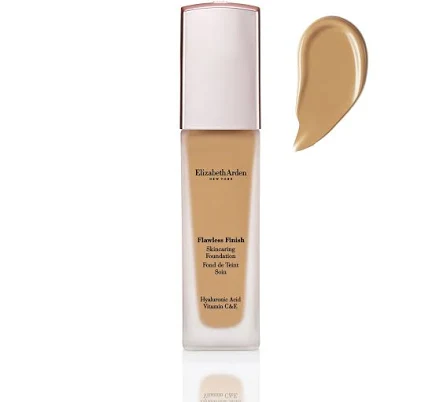
Elizabeth Arden Flawless Finish Skincaring Foundation
Lower concern, typical cosmetic. No known PFAS triggers identified.
Liquid foundations rarely use PFAS, though some waterproof or long-wear cosmetics may contain Teflon-family coating. Elizabeth Arden discloses no PFAS claims or concerns for this product. Standard cosmetic risk profile.
We flunk more products than we pass. This one earned its grade. How we grade
Material
liquid foundation with mineral pigments and polymeric binders
Brand disclosure
Brand is silent on PFAS
Lab data
No public lab test
You may also be interested in
Top-graded picks in the categories readers replace first, every one scored on the same rubric.

- polypropylene filter housing, carbon/sediment cartridge
- We found no PFAS statement from the brand
- Bacterial growth in spent cartridges
3 hazards checked on this product, all on its full breakdown.

Aquasure
Premier Series 75 GPD Under Sink Reverse Osmosis Water Filtration System
- RO membrane, carbon filters, stainless steel housing
- We found no PFAS statement from the brand
- Bacterial and microbial growth in housing and filters
4 hazards checked on this product, all on its full breakdown.

Avocado
Vegan Mattress
- organic cotton, natural latex, coconut coir, recycled steel coils
- The brand calls it PFAS-free, which we have not verified
- Heavy metals
2 hazards checked on this product, all on its full breakdown.
What Elizabeth Arden Flawless Finish Foundation is made of, ingredients and materials
Flawless Finish is a liquid foundation combining mineral pigments (iron oxides, mica, titanium dioxide) with polymeric binders and emollients typical of modern makeup. Mineral pigments are generally well-tolerated and inert once applied to skin, though particle size and surface treatment affect absorption potential. Polymeric binders stabilize the formula and prevent separation; these are standard cosmetic-grade materials with established safety records at typical use levels. The 'skincaring' positioning suggests added humectants or conditioning agents, which are unlikely to introduce new hazards if formulated to cosmetic standards.
What’s concerning
Category baseline
The starting point for this type of product, before anything specific to this product is counted.
No PFAS disclosure
No public statement from the brand about PFAS in this product.
Heavy metals
Iron oxides and mica used in mineral foundations can carry trace cadmium or lead depending on ore source and refinement; Elizabeth Arden does not publish pigment metal testing data, so contamination cannot be ruled out, though regulatory limits in the US presumptively prevent unsafe levels.
Source, FDA ↗Formaldehyde / VOCs
Liquid foundations require preservative systems to prevent microbial growth; some preservatives (e.g.imidazolidinyl urea, dmdm hydantoin) release formaldehyde as a byproduct, though modern cosmetics increasingly use alternatives with lower concern for formaldehyde release, such as phenoxyethanol or sodium benzoate.
Source, ATSDR ↗Fragrance allergen content
Flawless Finish formulations typically contain fragrance compounds; cosmetic fragrance blends are not required to list individual components, so sensitized consumers cannot identify specific allergens without contacting the brand directly.
Microbial growth from improper storage or applicator hygiene
Liquid foundations are susceptible to bacterial and mold colonization if applicators contact contaminated surfaces or if the bottle is stored in damp bathrooms; this is a user-management issue rather than a formulation flaw, but remains a practical concern.
What’s reassuring
Base material not linked to PFAS
The main material recorded for this product is not one associated with PFAS.
Talc contamination risk
No public records indicate talc as an ingredient in this foundation; mineral-based formulas may use mica, kaolin, or titanium dioxide instead, which carry lower asbestos cross-contamination risk, though mica sourcing practices are not independently verified by Arden.
How is this PFAS grade calculated?
The brand's record and disclosure
Elizabeth Arden does not publish detailed ingredient safety disclosures or pursue third-party cosmetic certifications (e.g., EWG Verified, Leaping Bunny). The brand's parent company Revlon has faced no major recalls or safety actions specific to this foundation line in recent years. Like most prestige cosmetic brands, Arden provides safety data sheets upon request but does not voluntarily highlight heavy metal testing or formulation transparency beyond regulatory minimums. No credible reports link this product to adverse reactions at typical application levels.
How it compares in its category
Liquid mineral-pigment foundations occupy a middle ground in cosmetics safety; they avoid silicone-heavy formulas some consumers prefer to avoid, but use synthetic polymers more than pure mineral alternatives. Compared to budget drugstore foundations, prestige brands like Arden typically maintain tighter ingredient controls and are less likely to source pigments from high-contamination suppliers. Compared to high-transparency indie brands, Arden does not disclose heavy metal testing data, which leaves uncertainty about cadmium or lead limits in iron oxide batches, though regulatory compliance is presumed.
If you buy it
Apply only to face and neck; avoid ingestion and eye contact. Store at room temperature away from direct heat or sunlight, as extreme temperatures can affect polymer stability and potentially alter pigment suspension over time. Replace product every 6 months to 1 year of regular use to prevent bacterial growth, especially if applicator contacts eyes or mucous membranes. If irritation or rash develops after application, discontinue use and patch-test on a small skin area before reapplication.
What is not known about PFAS in this product?
- Basis
- Model estimate, 72% confidence, not a lab result
- Lab test
- None on record for this exact product
- Brand statement
- Elizabeth Arden has made none
Formulations change between production runs, so check the current label. How we grade.
More makeup grades
How we score, every product runs through the same public 0-100 rubric based on materials, coatings, brand disclosure, lab findings, and recalls. See the full methodology → Spotted a mistake? Report an error.